
To engage LGBTQ+ people in data collection, we need to look at its harmful history:
In the 1950s, the UK government formed a committee to investigate fears of a homosexual “problem” in Britain. This was partly sparked by a series of scandals, including the exposure of a Soviet spy ring of homosexual and bisexual men at the heart of major cultural and political institutions, and the conviction of mathematician and codebreaker Alan Turing for gross indecency.
The Wolfenden Committee published their findings in 1957, recommending the decriminalisation of sex between men aged 21 and over. The committee also made a curious statement about the absence of relevant data:
So far as we have been able to discover, there is no precise information about the number of men in Great Britain who either have a homosexual disposition or engage in homosexual behaviour.
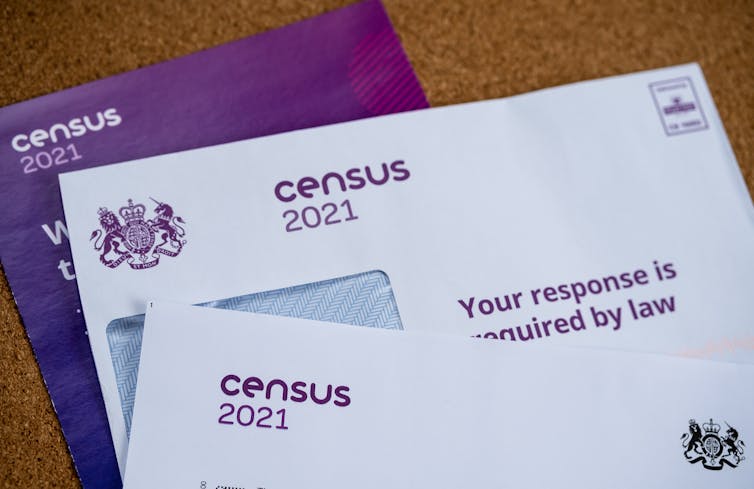
The history of data about LGBTQ+ people is troubled by gaps and absences. The national census, for example, only asked questions about sexual orientation and trans/gender identity for the first time in 2021. Population data from the census is used to inform policies and make decisions about funding for services. Leaving out data about sexual orientation and trans/gender identity means that the specific needs and experiences of LGBTQ+ communities have been overlooked.
In the rare cases where data was collected about individuals who broke gender, sex and sexuality norms, it was often used to “prove” criminality, deviance or difference. For example, records detailing the names of men charged with crimes related to homosexual activity or participants in studies of homosexuality, in which same-sex attraction was understood as a mental illness.
The damaging history of data is often left out of discussions about the importance of LGBTQ participation in major research exercises, such as the census and the UK government’s national LGBT survey.
Careful data collection
Today’s relationship between data and LGBTQ+ communities is partly the product of a history where data functioned as a tool to stigmatise, pathologise and inflict harm.
Far more data about LGBTQ+ lives exists today than at the time of the Wolfenden Committee. This data can reveal the effects of discrimination on rules that shape everyday life, and expose differences for LGBTQ+ communities in everything from the use of public transport, experiences of healthcare to educational attainment.
But there is no easy way out of the damage caused by the harmful history of data collection. LGBTQ+ communities are told, by those in positions of power, that to change the status quo we first need to gather evidence about the nature, size and scale of the problem before work can commence. But, considering data’s dark past, why should we participate?
In projects involving the collection of data about LGBTQ+ communities, I ask myself the following questions before I agree to share my data:
What does the project aim to achieve?
The collection and analysis of data is not an objective in itself. What problem does the data specifically intend to address? It is also vital to assess whether the project creates more good than harm, and whether the potential benefits outweigh the potential dangers.
Who will make decisions about the data?
LGBTQ+ people should make decisions about data that disproportionately affects their communities. Where this is not practical, or there is a risk of overburdening a small number of people, decision makers should be familiar with LGBTQ+ issues and people.
Is more data required to solve the problem?
Do not assume the need for more data –- enough evidence of a problem might already exist to justify the need for action. Similarly, does the data present an authentic account of LGBTQ+ lives? This might be a matter of collection and analysis methods, such as multiple response options and the provision of open-text boxes, to produce a more meaningful reflection of lives and experiences.

Kevin Guyan is employed on a project that receives funding from the Economic and Social Research Council. He sits on the board of the LGBTI charity the Equality Network.
: The Conversation – Articles (UK)
Have you tried: Diving with Sharks?