
The roar of the crowd – how fans create electric atmospheres:
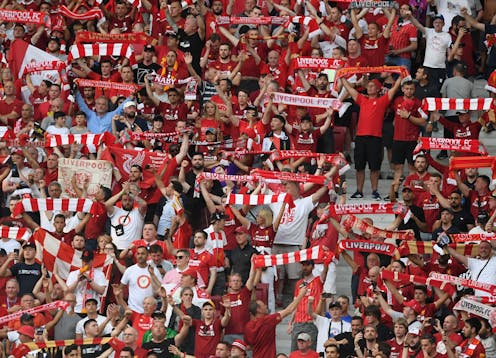
Since the arrival of COVID-19, empty seats and eerie silences at sports and entertainment venues have highlighted how much fans contribute to live events. Everywhere from the Olympics to the Premier League and the London Proms, a lack of crowds has meant an absence of atmosphere.
Memorable atmospheres are created when behaviour and emotions align within a social gathering. Groups that share a common focus and respond to events with expressions of contagious excitement create economic value for the organisations which stage the events, and pleasure for their customers.
Places that do this well, like Glastonbury or Anfield, the home of Liverpool FC, eventually become known for their unique atmospheres. And this leads people to return on a regular basis to relive these magical experiences.
Yet creating atmospheres after lockdowns and extensive social restrictions is a challenge for theatres, nightclubs, stadiums and festivals. Some events have been cancelled, while others are going ahead, despite the risks of infection.
So as customers gradually return, how will atmospheres return with them? Our study of Premier League football crowds suggests that they are a shared creation between firms and fans, before, during and after an event. For example, fans regularly prepare the “ingredients” of atmospheres in anticipation. By creating songs, costumes and flags, they create resources that are later used as shared points of focus and revelry.
And just as sports teams and musicians warm up before a match or performance, atmospheres are commonly triggered by smaller groups hours before an event. Bars, restaurants and public transport are brought to life by fans rehearsing songs and gestures that will later unite thousands of people.
At the venue, these smaller groups need to be unified into a crowd. This is often achieved by staging formal rituals. The New Zealand All Blacks’ haka, and Liverpool FC’s anthem You’ll Never Walk Alone) both illustrate the power of formalised moments to activate shared emotion as an event begins.
All together now
Atmospheres rarely emerge spontaneously. It is through preparing, rehearsing and engaging that crowds become capable of responding as one.
Different contexts reveal different levels of cooperation between hosts and consumers in creating atmospheres. Galleries, museums and shopping centres tend not to involve shared emotions among large groups. Instead, they rely on multi-sensory cues such as music and smell to stimulate visitors’ feelings and emotions.
With music and sports, fans often want to create atmospheres themselves, and attempts to “pump in” an atmosphere can be counterproductive. In the Premier League, for instance, bright lights, pyrotechnics and loud music can drown out the sights and sounds of crowd revelry such as singing and chanting.
Crowds also often make use of longstanding social rituals passed down through generations, such as the tradition of Liverpool supporters applauding the opposition goalkeeper. Without cooperative fans, crowds can become dull and passive, causing atmospheres to fizzle out.
After the loss of crowds from COVID-19, the gradual reopening of entertainment venues heralds hope for businesses as well as people emerging from social restrictions. To get things properly (and safely) back on track, our research suggests that event organisers should acknowledge and harness the power of fans to influence the success or failure of atmospheric events.
Fan zone
Open dialogue between fans and event organisers is vital to encourage the social practices that contribute to atmospheres. For example, the introduction of safe-standing areas in some Premier League venues represents a positive instance where fans’ requests to stand more closely together have been heard. Atmospheres are likely to benefit as a result.
Seasoned fans help to facilitate an atmosphere, and organisers should encourage these groups to come back again and again. The Glastonbury festival retains its unique atmosphere in part due to committed and regular ticket buyers. Social media platforms can be used to communicate traditions, contributing to atmospheres and aiding wide participation.
Finally, event organisers should develop partnerships with nearby venues such as pubs and bars to make sure that fans have space to warm up before events, initiating the creation of atmospheres even before the doors of stadiums and concert halls have opened.
Of course, the necessity to balance safety with the possibility to create atmospheric events will remain an ongoing challenge. But the possibility to share emotions with others will be a powerful draw to events that provide the electric atmospheres so many of us now crave.

The authors do not work for, consult, own shares in or receive funding from any company or organisation that would benefit from this article, and have disclosed no relevant affiliations beyond their academic appointment.
: The Conversation – Articles (UK)
Have you tried: Sailing in Africa ?