
 |
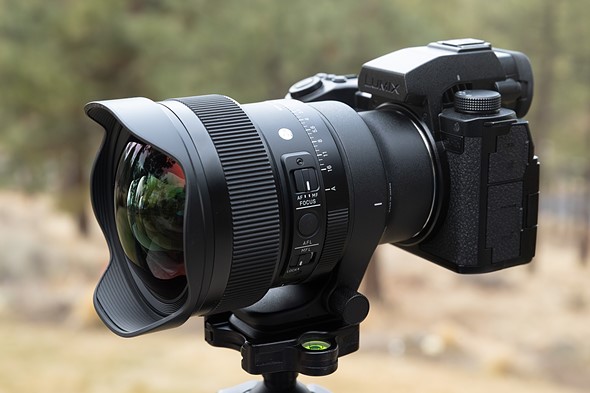
My gear of the year is the Sigma 14mm F1.4 Art lens: a big, heavy and glorious ultra-wide prime lens with a fast aperture.
Recent Videos
I know, I know. I did it again. I picked another fast, ultra-wide lens as my Gear of the Year. At this point, you could call it a trend.
If you haven’t read my Gear of the Year articles over the past few years, now is probably the best time to point out that this isn’t the first ultra-wide lens I’ve selected for this honor. That was the Sigma 14mm F1.8 Art. It’s not the second, either. That was the Laowa 15mm F2 Zero-D. In fact, it’s not even the third. That was the Sony 14mm F1.8 GM.
 |
|
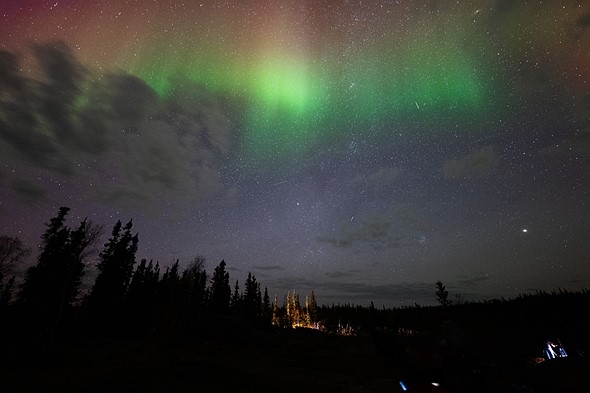
The aurora borealis makes an appearance over Canada’s northwest territories. 14mm | ISO 320 | 8 sec | F1.4 |
Buy now:
To be precise, the Sigma 14mm F1.4 is the fourth fast, ultra-wide lens I’ve selected.
At least give me points for consistency, OK?
I blame this on my passion for shooting the night sky, something I started doing about a decade ago and can’t seem to stop doing. To be clear, all the lenses I mentioned above are outstanding optics and I wouldn’t hesitate to use any of them, but the Sigma 14mm F1.4 is something altogether different.
 |
|
14mm | ISO 6400 | 6 sec | F1.4 |
Before I talk about the lens, let’s jump into the Wayback Machine and rewind to last February, when I had the opportunity to interview Sigma CEO Kazuto Yamaki. Discussing Sigma’s market strategy, he told me, “I think people’s demand for lenses is unlimited. Moving forward, we’ll probably release more unique or innovative lenses that don’t exist in the market today, and we will create demand for unique lenses in the future.”
The concept is that by providing unique products to photographers, Sigma would help create new markets for lenses that don’t currently exist.
 |
|
Night photos don’t have to point up at the sky. Although it’s a bit bulky, the Sigma 14mm F1.4 makes a great walk-around lens after dark. 14mm | ISO 320 | 1/25 sec | F1.4 |
My mind raced to just such a product: the Sigma 14mm F1.8, a lens practically designed for astrophotography. Before that lens, photographers had access to wide lenses, but not wide lenses with apertures that fast. Not only did astrophotographers snap them up, but the mere existence of such a lens inspired people with little or no experience in the field, myself included, to buy them to learn astrophotography, and in the years following, many similar products have hit the market. That’s exactly what Mr. Yamaki meant by creating demand for unique lenses.
I secretly hoped one of those products might be an updated 14mm lens, though I certainly didn’t expect it. But then, in June, Sigma went and did exactly that. And it wasn’t just an updated lens but an even faster F1.4 model. Wow.
 |
|
This star field is one of the first images I captured to assess how the Sigma 14mm F1.4 would work for astrophotography. Click on it to see the full-resolution image. 14mm | ISO 3200 | 6 sec | F1.4 |
The move from F1.8 to F1.4 may not sound significant, but for night sky photography, every bit of light gathering ability matters, particularly when photographing the aurora borealis, one of my favorite subjects. Those two-thirds of a stop mean I can use lower ISOs for cleaner images, or more importantly, I can use faster shutter speeds to retain more of the structure of the aurora during a fast-moving substorm. It also makes it easier to manually focus on pinpricks of light.
In September, I took the lens on one of my regular trips to the subarctic to photograph the northern lights. Unfortunately, this wasn’t my year; between wildfire smoke and overcast skies, I saw less aurora than I’d hoped, but what I did see was pretty spectacular. And when the lights came out, the 14mm F1.4 was magic to use. Consistent with my earlier testing, it delivered sharp focus across the entire frame and extremely well-controlled (though not perfect) comatic aberration.
 |
|
The Sigma 14mm F1.4 is also great for shooting landscapes. 14mm | ISO 125 | 1/400 sec | F2.8 |
As with any product, however, the little things often make the difference, and the 14mm F1.4 is no exception. I really appreciate the manual focus lock switch. Stars don’t move (at least not quickly enough for our purposes), and once I have a camera set up to shoot night skies, I don’t want the focus to move. I’ve been burned by nudging focus on a lens before, and my DIY solution is to place gaffer’s tape across the barrel to keep the rings from turning. A hardware switch is a more elegant solution.
Similarly, an Arca-Swiss compatible tripod mount for a lens that’s pretty much guaranteed to be used on a tripod and a design intended to retain lens heaters for cold nights are practical touches (though I didn’t have to use the latter).
 |
|
A curtain of lights rises over the taiga forest. 14mm | ISO 5000 | 5 sec | F1.4 |
It would be easy to praise Sigma simply for introducing a 14mm F1.4 lens, but that would be selling it short. In my opinion, this is the best lens I’ve used for wide-field astrophotography. It’s big and it’s heavy, but it delivers the goods. I’m not sure how Sigma will up its game in the future, but at this point, I wouldn’t be surprised to see it manufacture an honest-to-goodness black hole that attaches to a camera, ensuring that even starlight can’t escape the sensor.
Ultimately, I chose the Sigma 14mm F1.4 because of its impressive performance. You might even call it stellar. But secondarily, I picked it because of Sigma’s dedication to creating unique products and challenging other manufacturers to do the same.
Next year, I promise I’ll try to pick something with more telephoto reach, like a 20mm prime.
Buy now:

Our DPREVIEW Tribute:
After nearly 25 years of operation, DPReview closed on 10 April 2023. This difficult decision was part of the annual operating plan review that parent company, Amazon, shared earlier this year.
Over the course of 25 years, DP Review built up a reputation as being one of the most informative places to go for information about that new camera or lens you’re after. DP Review began as an independent reviews site based in the UK in 1998, the brainchild of Philip and Joanna Askey, but it was eventually purchased by Amazon in 2007 and relocated over to Seattle in the USA in 2010.
Cheers DPReview – thanks for the great work and content that guided photographers, videographers and techno junkies the world over!