
 |
| Photo: Richard Butler |
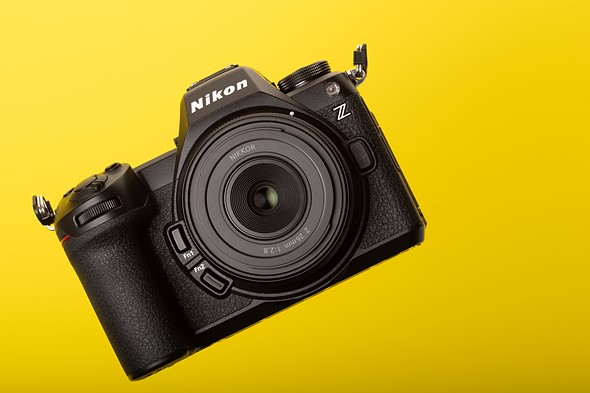
Results published by Bill Claff and forum regular Horshack both point to the Nikon Z6 III having appreciably lower dynamic range than the previous generation of 24MP sensors.
Recent Videos
Faster sensor readout is often associated with higher levels of read noise, and this appears to be the case with what Nikon is calling the “Partially Stacked” sensor in the Z6III. Bill Claff’s photons to photos site reports a maximum dynamic range of 10.4EV, using his own “photographic DR” metric. This compares to a figure of 11.3EV for the Z6 II.
It’s important to stress that dynamic range is not the same thing as image quality: two cameras can demonstrate the same dynamic range cut-off even while one exhibits much better tonal quality across much of the brightness range of its images. So it’s not safe to make assumptions about the Z6III’s overall image quality in relation to other cameras’ DR numbers.
However, after a long period in which most cameras showed extremely low levels of read noise, allowing the deep shadows of images to be brightened and incorporated into images, it’s definitely noteworthy that the Z6III will have noisier shadows that its predecessor and the Nikon Zf. The trade-off for this reduction in shadow performance is the high-speed shooting modes, the improved rolling shutter in both video and e-shutter stills, and any AF performance advantage shown over the Zf.
The Z6III’s sensor has a dual conversion gain design, and the higher gain step is sufficient to overcome the read noise difference seen at lower ISOs, bringing the Z6III back into line with the Z6 II, but it’s the peak dynamic range figures (typically for base ISO) that are most meaningful.
We have not yet received a testable camera so cannot corroborate the results, but the findings of lower dynamic range by experienced and knowledgeable users makes us feel confident enough to report them. We’ll be testing the Z6 III and showing how photographically meaningful these differences are or aren’t, as soon as we receive a camera.

Our DPREVIEW Tribute:
After nearly 25 years of operation, DPReview closed on 10 April 2023. This difficult decision was part of the annual operating plan review that parent company, Amazon, shared earlier this year.
Over the course of 25 years, DP Review built up a reputation as being one of the most informative places to go for information about that new camera or lens you’re after. DP Review began as an independent reviews site based in the UK in 1998, the brainchild of Philip and Joanna Askey, but it was eventually purchased by Amazon in 2007 and relocated over to Seattle in the USA in 2010.
Cheers DPReview – thanks for the great work and content that guided photographers, videographers and techno junkies the world over!
