
 |
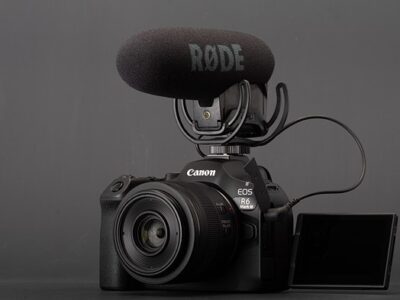
Canon’s recently announced EOS R6 III is aimed at hybrid shooters and has a strong suite of features for both stills and video shooting. We’ve already analyzed its still image quality, but now let’s take a look at how its video modes perform in front of our studio test scene.
As a reminder, the EOS R6 III can do full-width DCI or UHD 4K* video up to 120p. At 60p and below, you have the option of using Canon’s “Fine” mode, which delivers oversampled footage from 7K capture, though the company adds the intriguing caveat that the 60p fine mode won’t be quite as detailed as the lower framerate ones. The R6 III can also shoot open-gate footage using the entire sensor, and supports internal Raw recording using Canon’s C-Raw format.
* – The camera performs the same in its UHD and DCI modes, so whenever you read about the EOS R6 III’s “4K” performance in this article, know it applies to both.
Starting with the open gate mode, the 6912 x 4608 image the EOS R6 III produces captures lots of detail, appreciably more than the 5952 x 3968 open gate image from the Panasonic S1II. The difference will almost certainly be less noticeable in motion, but the EOS R6 III’s higher resolution allows for a bit more room to crop in if you’re delivering a vertical or horizontal 4K video (or if you shot a bit too wide, and are trying to take a 9:16 vertical crop without using the full height).
The increased detail versus the S1II is still there, though slightly less obvious, when you’re using the oversampled 4K mode. The Z6III offers similar levels of detail, though at default settings, it appears to apply more or less subtle sharpening than Canon does.
However, the EOS R6 III loses its edge in detail when you bump up to 4K/60. The oversampled fine setting is massively more detailed than the line-skipped standard mode, but, as Canon said, it’s less detailed than the oversampled footage from 24p mode. Interestingly, the rolling shutter figure is the same, so its perhaps a processing difference, rather than a readout one, presumably for reasons of heat.
| Rolling shutter | |
|---|---|
| 7K open gate | 17.9ms |
| 4K24/60/120 standard | 7.2ms |
| 4K24/60 “fine” | 14.3ms |
The Nikon Z6III’s output is again sharper (and more sharpened), but it’s not far off the output of the Panasonic S1II. This isn’t because Nikon and Panasonic’s 60p modes are more detailed than the 24p ones; it’s because Canon’s oversampled 60p mode isn’t as detailed as its 24p one. Perhaps most painfully, though, is that even the EOS R6 II’s 4K/60 footage has a slight edge in detail over its successor’s.
The sensor isn’t fast enough to offer an oversampled 4K/120 mode, but the EOS R6 III’s is at least full-width, so switching to it won’t change your field of view like it will with the S1II, which has a 1.24x crop for UHD, or the Z6III, which has a 1.5x crop. The 4K/120 capture is as detailed as the EOS R6 III’s other line-skipped modes, but this leaves it a long way behind the S1II’s 4K/120 footage, and even the Z6III’s. Despite those being derived from a smaller area of the sensor, it’s very likely they’re derived from more pixels that aren’t spread as far apart as they are on the EOS R6 III.
Raw Video
As always, when discussing Raw video options, it’s worth keeping in mind that the difference between Raw video and Log video is nowhere near as stark as the difference between Raw and JPEG for stills when it comes to editing flexibility. While shooting in Raw for video gives you control over noise reduction, sharpening* and white balance, it doesn’t offer substantially more latitude to adjust your footage’s lightness than Log footage does.
With that in mind, the EOS R6 III’s Raw footage looks good, capturing a lot of detail from either the entire sensor in open gate mode, or from a 7K 1.89:1 crop derived from that footage. The latter can be shot in up to 60p, though going above 30p will require switching to Canon’s Raw Lite format, which compresses the footage more. If there are compromises to detail that come from that, they’re not evident in our test scene.
It’s also worth pointing out that, unlike with the S1II’s Raw modes, Canon applies lens distortion corrections to its Raw footage. That arguably makes them a bit less Raw, but means you won’t have to manually apply them after the fact, which is especially important for those RF-mount lenses that heavily rely on those corrections as part of their optical formulas.
* – Put another way, shooting in Raw puts the onus of noise reduction and sharpening on you.
Summary
 |
| The EOS R6 III’s higher resolution sensor has its benefits, but its slower readout speeds hurt its full-width slow-motion performance. |
The EOS R6 III’s open gate mode provides exceptional amounts of detail for this class of camera, as does its oversampled 4K/24 mode. Its 4K/60 mode isn’t quite as strong as those of its competitors with faster, lower resolution sensors, though, and you’ll pay a significant detail cost to gain full-width 4K/120. The convenience of maintaining your field of view is definitely a benefit, but its partially stacked sensor rivals will maintain more consistent detail levels for your slow-mo shots.
Still, it’s hard to complain about the quality of the video we’ve been able to capture with the EOS R6 III outside of the studio. Annecdotally, when I sent Mykim, our director of video and platforms, a cut of a video we’d shot using the EOS R6 III, she asked which camera we had used, saying the footage had a “really nice visual quality to it, distinct from other videos we have done.” (It is worth noting that we shot it at golden hour on a beach, so it was quite literally being shown in its best light.)
We’ll cover other aspects of the video shooting experience in our full review, but in terms of image quality, the EOS R6 III has a lot to offer.

Our DPREVIEW Tribute:
After nearly 25 years of operation, DPReview closed on 10 April 2023. This difficult decision was part of the annual operating plan review that parent company, Amazon, shared earlier this year.
Over the course of 25 years, DP Review built up a reputation as being one of the most informative places to go for information about that new camera or lens you’re after. DP Review began as an independent reviews site based in the UK in 1998, the brainchild of Philip and Joanna Askey, but it was eventually purchased by Amazon in 2007 and relocated over to Seattle in the USA in 2010.
Cheers DPReview – thanks for the great work and content that guided photographers, videographers and techno junkies the world over!