
Coal mining in Wales: the 1930s writers who warned of environmental calamity caused by pits:
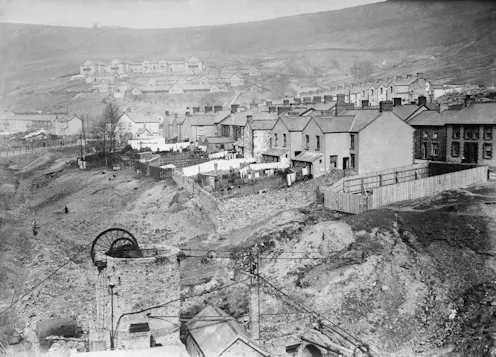
I come from a family of miners. The last person to work down the pit was my paternal grandfather, who dug coal from the subterranean tunnels hidden deep below the Welsh Marches, which lie along the English border. In comparison to the innumerable collieries that made south Wales at one point the biggest coal-exporting region in the world, ours was the forgotten coalfield.
My grandfather was a proud miner, but he was adamant that none of his children would follow in his footsteps. Thatcher’s obliteration of mining communities was conducted in an appalling manner, but reinstating the industry was not the answer. However, when I moved to south Wales to study, I was conscious of a different attitude towards our national heritage.
Shortly after beginning my master’s degree at Cardiff, I attended an event with a panel of ex-colliers. During the Q&A session, one audience member expressed a desire that mining should return to the area, which was met with approval from others. I was aware that this reflected the reality that large parts of south Wales have never fully recovered from the abrupt removal of industry, but also conscious that, on that occasion, there was hardly anyone arguing the contrary.
The price of coal
Admittedly, the coal industry brought employment, community and a strong sense of identity to parts of Wales. However, this came at the cost of widespread ecological destruction, and, despite the current coronavirus pandemic, the most significant threat to our survival remains climate change. As people, we have a natural tendency to look at the past fondly, but in order to avoid regressing, it is important to remember the negative aspects of history.
Literature about Welsh coal mining has attracted a healthy degree of critical attention over the years. Yet, little consideration has been paid towards the way writers depict the environmental impact of the industry.
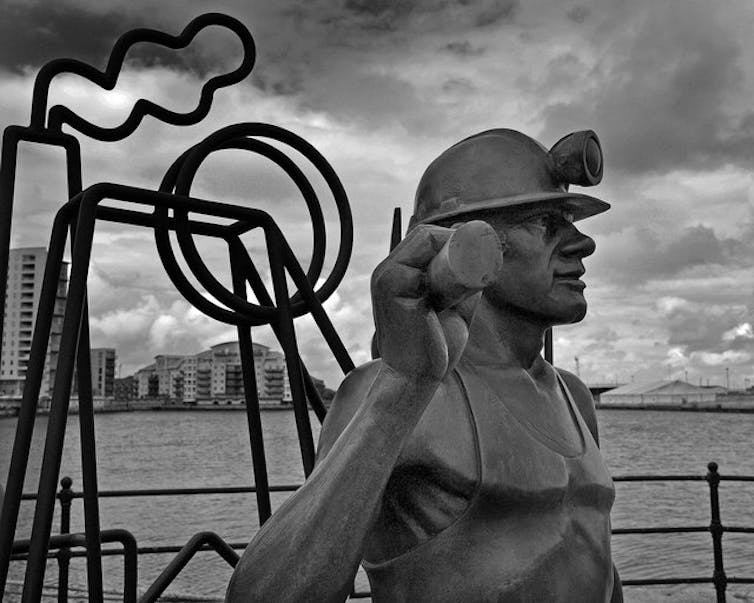
Over the past three years, I have examined a series of texts published in the 1930s, a decade that saw an increased demand – beyond Wales – for literature about the harsh realities of life in mining communities. This Welsh industrial writing, as it became known, is usually viewed as providing as a social document of that era. In my view, we should reclassify these writings as early articulations of the man-made changes that have created today’s climate emergency.
Writing environmental catastrophe
Wales was devastated during the 1930s by the great depression. The coal industry was in decline and by 1932, nearly half of all men were unemployed. This economic desolation is mirrored by literary depictions of environmental degradation in Welsh industrial writing, which was going through a boom at the time.
Collieries used local rivers to wash coal, whilst also treating water sources as a deposit for waste. As a result, river ecology suffered for generations. Jack Jones’s Black Parade (1935) communicates the deadly reality of this river pollution in Victorian Merthyr Tydfil, south Wales. Throughout Jones’s novel, the presence of the contaminated local river haunts the characters. Human and industrial waste combine to create intolerable living conditions where rats rule supreme.

Throughout the period of industrialisation, large areas of Welsh forest were cleared to produce the wooden props that were used to create underground tunnels for coal mining. In Idris Davies’s extended poem, Gwalia Deserta (1938), the poet draws parallels between the loss of Welsh trees to industry and the deprivation of the local population during the depression. Davies’s poem serves as a stark warning of what a place becomes when it loses its trees.
Widespread air pollution was a major consequence of Welsh coal mining. BL Coombes’s autobiographical text, These Poor Hands (1939), describes how collieries created innumerable quantities of dust that blackened the natural landscape and nearby communities, whilst below ground, miners were subjected to abject working conditions that caused fatal respiratory diseases.
During the mining of Welsh coal, large amounts of waste material were also removed from the earth and placed on the surface. This resulted in enormous heaps of black dirt, known as spoil tips, which littered the Welsh landscape.
Richard Llewellyn’s How Green Was My Valley (1939) is criticised for its inaccurate portrayal of mining communities, but as the most widely read account of life in the Welsh coalfield, it deserves attention. The novel focuses throughout on the menacing spoil tip that looms above the protagonist’s house. Published almost 30 years before the Aberfan disaster, in which a spoil tip collapsed onto the Welsh village of Aberfan, killing 116 children and 28 adults, Llewellyn’s text is unsettlingly prophetic.
Given the urgency of reversing the global climate catastrophe, it is important that we end our reliance on fossil fuels. In Wales, we can be proud of our industrial heritage whilst acknowledging its ecologically destructive realities. Literature, in its ability to engage people, can help us remember the negative aspects of our past, so we avoid taking regressive steps in the future.

armstrong-twiggsa@cardiff.ac.uk receives funding from the Arts and Humanities Research Council, in collaboration with the South, West and Wales Doctoral Training Partnership.
: The Conversation – Articles (UK)
Have you tried: Visiting Port Elizabeth?