
Women in mosques: fixating on the number of female imams overlooks the progress that has been made:
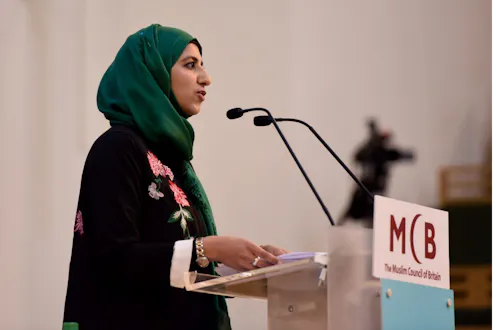
Debate continues in the wake of a high-profile Radio 4 Woman’s Hour interview with Zara Mohammed, the first woman general secretary of the Muslim Council of Britain. Mohammed was pressured live on air to answer a question about how many female imams there are in Britain. Following accusations of hostile questioning from host Emma Barnett, the discussion pivoted to a widely misunderstood issue in Britain and beyond: the role of Muslim women in religious spaces.
To dispel some of those misconceptions, it’s important to understand the varied experiences of Muslim women in a number of religious roles and communities around the world. There are complicated reasons for the lack of women in leadership roles but that is not to say that no progress has been made on updating gender disparities in Islamic religious life.
Women’s voices in Muslim communities
Whether questions about women’s roles in mosques are raised within the Muslim community itself or by wider British society, Muslim women’s own views and practices are key.
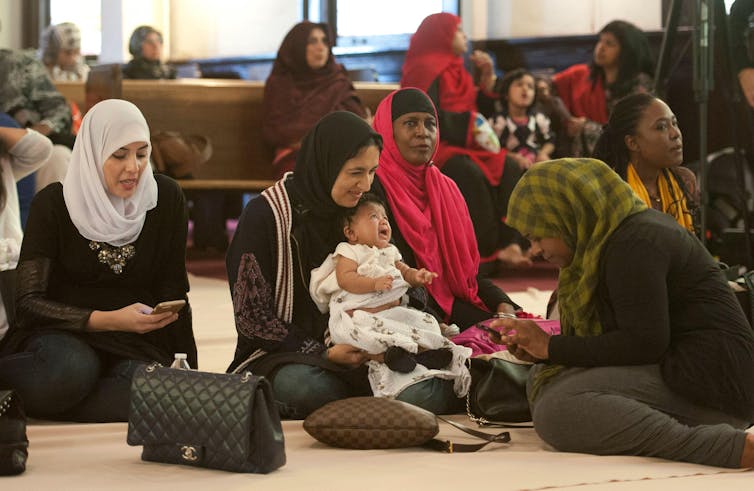
Muslim women are increasingly calling for more mosques to include them. Organisations such as the Muslim Women’s Network UK, Faith Matters and Citizens UK have urged mosques to open up spaces for women and to include them in mosque leadership. The Mosques and Imams National Advisory Board and the Muslim Council of Britain have issued similar recommendations, as has the Vibrant Scottish Mosques initiative. The Muslim Council of Britain has also launched a programme of leadership training for women. These initiatives also build on an established history of women as Islamic scholars.
In some contexts, women have reacted against male-dominated mosques by establishing mosques that are led by women. The first women-only mosque in the US, The Women’s Mosque of America, opened in Los Angeles in 2015, mirroring women-only mosques that have served the Hui community in China for several hundred years. In the UK, the Muslim Women’s Council launched an initiative in 2015 to establish a new women-led mosque in Bradford. The planned mosque will be open to women and men. Prayers where both women and men partake will be led by a male imam.
A more radical innovation is the Inclusive Mosque Initiative established in London in 2012, which offers a space for worship without gender segregation and works with women imams such as Naima Khan. American female imam Amina Wadud has led gender-mixed prayers in Oxford, London and elsewhere. Other gender and LGBTQ+ inclusive developments have emerged in Canada, the US, France, Germany and Denmark.
Still, opinions are divided about women’s participation in mosques. My interview study with Muslim women in the UK and Norway found that they were highly appreciative of dedicated mosque spaces for women. Some also wanted greater influence for women in mosque governance. While some sought advice from imams deemed to be supportive of women, others were critical of imams harbouring conservative views on women’s roles.
The participants agreed, however, that only men can be imams and lead prayers for gender-mixed audiences. This rule was seen as rooted in religious prescriptions and as such was not up for debate. The women also suggested that “authentic” or true Islam supports women’s rights and equal value, while “cultural” or “traditional” forms of Islam deny this.
Women’s roles in mosques
Mosques are houses of religious worship that also function as community hubs for social events, welfare services, charitable activities, political engagement and even sports. They are typically governed by male-dominated boards and the main religious leadership role is held by the male imam.
While only men have a religious duty to pray at the mosque, women are increasingly participating in mosques throughout the UK, Europe and North America.
Some mosques are welcoming and facilitate women’s participation via separate entrances and prayer rooms. These spaces allow women to exercise religious leadership in women-only contexts including leading women’s prayer. Other mosques are less traditional.
Overall, Muslim women’s complex engagement with mosques shows both compliance with, and challenges to, male power and authority. Debates about women’s leadership, authority and participation in mosques, then, are clearly here to stay. While some may be more polarising than others, these discussions raise fundamental questions about democratic governance, gender equality, religious freedom and self-determination. Regardless of people’s views, it should be evident that when it comes to the complex issue of women’s roles in mosques, evidence-based approaches are always best.

Line Nyhagen has received funding from the European Commission's 6th framework programme (2007-2011).
: The Conversation – Articles (UK)
Have you tried: Diving with Sharks?