
Women can reliably remember if they gave sexual consent when intoxicated, new study suggests:
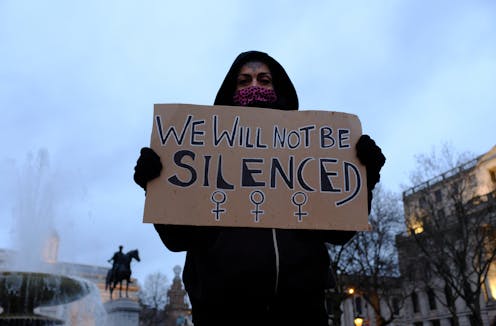
According to the Crime Survey for England and Wales for 2020, 1.6 million adults aged between 16 to 74 have experienced sexual assault by rape or penetration (including attempts), since the age of 16. But the vast majority didn’t report it to the police. And, in the tiny fraction of cases that do make it to the courts, the victim’s testimony will be closely examined and subject to scepticism – especially if they disclose that they had been drinking on the day it happened.
But my team’s first-of-its-kind study found women can recall details from memory even when they were moderately drunk at the time. This means people who refuse to believe or challenge victims’ claims “because they were drinking” are often wrongfully discrediting a sexual attack survivor.
Victims usually say that they didn’t report what happened because they felt embarrassed or thought police would not be able to help or simply not believe them.
Their concerns have foundation. In 2022, charges were only brought against a suspect in 1.5% of reported rapes according to recent Home Office figures. This rate is lower than the 6.3% charge rate for robbery or the 5.9% charge rate for violent crimes against the person during the same period.
Under the influence
Alcohol is a key factor in the low conviction rates. Up to 80% of sexual assaults involve alcohol, but victims are more likely to blame themselves and are less likely to report the crime if they drank alcohol just before the attack. According to research by Northwester University, US, the public is also more likely to blame rape victims who drink alcohol.
This belief about alcohol and sexual assault makes justice officials wonder whether the victim is misremembering the encounter. Even if the police and prosecutors believe the victim, the defence team and memory expert witnesses may argue the complainant is falsely remembering consensual sexual activity as rape because she had been drinking at the time.

Science does show alcohol impairs memory consolidation, or the formation of new memories. Research has found people freely recall fewer details about incidents they experienced or witnessed while intoxicated, compared to people who are sober.
What many of us don’t realise, however, is the accuracy of the details people report does not differ depending on alcohol intoxication under free recall conditions. Memory for salient, central details is also more likely to be accurate compared to peripheral details about the event, regardless of alcohol intoxication.
Against this backdrop, we set out to study the effects of acute alcohol intoxication upon how accurately women remember sexual encounters, both consensual and non-consensual.
The experiment
In our study, 90 women reported to the lab early in the morning. They were randomly assigned to drink vodka and tonic, or tonic water alone. Each participant had three standard size drinks, each within five minutes, one right after the other, on an empty stomach. This amount of alcohol, consumed at this speed, is enough for a fragmentary blackout, or partial memory loss.
Half of the participants in each beverage group were told they were consuming alcohol, the other half that they were consuming tonic water alone, regardless of the drink they were actually given. This was done to control for the psychological effects of alcohol on memory. The belief that you are drinking alcohol can sometimes affect how people pay attention and report their memories.
Fifteen minutes after finishing their drinks, participants engaged in an hypothetical scenario, in which they went on date with a man named Michael.
Throughout the exercise, women decided whether they wanted to continue to engage with Michael or to instead “call it a night” and end the story. During the date, the participant was told her friends have gone home, and Michael had offered to give her a lift. If she accepted, eventually Michael made sexual advances towards her.
Some participants (about 10%) decided to continue and listened to descriptions of consensual sex. For the 90% of participants who stopped consenting, they were told Michael refused to take “no” for an answer.
A week later, all participants were interviewed about the scenario. We found women were accurate (correctly answering up to 90% of questions) in recalling the activities to which they had consented, regardless of alcohol intoxication.
Women were less accurate in their answers to questions about Michael’s behaviour during the rape. But those who did drink alcohol had a similar level of accuracy to those who did not.
Women who thought they had consumed alcohol, as opposed to tonic water alone, had higher accuracy on average, regardless of whether they had actually consumed alcohol. This finding is in line with research that shows women’s awareness is heightened in situations where the risk of rape is high, such as when they are drinking alcohol.
A new way forwards
My team’s research is an important first step in studying how accurately women remember sexual encounters depending on alcohol intoxication. Our results do need to be replicated in different contexts.
For example, in studies where the participant is repeatedly interviewed, or interviewed for the first time after a relatively long delay. But the more public awareness that women can still recall details of an attack even when moderately drunk, the more likely it is that interviews in courts and police stations will result in a fair outcome for everyone involved.
It is always up to the victim-survivor whether or not to report rape. But we hope that when people choose to do so, they can be confident they will be believed like the victims of other crimes.

Heather D. Flowe receives funding from UK Research and Innovation.
: The Conversation – Articles (UK)
Have you tried: Diving with Sharks?