
Why The Gambia should fast-track gender quotas for women:
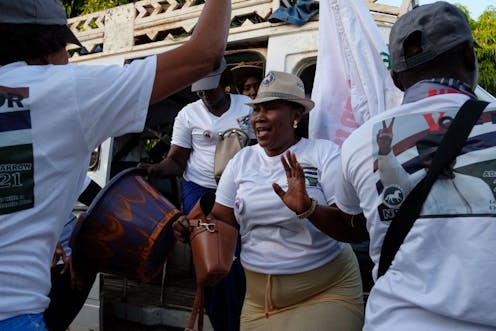
Women have historically been poorly represented in positions of power and decision-making in The Gambia. Out of 58 National Assembly members, only six are women lawmakers and only three of these are elected. Women make up more than half of the Gambian population, yet they account for only 10% of parliamentarians, including the speaker.
This poor representation is just as evident in the political parties. None of the 18 registered political parties is led by a woman. A few have women serving as deputy party leaders. But for the most part, women are assigned token positions that lack the necessary power and authority. They are deployed as mobilisers, campaigners and cheerleaders.
Little wonder then that during the December 4, 2021 elections, only one woman, Marie Sock, filed her nomination for the presidency. Even then her application was rejected by the Independent Electoral Commission (IEC) as she failed to declare her assets. She also did not have the legally required number of registered voters to support her nomination.
This left the field open to a contest between six male candidates in which Adama Barrow secured his second term.
Adama Barrow was voted into office in December 2016, ending 22 years of autocratic rule under Yahya Jammeh. In the democratic transition that followed, Barrow pledged a reformed constitution and transitional justice for victims of Jammeh’s brutal dictatorship.
But the constitution-making process is stalled. The proposed Constitution Promulgation Bill of 2020 was rejected by the National Assembly owing to political party disagreements.
The draft constitution outlined several provisions to accelerate substantive equality between men and women. Among its transformative provisions was a section that explicitly forbids discriminatory treatment based on gender.
Section 55 further provided equal treatment between men and women. This included equal political, economic and social opportunities. Section 74 set out general principles for the electoral system. This included fair representation of all genders in elective public bodies. The draft constitution also provided a quota system that reserves 14 seats in parliament for women.
The failure to pass the bill represents a loss in the momentum for gender reforms.
But, in my view, there is still an opportunity to address the issue of women’s representation in politics. This is in the form of a private member bill which seeks to increase women’s representation in the National Assembly.
The bill presents a timely opportunity to rectify imbalances in political representation by guaranteeing a number of seats for women. Arguments against it might be that it’s only a temporary measure. But, I would argue, temporary measures such as legislative gender quotas can increase women’s access to political participation.
It’s true that over the past few decades the principle of equality between women and men has become increasingly constitutionalised. These include gender-specific constitutional provisions on women’s rights, the right to reproductive healthcare, access to education, protection from violence.
But a number of temporary special measures have also been put in place. One is the quota system.
Support for quotas
Gambians are ready for change.
A nationwide study on women’s political participation and representation showed that 89% of all respondents supported the introduction of the quota system.
In 2018, a survey by Afrobarometer – the pan-African research network – showed overwhelming support (85%) in the country for constitutional change that would mandate a quota system for women’s representation in the National Assembly.
But this support has not yet been translated into the statute books.
Gender rights in The Gambia are governed by the 1997 constitution and other relevant laws. These laws include the Women’s Act 2010 which has general provisions to support women’s political participation and representation.
The Gambia is also one of few countries in Africa that has enacted specific legislation to domesticate African and international norms and standards that recognise the human rights of women and girls.
But the legal framework in its present form is not comprehensive in securing a substantive right for women in the political realm. Take section 15 of the Women’s Act. It provides a general obligation to adopt temporary special measures. But it does not make a definitive prescription such as electoral gender quotas.
In addition, existing laws are grossly inadequate given the socio-cultural barriers that are well entrenched in society against women.
An alternative route
The private member bill before parliament presents an opportunity to embrace reform. The bill proposes increasing the total number of seats in The Gambia’s National Assembly from 58 to 71, reserving 16 seats for women assembly members. Fourteen would be elected from each region; people with disabilities will elect one woman from among them, and the president would appoint one.
In my view the private member bill effort would be beneficial for advancing women’s rights.
However, a key question has arisen as to what will be the modalities for electing the women parliamentarians. It would be helpful to draw from other countries with a quota system to address this. For example, the revised 1995 Constitution of Uganda institutionalised the quota system by providing for a number of reserved seats in the national parliament equal to the number of districts in the country. Each district elects a female parliamentary representative.
In this case, reserved seats are organised as single-member “women’s districts” constituencies, designed as first-past-the-post districts. In essence, a one-woman representative is elected by universal suffrage in each district – which may consist of multiple counties (constituencies) – indirectly contested “female candidate only” elections.
Equally, in the case of The Gambia, it is proposed that parliamentarians for the female-reserved seats be elected and not appointed to enhance the legitimacy of these parliamentary seats. Some have argued that this may promote a static view of “women” as a group and push for a parallel process that affects equal voting rights. But in this case this is necessary as a time-limited positive measure that is intended to provide opportunities for a historically and systematically disadvantaged group.
An longer version of this article was published by International Association of Constitutional Law.

Satang Nabaneh does not work for, consult, own shares in or receive funding from any company or organisation that would benefit from this article, and has disclosed no relevant affiliations beyond their academic appointment.
: The Conversation – Articles (AFRICA)
Have you tried: Farking?