
Why surfing can be beneficial for people with brain injuries:

Nothing quite beats riding a wave for the first time. And our research suggests you don’t have to be a pro to benefit from the power of the sea. We have found that surfing can help people with brain injuries live more engaged and meaningful lives.
In addition to physical impairments, acquired brain injury can cause difficulties with processing information, regulating emotions and socialising. Many people with brain injuries can struggle to return to work or engage in exercise and can start to feel isolated. Critically, they don’t always have the confidence or connections required to engage with their local communities.
We have been working with a team of psychologists across different Welsh health boards to help survivors overcome these barriers and have studied the effects.
During our research, we teamed up with Surfability UK, which is a surf school that aims to make the activity as inclusive as possible to disabled people. It offers adapted wetsuits, longer boards, beach buggies and developed the world’s first tandem seated surfboard to support those with mobility issues, including people with acquired brain injuries.
Accessing such opportunities can still be a challenge if you have a brain injury. So, to overcome this, psychologists join patients for a dip in the sea and provide them with therapeutic support in their wetsuits.
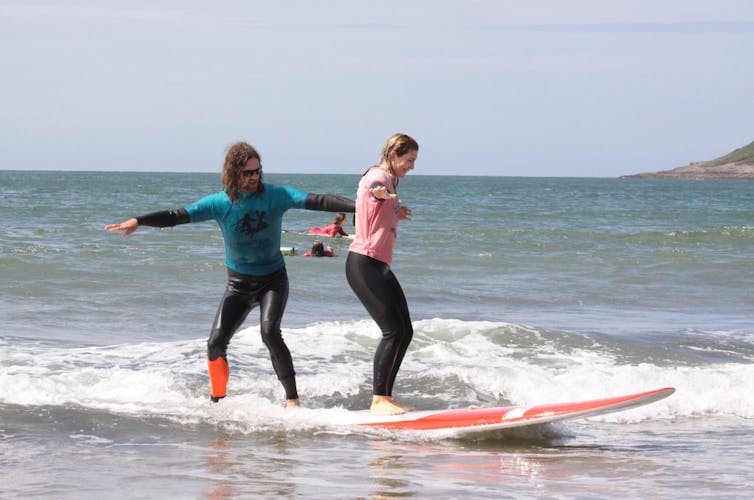
We followed up by interviewing 15 patients who have undertaken surfing sessions as part of the neuro-rehabilitation programme run by the Swansea Bay and Hywel Dda university health boards to learn more about their experiences.
We found that providing brain injury survivors with an opportunity to immerse themselves in the dynamic elements of the tide, wind and sea can have a huge impact on their mental health and wellbeing. It enabled participants to reconnect with the outside world and feel respite from the everyday stressors of modern life.
Connecting people to nature has previously been shown to improve wellbeing and promote an appreciation of the environment. But our patients reported some particular benefits to surfing.
In contrast to gardening, for example, one of the participants who shared their experiences described surf therapy as something which “doesn’t stay still”. It’s something which is constantly evolving – falling off the board is a part of the learning process. This can be uncomfortable and distressing at first, but persevering can often lead to feeling a sense of achievement.
Some of our participants reported that surfing had taught them that all types of emotions – whether positive or negative – are an important part of the human experience. Instead of trying to control them, accepting them can help people find meaning in their lives.
Read more: Why learning to surf can be great for your mental health, according to a psychologist
Making room for difficult thoughts enabled some of our brain injury survivors to reconnect with their values and hobbies too. Surfing gave them meaning and a “valid reason for being alive”. It also showed them that “despite being a bit broken in some places,” they were still capable people. This helped them to renegotiate their identity.
Connecting with people in similar situations can also be crucial after brain injury. Many report that they don’t feel understood by family and friends. Yet belonging is a basic psychological need.
Being part of a group enabled our brain injury survivors to learn there were other people with similar experiences. They were able to create a network where they could share resources and experiences to help each other.
The purpose of therapy is to induce sustained and meaningful change after brain injury. Along with immediate improvements in fitness, balance and coordination, our follow-up research found patients continued engaging in outdoor physical activity for up to ten months later.
Some stuck with surfing, while others took up paddleboarding or cold-water swimming. Research suggetss taking part in purposefully designed water-based activities can generate a similar sense of wellbeing as surfing.
Our research underlines how the power of the sea can offer patients benefits which typical clinical settings do not provide.

Andrew H Kemp receives funding from Health and Care Research Wales.
Zoe Fisher receives funding from Health Care Research Wales
Katie Gibbs does not work for, consult, own shares in or receive funding from any company or organisation that would benefit from this article, and has disclosed no relevant affiliations beyond their academic appointment.
: The Conversation – Articles (UK)
Have you tried: Travelling to South Africa?