
Why Kenya needs policies to tackle dengue and chikungunya viruses:
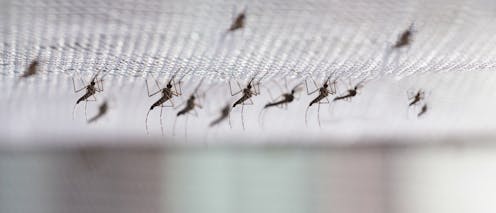
Kenya is one of several countries across the world experiencing an unprecedented outbreak of the chikungunya and dengue viruses.
Dengue fever and chikungunya are two of several arboviral diseases – which are spread to people when they’re bitten by an infected mosquito or tick.
Globally there’s been an increase in the emergence and recurrence of these diseases.
Outbreaks have been reported in Europe – in Portugal in particular – as well as South East Asia and the Pacific Island countries. Reports of dengue fever in Japan have arisen after a lapse of more than 70 years.
And in Africa, Burkina-Faso has also seen recurrent dengue outbreaks in the last two years. In Brazil more than 1.4 million people were infected with dengue in 2016 and have suffered serious after effects.
Kenya’s caseload has seen more than 100 people infected with chikungunya in Mombasa since January 2018 after another 100 were infected with dengue in the seaside town last year.
These are not the first incidents. In the last five years, there have been several outbreak reports of the same diseases in the North Eastern part of Kenya. According to World Health Organisation records, the town of Mandera in the north east of the country recorded 1700 positive cases of chikungunya in May 2016.
The challenge with these two viruses are that they have no vaccines or treatment. Controlling the vector is the only way to prevent and control these diseases so that outbreaks don’t get out of control.
But part of the problem is that the Kenyan government has not instituted any policies that could regulate the control of these diseases. The government has done this with malaria by instituting several policies in the national malaria control programme that has helped control the spread of the disease.
Unless the government establishes policies to deal with dengue fever and chikungunya, like it did for malaria, it will have challenges managing the spread.
Malaria vector control
Policies that prevent the spread of malaria in Kenya have been in place for over a decade. There are two main methods: insecticide treated bednets and indoor spraying of homes. In parts of the country, these methods have resulted in the disease’s caseload decreasing by over 70%.
But these measures would do little to contain the vector that spreads dengue and chikungunya.
This is because unlike for the malaria vectors that bite at night and can be controlled by sleeping under bed nets, Aedes aegypti – the main vector that spreads dengue fever and chikungunya – bites during the day. Sleeping under bed nets would therefore have minimal impact in the control of the diseases.
The spraying of insecticides is not advocated because it targets unintended organisms and has a detrimental effect on the environment. In addition, there is the challenge of insecticide resistance.
A few suggestions
There are two approaches that the national and county governments could try: urban planning policies as well as policies that target land use. Some of these could be simple and easy to achieve.
Recent research on the Aedes aegypti – also known as the black mosquito – has shown that the mosquito prefers breeding in:
-
garbage like abandoned car tyres, plastic containers and tins,
-
water tanks and pots, and
-
shady areas
Urban planning policies that tackle these three areas could reduce the transmission risks of dengue and chikungunya.
One example is a policy that encourages a cleaner environment and for people to dispose their solid waste properly. This would rid urban centres of garbage lying around that provides artificial man-made habitats for the black mosquito.
Another would be for government to provide enough tap water to residents so that water is not stored in pots and tanks. These should be accompanied by education campaigns which sensitise citizens about the importance of covering, emptying and cleaning their domestic water storage containers weekly.
And a third policy could be improved environmental management. This includes better drainage systems around residential areas, and clearing bushes and shady areas. This would help destroy the breeding sites for these mosquitoes.
In terms of land use, novel research suggests that attempts to intensify agricultural production could be linked to a high prevalence of dengue fever and chikungunya. In Kenya this could be caused by plants that have been imported into Kenya bringing in invasive weeds like parthenium hysterophorous. This weed is the preferred source of sugar for mosquitoes. Similarly to the protein mosquitoes get from blood, sugar is important for the biology and ecology of mosquitoes. For male mosquitoes, it’s the main source of energy.
There could be a benefit for government to turn vast areas of agricultural land into conservancies.
It’s clear that with proper policies and planning, dengue and chikungunya can be controlled but the government must take the first steps.

Eunice Anyango Owino is a medical entomologist and works for the University of Nairobi. She consults with the International Centre of Insect Physiology and Ecology and has received funding from the International Foundation for Sciences (IFS), the National Commission For Science, Technology & Innovation, Kenya.
: The Conversation – Articles (AFRICA)
Have you tried: Sailing in Africa ?