
Why it’s hard to end elephantiasis, a debilitating disease spread by mosquitoes:
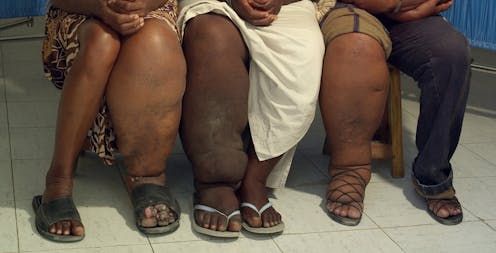
Lymphatic filariasis is one of the world’s leading causes of permanent and long-term disability. Sometimes referred to as Elephantiasis tropica, it is a neglected and stigmatised mosquito-borne disease. It damages the human lymphatic system, leading to disfiguring swelling of limbs, breasts and genitals. Despite a decade of World Health Organisation (WHO)-led drug administration to halt its spread, the disease is endemic in 72 countries, puts about 1.4 billion at risk and affects about 120 million people. Alexander Kwarteng, Kristi Heather Kenyon, Jonathan Roberts and Mary Asirifi are doing extensive research on lymphatic filariasis. Here they tell The Conversation Africa more about the illness and the challenge of eradicating it.
How do people get lymphatic filariasis?
People are primarily infected with the disease through mosquito bites. In Africa, the Anopheles mosquito is the main vector. The female Anopheles mosquito transmits microscopic filarial parasitic worms (Wuchereria bancrofti, Brugia timori and Brugia malayi) from one person to another during its feeding process. These worms then live and grow in the human lymphatic system, causing disruption and damage. The lymphatic system is part of the immune system – it works primarily to maintain the body fluid levels and protects the body from pathogens.
The primary method of prevention is to avoid being bitten by mosquitoes in endemic areas. The disease is common in tropical regions of the world, where water collects outdoors and there are poor sanitary conditions. Infection takes more than one bite – those most at risk are people who are bitten repeatedly over time. Research in Ghana, for example, shows that risk factors include a mixture of environmental and economic conditions. These include proximity to the coast or short savanna grass areas, rainfall and temperature, season, and poverty and poor housing.
What is it like to live with lymphatic filariasis?
People with lymphatic filariasis experience acute filarial attacks. Filarial attacks involve a fever, and swelling and peeling skin on the affected areas of the body. The causes of the attacks are believed to include microbial contamination and immune reactions to the presence of the live or dead adult worms. The main visible sign of the illness is disfiguring swelling, followed by peeling of the affected area. In women this swelling, called lymphedema or elephantiasis, mainly affects arms and legs. In men it can also cause enlargement of the scrotum, referred to as hydrocele.
The swelling affects people’s lives in a multitude of ways. It can interfere with the fit of clothing and shoes, impair mobility, and affect sexual function. The harm is more than physical. It can also result in serious economic, social and interpersonal consequences.
As a former UN Special Rapporteur on the Right to Health, Paul Hunt, has argued:
the human rights implications of neglected diseases have not been given the attention they deserve.
Due to a combination of disability, stigma and discrimination, people with lymphatic filariasis often lose their jobs, are shunned from their communities and have difficulty starting or maintaining relationships. The stigma, ill-treatment and isolation that results from this condition can, in turn, lead to negative mental health outcomes.
How is it being addressed?
Lymphatic filariasis cannot be cured. However, recent studies show tetracycline-based antibiotics could be helpful, particularly in the early stages. Given the issue of multidrug resistance to antibiotics, however, this is not normally encouraged on a large scale.
The Global Programme for Elimination of Lymphatic Filariasis aims to interrupt the transmission of the infection and manage the conditions that accompany it by mass drug administration in endemic communities. The programme has achieved some notable successes, but it continues to face challenges. Despite more than a decade of work, lymphatic filariasis remains endemic in 31 African countries.
Public awareness campaigns and strict adherence to mass drug administration campaigns are important tools of prevention and eradication. It is also necessary to ensure the clearing of bushes, dredging of choked gutters, and proper disposal of refuse in endemic communities to interrupt mosquito breeding sites.
What are the barriers to eradicating it?
Barriers to eradication are not straightforward. Research and interventions have been overwhelmingly biomedical, focusing largely on mass drug administration (ivermectin, albendazole, diethycarbarmazine). Drugs work by killing the larval stages of the parasites. They have little effect on the adult worms, so they need to be given yearly. However, these drugs can only save a person from disfigurement if they are taken early and regularly.
Placing the illness in the context of the local culture is still a major challenge for health practitioners. The lack of cultural engagement in eradication programmes is in itself a barrier. People with lymphatic filariasis view the illness through their cultural traditions. Often they blame outside invisible forces such as witchcraft, sorcery or ancestral curses when they contract the disease. Logically, they may spend as much time seeking help from ritualists and priests to fight off these dangerous spirits as they might spend following a western medical regimen. They may understand healing the spiritual and social self to be as important as healing the bodily self.
Gender dynamics can also be an important factor in seeking treatment. Women may face social and financial barriers in accessing treatment.

Kristi Heather Kenyon receives funding from Canadian Institutes for Health Research for a related project titled, "Combating Stigma and Social Isolation Among People Living with Lymphatic Filariasis in Ghana through Culturally Appropriate Interventions." Alexander Kwarteng and Kristi Heather Kenyon are co-PI on this project. Mary Asirifi is a co-applicant and Jonathan Roberts is a collaborator.
Alexander Kwarteng, Jonathan Roberts, and Mary Asirifi do not work for, consult, own shares in or receive funding from any company or organisation that would benefit from this article, and have disclosed no relevant affiliations beyond their academic appointment.
: The Conversation – Articles (AFRICA)
Have you tried: Sailing in Africa ?