
Why education systems should build environmental ethics into every subject:
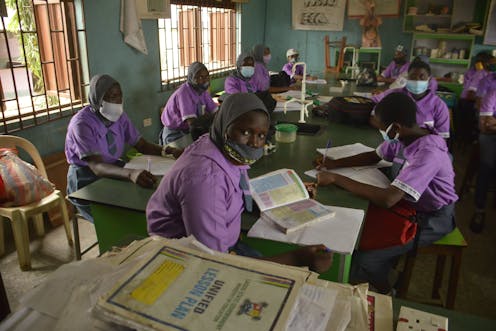
One of the goals most of the world has agreed on is education for sustainable development. This means development that considers present concerns without compromising the interests of future generations. Nations develop through education that takes care of the present and the future.
As I have argued in a paper on environmental ethics in education, I believe that the principles and ideas of sustainable development and consumption should be embedded in all aspects of education. Every course or subject in the school curriculum should contain these ideas. Education should give future leaders the critical thinking tools they will need in a dynamic society faced with serious climate change challenges. Almost every profession and livelihood has an impact on the environment.
Call for ‘edutainability’
In Nigeria’s schools, there is little or no emphasis on sustainable consumption as part of sustainable development. My call is for the idea of “edutainability”. This I derived from a combination of the words education and sustainability. It is based on the gap I see in the idea of education for sustainable development. This misses the consumption aspect, which adversely affects our environment.
Edutainability stresses that every subject must incorporate ideas about how to ensure sustainable development and consumption.
I also argue that learning about sustainable development and consumption should not be limited to disciplines in the sciences and technologies. Almost every human action affects sustainability and has an impact on the environment, directly or indirectly.
Edutainability can be viewed as part of environmental ethics. Environmental ethics is a branch of applied philosophy that studies the conceptual foundations of environmental values. It’s also concerned with issues surrounding societal attitudes, actions, and policies to protect and sustain biodiversity and ecological systems. It applies the rigour of ethical thinking to the natural world and the relationship between humans and the planet Earth.
The earlier children are introduced to reflecting and asking questions about the environment and the impacts of human activities on it, the better they can begin to develop an attitude of care for the environment.
Children are inquisitive and full of questions about their surroundings. This is what the introduction of philosophy at primary and secondary school level could exploit. It would help shape children’s reasoning and equip them eventually to take part in debates and policy making. As UNESCO puts it, education that would lead to sustainable development empowers citizens to take informed decisions and responsible actions for environmental integrity, economic viability and a just society for present and future generations.
It is not enough to tell people what to do in order to preserve the environment. Children must understand the rationale and the interconnectedness of humans and nature. They need to know their environmental rights, such as the right to inherit a healthy and sustainable environment, and the right to food, water, shelter and education. They also need to know that climate change is going to affect the exercising and enjoyment of these rights.
For example, recent flooding in parts of Nigeria is one reason to introduce environmental ethics into the country’s education system (and elsewhere on the continent). Children were major victims of the flooding and remain at risk. Drought in the Sahel is another issue that children need to understand. They should appreciate the differences between human-made and natural disasters.
Read more: What Nigerian cities can do to cope better with flood risk
They also need to appreciate the political nature of climate change and what their various governments are doing about their future. When it is time for them to take over they must be equipped for the task.
Everybody is a consumer
It’s not enough to teach environmental ethics and philosophy of technology to students in science and technology departments. That would be a limited perspective, focusing only on producers (the professions in the two sectors) while ignoring the end users.
For example, certain pest control chemicals, when applied safely, can be sustainable but applying them or disposing of them incorrectly would challenge sustainability.
My view is that every course or subject must incorporate how to ensure and contribute to sustainable development and consumption. Also, all academic research must incorporate a section on sustainable development and consumption from the perspective of the discipline concerned.
The choices of consumers can greatly influence producers to adopt sustainable development approaches. And everybody is a consumer.

Bellarmine Nneji does not work for, consult, own shares in or receive funding from any company or organization that would benefit from this article, and has disclosed no relevant affiliations beyond their academic appointment.
: The Conversation – Articles (AFRICA)
Have you tried: Diving with Sharks?