
 |
| Photo: Richard Butler |
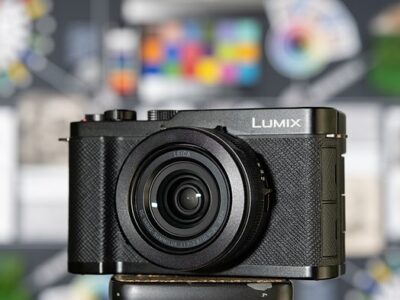
When we wrote our review of the Panasonic L10, we tried to make sure we put the studio comparison into context. For mirrorless cameras and DSLRs we use good prime lenses, stopped-down to the point that their performance is reliably excellent: zoom lenses and, in particular, the downsized, retractable zoom lenses in compact cameras, can’t match up to this standard. As a result, compacts don’t look quite as impressive.
Our test scene lets you compare images in incredibly fine detail, revealing differences that you wouldn’t see in most real-world situations: they exist but that doesn’t mean they matter. That’s exactly why we also post a gallery of real-world sample images so that you can relate the things you see in the studio scene to their photographic impact.
We’d gone through our usual processes for compact cameras: carefully align, shoot a series of images, compare to cameras we’d expect to perform similarly, then do it again at a different focal length, to make sure we were representing the camera fairly.
However, we still saw some concerns expressed that we were testing a “faulty” or sub-standard copy. Just to be certain, we requested another L10, to see whether we’d get a significantly different result.
Test and retest
It didn’t. With the first copy, we found that the 75mm setting looked better than the 50mm we’d used on the LX100 cameras. The difference was much smaller on the second copy. Both copies could be a touch sharper at the center at 75mm whereas 50mm equiv was less sharp at the center, more consistent out to the corners, which is presumably why we chose it for the LX100s.
Multiple focus attempts, using both manual focus and autofocus, appear to suggest that a lot of the softness in the corners is a result of curvature of field: a non-flat focus field, meaning it’s not possible to get the whole of the chart in focus at the same time. The images with the sharpest center focus had worse looking corners than the images with slightly miss-focused center.
Ultimately we were able to shoot some images that are sharper at the center than the ones displayed in our image comparison tool, but they have visibly less sharp corners. The second copy of the camera also appears less consistent, with what appears to be slight decentering sometimes affecting the top left corner.
The images between the two cameras are similar enough (decentering aside) that we don’t think we can get consistently better images from the second copy than the ones already in the scene. Those images already exhibit aliasing – a sign that the lens is resolving detail beyond the level the sensor’s resolution can accurately capture – suggesting the lens is doing a good job. You just need to consider the context of how finely you’re scrutinizing them and how impossibly the high the standards set by good, prime lenses are.
Was it worth the effort?
We re-tested the L10 because we want to make sure our image comparison tool shows all the cameras in it in as fair a light as possible. And if that means re-doing some of the work and re-checking our assumptions to ensure our standards are maintained, then it’s worth doing.
See how the L10 looks in the real world

Our DPREVIEW Tribute:
After nearly 25 years of operation, DPReview closed on 10 April 2023. This difficult decision was part of the annual operating plan review that parent company, Amazon, shared earlier this year.
Over the course of 25 years, DP Review built up a reputation as being one of the most informative places to go for information about that new camera or lens you’re after. DP Review began as an independent reviews site based in the UK in 1998, the brainchild of Philip and Joanna Askey, but it was eventually purchased by Amazon in 2007 and relocated over to Seattle in the USA in 2010.
Cheers DPReview – thanks for the great work and content that guided photographers, videographers and techno junkies the world over!