
Vaccinating mothers during pregnancy protects their babies from COVID:
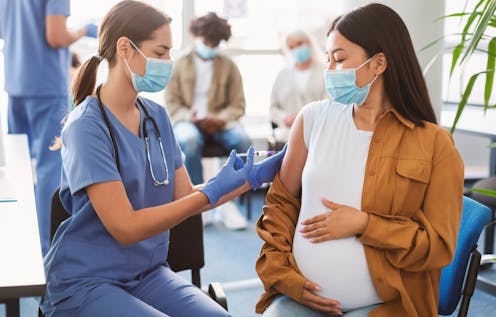
If a pregnant woman catches COVID, it’s very rare for the virus to be passed through the placenta to the foetus. But it’s long been known that a mother’s antibodies can cross the placental barrier to the baby and can also be transferred via breast milk after the baby is born. This is why it’s common in many countries for pregnant women to be vaccinated against flu and whooping cough.
When a mother passes antibodies to her child, it’s known as passive immunity, and this can be generated by a mother being vaccinated or infected during pregnancy. It happens with COVID as it does with many other diseases.
COVID-specific antibodies have been found in umbilical cord blood from pregnancies of women who either caught the virus or got vaccinated during their pregnancy, confirming the passage of this immune protection from mother to unborn child. These antibodies should then give the baby better protection against COVID during the early stages of life. Indeed, new research from the US Centers for Disease Control and Prevention suggests that this is the case.
The research was carried out between July 2021 and January 2022. It looked at 379 babies under six months old that were admitted to hospital. On average, they were two months old. The babies were split into two groups. The first comprised babies hospitalised with COVID symptoms and who tested positive for the virus. The second included babies hospitalised with suspected COVID or for other reasons who subsequently tested negative for the virus. This type of study is known as a “case-control” study because cases (babies with COVID) are matched with “controls” (babies without COVID).
The researchers then compared the vaccination status of the mothers of each group to see if the babies with COVID were more likely to have unvaccinated mothers. All the infants studied either had mothers who were unvaccinated or who had received two doses of an mRNA COVID vaccine. To qualify, vaccinated mothers had to have had their second dose during pregnancy and more than 14 days before giving birth.
The scientists found that there was a difference. Just 16% of the babies with COVID had mothers who had been vaccinated, whereas for the COVID-free babies, the rate of maternal vaccination was double that – 32%, a statistically significant difference – suggesting a protective effect. Some of the COVID-positive babies were admitted to intensive care, and among these, 88% of their mothers were unvaccinated. The one infant in the study who died had an unvaccinated mother.
The researchers also looked to see if there was any effect of completing the two-dose vaccine course at different stages of pregnancy. They divided the babies into those whose mothers got their second vaccine before 21 weeks of pregnancy – so about halfway through a normal pregnancy – and those who got it after. It seems that receiving a second vaccine dose in the latter half of pregnancy was more protective for the baby, but the study couldn’t prove this (due to being statistically underpowered). In other words, the researchers would need to run further research with a greater number of babies to be sure of there being a link between timing of vaccination and infection.
The study has some other limitations too. It’s a case-control study, which means while it can show whether there’s an association between maternal vaccination and lower COVID rates in infants, it can’t prove that the former causes the latter (for that, a randomised controlled trial would be needed). Indeed, the study’s authors note that other factors may have influenced the rates of COVID in the different groups of babies – for instance, whether their mothers had previously had COVID (either during or before pregnancy), or whether they were breastfed, attended child care or were born preterm.
But assuming passive immunity is playing a role, how long will it last? One study has found that in infants whose mothers were infected naturally during pregnancy, passive immunity persisted up to babies being six months old. It’s likely that passive immunity generated through vaccination would also last for at least this long.
Not getting vaccinated is dangerous
Yes, COVID has its severest effects on the elderly, but protecting newborns from it is important too. If a baby is infected shortly after being born, this raises the risk of it being admitted to neonatal intensive care. According to one study, 21% of infants under three months old that get COVID end up needing intensive care.
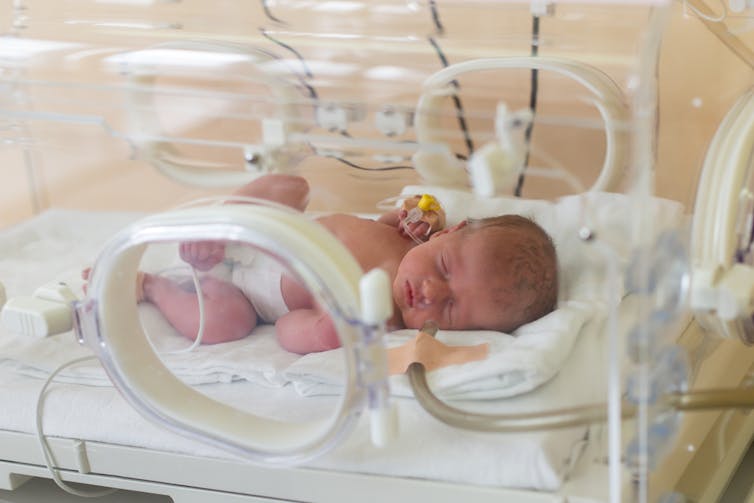
COVID during the first few months typically causes fever or decreased feeding, while babies with moderate to highly severe infections may have respiratory symptoms. But by seemingly lowering the chance of a baby becoming infected with the virus after birth, maternal vaccination appears to decrease the risk of any of this being encountered.
Plus, getting vaccinated also reduces the chance of mothers getting COVID while they’re pregnant, keeping their unborn baby safer. A coronavirus infection during pregnancy raises the risk of stillbirth, preeclampsia and preterm birth.
We know that giving COVID vaccines during pregnancy is safe for both mother and child. We now know that maternal vaccinations appear to provide immunity to infants that prevent severe disease. And we know that vaccination during pregnancy lowers the risk of COVID-related complications. So really, vaccinating during pregnancy is vital. The Royal College of Obstetricians and Gynaecologists urges pregnant women to have the full course of COVID vaccines, including the booster.

Catherine Thornton receives funding from the Medical Research Council, the Welsh government and the Natural Environment Research Council.
April Rees does not work for, consult, own shares in or receive funding from any company or organisation that would benefit from this article, and has disclosed no relevant affiliations beyond their academic appointment.
: The Conversation – Articles (UK)
Have you tried: Travelling to South Africa?