
 |
|
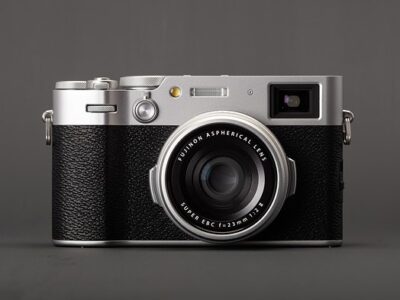
The combination of size and focusedness means a prime-lens compact isn’t necessarily the same as leaving a prime lens on an ILC. Photo: Richard Butler |
A camera with a built-in prime lens is an inherently limiting piece of equipment, but that’s not the same as saying they’re an inferior substitute for an interchangeable lens camera.
The past year or so has been something of a golden period for fixed, prime-lens cameras. From the latest, still hard-to-get iteration of the Fujifilm X100 to the gen-Z-focused X half. We’ve seen aspirational, high-end models from Leica, Sony and Fujifilm, along with the promised continuation of Ricoh’s much-loved GR series. Why are so many camera makers building machines that are so seemingly inflexible?
The announcement of the Sony RX1R III brings the question into particularly sharp focus, given how many components and capabilities it shares with the much less expensive, much more flexible a7CR. And yet, as I shoot with the prime-lens compact, I find the comparison makes less and less sense: they’re not really the same things.
Why would anyone choose a fixed lens camera?
There can be practical reasons for choosing a fixed, prime-lens compact over an ILC: size being the most obvious. As well as convenience, this can make them less intimidating when shooting in social situations.
The ability to have a lens that extends further back than even the short flange-back distances of modern mirrorless cameras lets a built-in lens be smaller than an interchangeable version. Note, for instance, that Fujifilm’s 23mm F2.8 pancake extends further from the camera body than the X100’s 23mm F2 lens does, despite being a stop slower.
 |
|
Prime-lens compacts are targeted at niche audiences, more willing to pay more for premium design and build. Price is rarely a reason to go for a prime-lens camera. Photo: Richard Butler |
This leads us to a second physical difference between most compacts and most ILCs: the use of leaf shutters. Leaf shutters, built into the lens, affect the whole sensor as they open and close, effectively giving a global shutter. This usually brings the ability to sync with flash at any shutter speed. For an ILC, focal plane shutters make more sense: they typically offer faster shutter speeds, and have the advantage that you don’t need to buy a new shutter mechanism with each lens, but with the downside of limiting the range over which you can use flash.
But there are creative considerations, too: knowing the single focal length that’s hanging over your shoulder can prompt you to see the world through that lens, as it were. Rather than being overwhelmed by the ability to shoot almost anything, I sometimes enjoy getting to develop a sense for the lens’s view, so that I can then try to see things I can fit into it. That’s something you don’t get with a zoom and is harder to maintain if you swap a prime on and off your camera.
“Knowing the single focal length that’s hanging over your shoulder can prompt you to see the world through that lens”
A fixed lens camera can also be designed in a more focused manner. Although it shares its menu structure with the a7CR, the RX1R III has fewer modes, fewer options and only the direct controls you need for its way of shooting. It’s like choosing a hand-made chef’s knife over a Swiss Army knife: it’s much less flexible but very well suited to one specific thing.
Finally, there’s something to be said for a camera that’s a self-contained purchase. Buying a fixed-lens camera isn’t a gateway into a new system. This can make them popular as second cameras, because you don’t find your loyalties (or finances) split between two lens families, but also has some appeal as an only camera. It can be easier to justify a higher initial outlay if you know that it doesn’t come with the temptation to keep upgrading and expanding a set of lenses.
Horses for courses
 |
|
Fixed prime cameras can make good second cameras, too: as an additional camera for wedding and events shooters, perhaps, but also as a way of perpetuating your ‘main camera’ experience on those occasions you don’t want to carry your main camera. Photo: Richard Butler |
If your photography requires specialist lenses, whether they’re macro, long tele or tilt-shifts, or simply a variety of lenses, the idea of being permanently wedded to a single focal length can seem incredibly restrictive. But, just because it’s not for you, doesn’t mean it doesn’t make sense for other people. As with so many other aspects of photography, it’s a question of personal taste.
Ultimately, a prime lens compact either makes sense to you or it doesn’t. But you don’t have to look hard to see the regard with which the Ricoh GR cameras or Fujifilm’s X100 series are held by their users. Leica isn’t selling Q3s to people who can’t afford its rangefinder models: they fulfill different requirements.
Even the most lens-laden ILC shooter should recognize that some people simply prefer the constraints of a prime lens. Just don’t expect any agreement over what the ‘right’ focal length for such a camera.

Our DPREVIEW Tribute:
After nearly 25 years of operation, DPReview closed on 10 April 2023. This difficult decision was part of the annual operating plan review that parent company, Amazon, shared earlier this year.
Over the course of 25 years, DP Review built up a reputation as being one of the most informative places to go for information about that new camera or lens you’re after. DP Review began as an independent reviews site based in the UK in 1998, the brainchild of Philip and Joanna Askey, but it was eventually purchased by Amazon in 2007 and relocated over to Seattle in the USA in 2010.
Cheers DPReview – thanks for the great work and content that guided photographers, videographers and techno junkies the world over!