
Ukraine has made a major move towards EU integration – by plugging into Europe’s electricity grid:
Ukraine and neighbouring Moldova have synchronised their power grids with continental Europe, meaning electricity could now in theory flow back and forth between the two countries and across a grid that stretches through the EU to the UK and may one day link to northern Africa.
This was a delicate and difficult task – the frequency of both electricity systems must be perfectly aligned in order to ensure there aren’t sudden surges or blackouts – that was hastened by the invasion. What would normally have taken a year, happened in weeks.
But more than just a technical integration of systems and capacity, electricity alignment is also a strategic political alignment not far from the level of joining the EU.

Indeed, Russia’s invasion has opened a discussion across Europe and beyond about how and where countries source their energy. For some, the answer is energy independence. In the UK, the likes of the Net Zero Scrutiny Group argue the country needs to re-open oil wells and restart fracking to reduce its reliance on energy supplies from abroad.
However, the politics of energy systems are not so simple. In the US, Texas has long been insulated from the energy disasters that affected other states because it runs its own electric grid, separate from the others. But in 2021, when three successive storms took out crucial infrastructure, 4.5 million homes and businesses were left without power and an estimated 700 people died. Since it wasn’t able to import electricity from unaffected states, Texas was unable to do anything other than wait for the storms to pass and rebuild.
Supply and demand must match up
While the issue of generating electricity is attracting a lot of attention as energy prices shoot through the roof, there is a risk that the politicisation of energy obscures the practical issues involved in electricity supply and generation. There are two key problems here.
First, what do you do when electricity demand exceeds electricity supply? This happens when, for instance, the nation collectively decides to make a cup of tea at the same time after a major sporting event – the so-called “TV pick-up effect”. After England played Germany in Euro 2020, National Grid saw UK electricity demand spike by 1.6 gigawatts (enough to power around 320 million light bulbs and 888,000 kettles).
Second, what do you do when you have generated more electricity than consumers want to use? Many generators, such as large fossil fuel-based power stations, cannot be turned on and off quickly. They continue producing electricity even if no one wants to use it. Yet, demand can reduce suddenly by up to 20%, meaning an electric grid has to do something with the extra electricity.
There have been some attempts to solve these problems, either through regulation such as requiring low-energy appliances or through market-based measures such as dynamic pricing and the Economy 7 service, which offers discounted rates for electricity over night, but these efforts have struggled.
But the answer to both questions is to build connections with other electricity systems. This is a practical necessity that means, no matter who supplies the electricity, a country cannot really cut itself off as some might want. The real question is who it connects with.
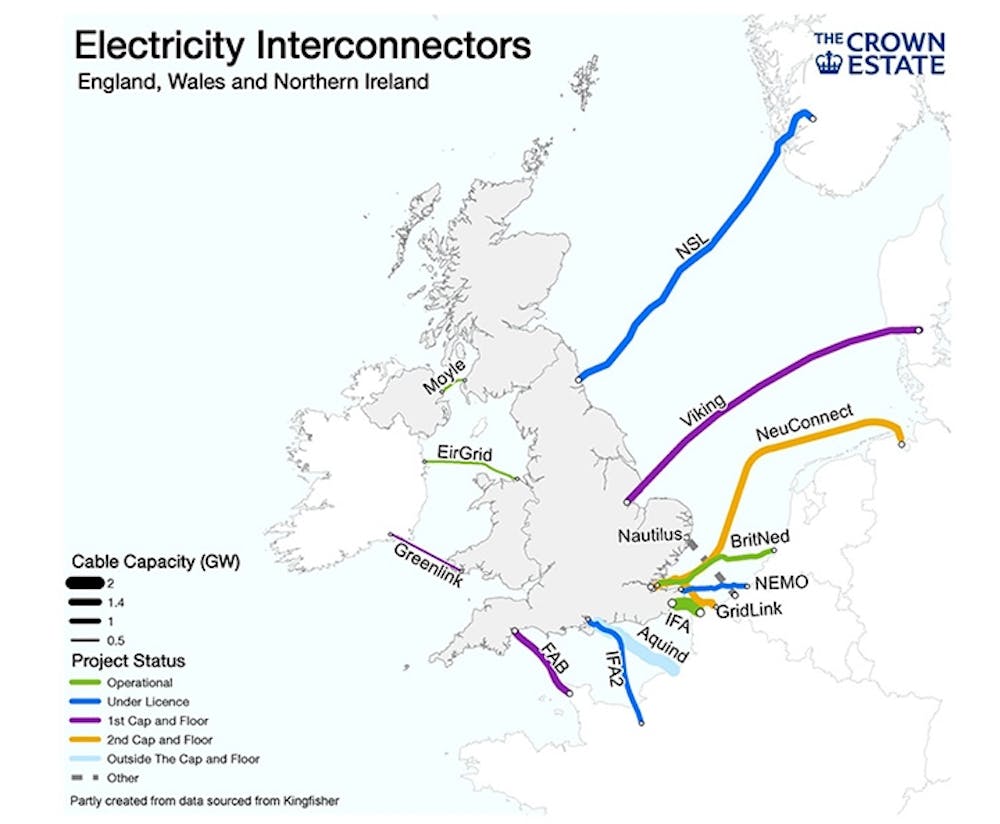
The UK for instance, despite talk of energy independence, has constructed numerous underwater “interconnector” cables that link the national grid to others such as Norway, France and the Netherlands. More of these cables are planned including ElecLink, a privately funded connection between the UK and France.
These connectors mean that when the UK isn’t generating enough power, especially when the wind isn’t blowing, it can import electricity from overseas. In 2020, 9% of the UK’s electricity came through its interconnectors. Likewise, when the UK generates too much power, it can be traded abroad.
At a time when much of Ukraine’s infrastructure is literally under attack, it is hard to compare the UK and Ukraine’s decision to link into European energy grids. Yet both countries’ decisions are ultimately based on a recognition that energy independence involves difficult choices about who to work with. History, ideology, technology, economics and, ultimately, realpolitik come into play.
The war in Ukraine is of course far more destructive and hard to forecast than even the UK’s worst winter storm or most sudden demand surge. But the principle behind grid connections is the same. Connecting Ukraine’s electricity grid to Europe offers both a mechanism for sustaining the energy supply across the region and a new form of aid to an embattled neighbour.
It might not guarantee energy security as critical infrastructure can still be attacked and the lights may still go off in Ukrainian cities. But it is evidence of political solidarity and a strengthening of ties between Ukraine and the EU.
Outside of Ukraine, the move shows us that electricity cannot be separated from politics. Energy policy needs to move beyond easy answers and false promises.

Robert Cluley receives funding from the EPSRC.
Hafez Abdo does not work for, consult, own shares in or receive funding from any company or organisation that would benefit from this article, and has disclosed no relevant affiliations beyond their academic appointment.
: The Conversation – Articles (UK)
Have you tried: Travelling to South Africa?