
Tooth decay in children – is it time to put the needle and drill away?:

Nearly half of all British adults and just over one in five Australian adults fear the dentist. Research shows that having dental treatment as a child is a common reason for this fear in adulthood. This is not surprising given that most children’s experience of the dentist involves injections followed by drilling. And who can forget the sound of a dentist’s drill?
By taking advantage of recent advances in our understanding of tooth decay, we have investigated and developed new treatments that don’t need injections or drilling. One of these is called the Hall technique. It involves placing a small stainless steel crown over affected baby teeth to seal in the decay.
Doing so seals in the bacteria that are causing the tooth to decay and stops them getting oxygen and sugar – which these bacteria need to survive. Once the crown is in place, the bacteria can no longer make acid – which dissolves tooth enamel and causes cavities – so the disease stops.
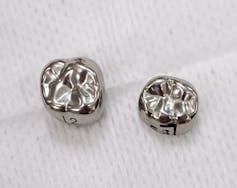
Our trials comparing sealing decay under these small metal caps with traditional tooth fillings show that the Hall technique has higher success rates, with 93% to 98% of children avoiding toothache or infection for two to five years. And children either prefer it or find it as easy to cope with as traditional drilling and filling, regardless of whether the treatment was provided in a dental clinic or a classroom, and regardless of whether the procedure was performed by a specialist dentist, general dentists or dental student.
A study from the US found that the Hall technique was as effective as using specialist crowns that involved injections, drilling and removing decay. Also, studies in Germany, the UK and Sudan found it to be cheaper than traditional drilling and filling.
But what happens over time?
It’s all very well treating a single tooth, but we wanted to know what happens when you treat a child’s teeth over a long period. To do so, we compared three ways of managing decay in baby teeth in 1,058 children, aged three to seven, who already had tooth decay, and followed them up for three years.
The first way was the traditional approach: numbing the tooth with injections, removing dental decay with drills and putting a filling in the cavity. This was accompanied with preventative treatment, the dentist or dental therapist delivering toothbrushing and diet advice as well as applying high-fluoride varnish. The second way was using the Hall technique or placing a filling over decay without injections. This, too, was accompanied by preventative treatments. The third way was preventative treatment alone.
Read more: Saving children’s teeth in Sudan – without anaesthetic or drills
After three years, there was no evidence of a difference between the groups for pain, infection, quality of life or dental anxiety. All methods were acceptable to children, parents and dental professionals. However, when considering the slightly higher number of episodes of dental pain and infection in the prevention-alone group, and the overall cost of subsequent treatment, the sealing in with prevention strategy was the most cost-effective treatment.
A highly significant factor in the acceptability of all three types of treatments was the trust that children and parents had in their dentist. Having the same dentist throughout was also important.
Children and parents had positive experiences and reduced dental anxiety when their dentist listened, explained procedures and was gentle, caring and patient.

Highly prevalent disease
In 2015, untreated childhood tooth decay was the tenth most common health condition in the world, affecting 9% of children (573 million). In adult teeth, it was the most common, affecting 35% of the global population – almost 2.4 billion people.
Tooth decay is also a significant financial burden for healthcare services. Although it’s difficult to get a cost for dental decay treatment alone, of the US$ 7.7 trillion global health expenditure in 2015, almost 5% (US$ 357 billion) was for dental diseases (including gum disease and other oral diseases). Yet the lack of treatment globally from the cost of untreated tooth decay is huge, with productivity losses in 2015 amounting to US$ 22.5 billion.
Read more: Fear of the dentist: what is dental phobia and dental anxiety?
We found that over 40% of children with tooth decay, even when seen and treated by dentists, experienced pain or infection, or both. We also know that children who develop tooth decay before they start school are more likely than their peers to suffer tooth decay and its consequences in later life.
Preventing tooth decay in children and its consequences (toothache and abscesses) will reduce it having a negative effect on children’s health, wellbeing and attainment. So it’s crucial that the moment a child’s first baby tooth appears, they are taken to see their dentist regularly and that good toothbrushing habits and healthy diets are adopted and encouraged at home.

Nicola Innes received funding from the Chief Scientist's Office in Scotland and 3M/ ESPE which supported work on the Hall Technique and currently received funding from the National Institute for Health Research in the UK which funded the FiCTION dental trial reported here. None of these organisations had any role in the design or conduct of the trials nor the interpretation of the results, writing of research reports or other publications.
Mark Robertson does not work for, consult, own shares in or receive funding from any company or organisation that would benefit from this article, and has disclosed no relevant affiliations beyond their academic appointment.
: The Conversation – Articles (UK)
Have you tried: Visiting Port Elizabeth?