
Tiny swimming creatures can create big currents in lake water – new research:
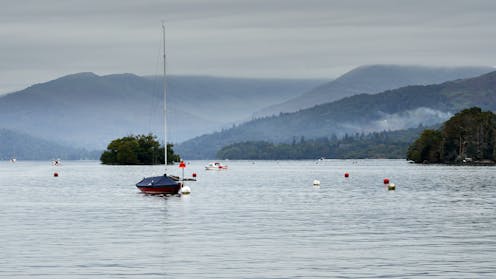
Lakes are usually pictured as tranquil environments, largely uninfluenced by the enormous tidal power which drives the oceans. But the surface winds that act upon lakes can significantly alter the environment in which many lake species thrive – particularly during summer.
Our recent research suggests another factor might play a significant role in mixing up a lake’s water: the movement of the animals that live in it, including microscopic zooplankton. This sheds light on how even the tiniest of organisms can contribute to the physical processes that make lake and ocean environments so extraordinary.
We already knew winds could induce water movement that extends throughout the full depth of a lake, commonly referred to as the “water column”. Mixing between surface and deep waters is essential for maintaining a healthy lake ecosystem.
This mixing drives the exchange of oxygen from the lake surface to the bottom layer, reducing production of the potent greenhouse gas methane in the sediment on the floor of the lake. Mixing can also allow nutrients, which are essential for species like phytoplankton living near the lake’s surface, to be transported upwards.
Yet in the most tranquil waters of a lake – near the bed – scientists have for a while suspected that animal life may contribute to lake mixing. By moving their fins, antennae or legs, swimming organisms can generate a variety of movements which combine to form eddies – dynamic circular currents of water – in a process known as “biogenic mixing”. Although studies of ocean environments have suggested how this might happen, mainly through lab experiments or using numerical simulations, evidence of this process in lakes is limited.

Our study of Windermere, a large lake in Cumbria’s Lake District National Park, found evidence of significant and persistent biogenic mixing in lakes. This suggests that previous studies may have missed a critical mixing process in lake ecosystems, with implications for our understanding of how they respond to environmental change.
Biogenic mixing
To study this phenomenon, we used acoustic Doppler profilers. These instruments send out sound waves which are reflected back by suspended particles, such as zooplankton, in the water column.
The wavelength of the returning sound differs from that of the outgoing signal, which allows us to measure the velocity of the water. Once we know the velocity at different positions in the water column, we can estimate the amount of mixing that takes place.
Our Doppler profilers, which were recording both water current velocities and the movement made by organisms swimming through the water column, indicated that mixing produced by swimming organisms is strongest near the bottom of the lake.
The mixing we observed occurred in a regular 24-hour period, which was quietest close to midnight. This suggested that high concentrations of organisms were moving vertically from deep water up towards the lake surface during the hours of darkness, before returning to deeper water before dawn where they stayed during daylight hours. This is known as “Diel vertical migration”, and is a characteristic behaviour of zooplankton.
We also detected a smaller mixing process taking place at the thermocline. This is a region within lakes and oceans where warmer surface waters and cooler bottom waters are separated during summer. As the sun heats the lake surface, cooler waters (which are denser) sink to the depths of the lake, resulting in a layered water column of varying temperatures.
The thermocline is somewhat of a haven for aquatic organisms, allowing them access to both the warm well-oxygenated water above and the cool nutrient-rich water below, while also providing a potential escape from predators often present in well-lit surface layers.
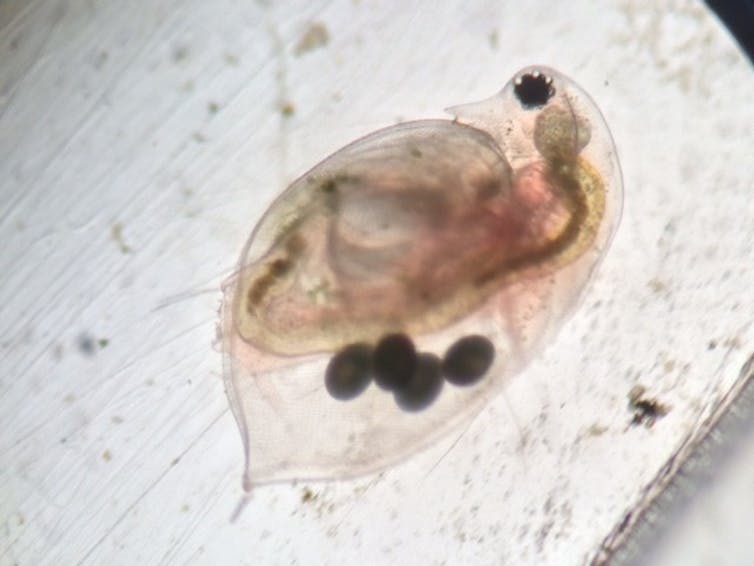
Our data indicated that the peak in mixing at the thermocline – around midnight – was the opposite of the peak observed near the lake bed. That’s because this region is where many of the upward swimming organisms come from the deeper regions to feed at night.
The implications of these findings are yet to be explored in detail. But it looks like understanding mixing processes could help us prevent algal blooms like those currently threatening Lake Windermere from developing, as these can be driven by weak mixing during summer that leaves sewage trapped in layers of the lake.

Iestyn Woolway receives funding from the Natural Environment Research Council.
John Harold Simpson received research funding from the Natural Environment Council from 1970-2015.
Martin Austin receives funding from Engineering and Physical Sciences Research Council.
: The Conversation – Articles (UK)
Have you tried: Visiting Port Elizabeth?