
Three pillars to strengthening health systems in African countries:
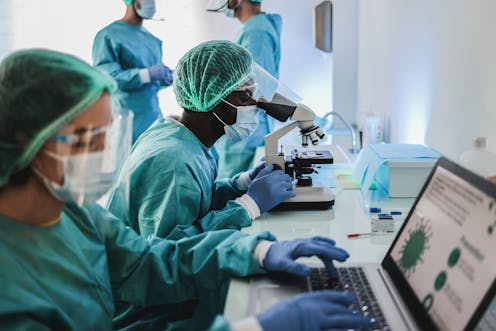
Africa needs, and is ready for, nothing short of a new public health order, with systems better able to prepare for and respond to the next health threat. Having engaged in outbreak response, research, and capacity development in Africa for decades, it is all too clear to us how weak health systems provide fertile ground for the growth and spread of dangerous pathogens.
But also growing during this time is a promising cadre of smart and skilled African health experts.
Now a new health order is required to provide the networking and infrastructure for them to apply their talents for maximum impact.
To attain a new health order, African governments need to bolster investment in research and development, innovation and manufacturing of health tools. This would underpin a strong pharmaceutical industry, which, in our view, is fundamental to creating resilient health systems.
The COVID-19 pandemic has laid bare many of Africa’s challenges in accessing health care. Despite the best intentions, Africa lags far behind the world in COVID-19 testing, vaccination, and therapeutics. The testing rate across Africa is over 40 times lower than in Europe. Less than 10% of the continent’s 1.2 billion people are vaccinated, compared with at least 50% of the rest of the world.
This situation has brought home to African countries the need to take matters into their own hands by developing local manufacturing capacity for diagnostics, vaccines, and therapeutics to guide them through the COVID-19 pandemic and beyond. And governments need to work more closely with scientists.
Manufacturing capacity
There is a critical need to increase Africa’s capacity to produce vaccines.
There are pharmaceutical companies in 40 of Africa’s 54 countries. But there are only six production facilities set up or in the pipeline.
According to the World Health Organisation (WHO) only five African countries have full vaccine manufacturing capabilities, all with modest production. For the rest, their contribution is largely limited to “fill and finish” work – formulating active pharmaceutical ingredients and filling and packaging vials.
Virtually all countries producing vaccines depend on external funding to enhance their capacity. South Africa, for example, through the African Union (AU), received funding from the US International Development Finance Corporation, and its European partners, to boost its manufacturing capacity.
In 2021 the AU and Africa Centres for Disease Control and Prevention announced the launch of the Partnerships for African Vaccine Manufacturing. The aim is to use pan-African and global partnerships to scale-up vaccine manufacturing in Africa. The plan is that 60% of African routine immunisation needs will be met on the continent by 2040.
Partnership between government and scientists
Governments must work more closely with scientists who have better knowledge and understanding of highly infectious diseases and viruses; and can provide sound advice to guide policy action.
In addition, governments must reduce barriers to health innovation and actively support African researchers and centres involved in the sciences.
One way of ensuring this happens is putting greater energy and resources into public health institutions. An example of such an institution is the Brazilian Oswaldo Cruz Institute. It was established in 1900 as an immediate response to address Brazil’s greatest health threats at the time. These included the bubonic plague, yellow fever, and smallpox.
These diseases were decimating the population, hindering the economic and social development of the country. The situation was similar to the threat posed by COVID-19 today.
The institution has a remarkably broad range of public health responsibilities. These include:
-
hospital and ambulatory care health-related research
-
production of vaccines, drugs, reagents, and diagnostic kits
-
training health workers and
-
providing information and communications related to health, science, and technology.
The institute offers valuable lessons on how national public health institutions can be strengthened on the African continent.
Toward short- and long-term solutions
There is unprecedented momentum to strengthen the public health response in Africa. This includes prioritising vaccine manufacturing, which can further serve as the foundation for the manufacturing of diagnostics and therapeutics.
Prioritising sustainable investments in line with WHO’s Health System Pillars offers the potential to reorganise health systems in a way that maximises impact across the entire health landscape in support of addressing COVID-19 and other health issues.
There is no better time than now for Africa to implement a new public health order with strengthened national public health institutions and the Africa Centres for Disease Control and Prevention (Africa CDC) to fight infectious diseases and continue to build towards achieving Agenda 2063.
This article is part of a media partnership between the Africa Centres for Disease Control and The Conversation Africa for the first Conference on Public Health in Africa.

The authors do not work for, consult, own shares in or receive funding from any company or organization that would benefit from this article, and have disclosed no relevant affiliations beyond their academic appointment.
: The Conversation – Articles (AFRICA)
Have you tried: Diving with Sharks?