
 |
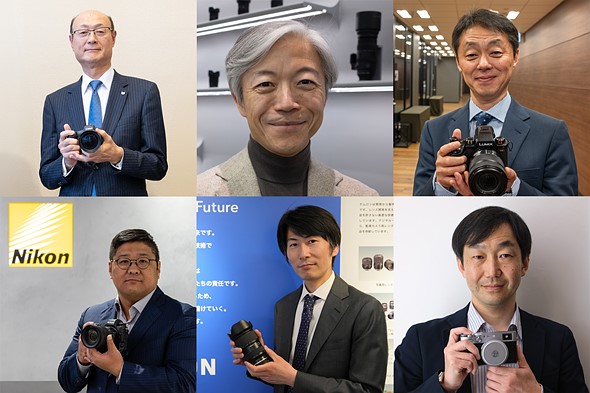
Earlier this year, DPReview editors journeyed to Yokohama, Japan, to attend the CP+ camera expo, the industry’s own trade show. CP+ is not only a showcase for the latest photography gear but also a rare opportunity to engage with industry executives and thought leaders.
Recent Videos
As in previous years, we thought it would be beneficial to share insights from our discussions with senior executives from nearly every major camera and lens manufacturer. Here are some of the key trends and themes that emerged from both formal and informal conversations with industry leaders.
The camera market: stability with caution
The consensus is that the camera market continues to stabilize after years of contraction. Most companies expect sales to remain stable, with potential for some growth in the coming years.
However, caution is still in the air. Sigma CEO Kazuto Yamaki observed, “For the time being, many photographers are now switching from DSLR to mirrorless, which will sustain the market. However, after they switch to mirrorless cameras, I worry that the market could shrink in the coming years.”
 |
|
Most camera companies see the ‘creator’ market as a growth opportunity and are making products targeting these users, like the Sony ZV-E1 pictured above. Photo: Richard Butler |
Video remains a significant growth driver, with demand increasing even among still photographers, and manufacturers see video as essential for attracting and retaining customers. The coveted ‘creator’ market, comprised of (mostly) younger users who have yet to establish brand loyalties, is also seen as a crucial demographic for growth.
The ascendancy of AI
When camera companies discuss AI, they’re typically referring to AI derived from machine learning. This technology has been enhancing cameras for several years, particularly in the form of subject identification and tracking. These capabilities will continue to gain speed and accuracy, but manufacturers are exploring other ways to refine camera functionality through AI, such as training cameras to understand scene context to predict and prioritize subjects.
We’ve already witnessed examples of these next steps. Nikon’s Auto Capture automatically captures photos or videos based on criteria like subject, distance or motion. Canon’s sports-specific Action Priority AF modes attempt to predict the most important subject in the frame based on the type of action in the scene.
 |
|
AI in cameras is most frequently associated with subject recognition, but manufacturers are finding other uses. Case in point: Tamron is using AI technology to improve image stabilization in lenses. Image: Tamron |
Additionally, some manufacturers suggested they plan to use AI to refine image processing algorithms, resulting in more precise and realistic rendering of photos, and to support more efficient post-processing workflows.
We also learned that Tamron is using AI to improve image stabilization by analyzing camera movement during video shooting and using this data to predict camera shake better. Some camera manufacturers also indicated an interest in using AI to enhance lens performance and functionality.
“Tamron is using AI to improve image stabilization”
Notably, no manufacturers have hinted that they want to incorporate technologies like generative AI, content removal tools, or anything of the sort into their cameras. On the contrary, several indicated that they see this as a differentiating factor between cameras and smartphones, with dedicated cameras allowing users to retain complete control over the creative process.
Enhanced support for video workflows
Consumer expectations for video quality have surged, influenced by the high-quality content they see around them. Yusuke Adachi of Nikon’s Imaging Business Unit noted, “Customers have become very discerning thanks to video streaming platforms such as Netflix or Amazon Prime, where they see beautiful content and want to live up to that high level of expectation.” In response, manufacturers have raced to boost video specifications in recent years, with nearly all enthusiast or professional cameras now capable of capturing high-quality video.
Manufacturers are now more aggressively working to provide video-specific tools and workflows to address the needs of video shooters. Features like video waveforms and dedicated video menus are becoming more common, and connectivity options like Frame.io, which allows real-time upload to the cloud and multi-user collaboration, are finding their way into more cameras. Companies also told us that video requirements are increasingly influencing lens design.
 |
|
Video-specific functions like waveform monitors used to be niche tools on mirrorless cameras but are becoming more common as more camera manufacturers work to address the needs of video users. Photo: Dale Baskin |
This focus on video also benefits photographers. “Video has had a significant impact on still image functions like high-speed capture and high frame rates, so video functions can be leveraged for imaging solutions,” Mr. Adachi from Nikon explained.
Finally, if you require any other evidence that camera companies are investing in video, see Nikon’s acquisition of RED Digital Cinema.
Integration with smartphones
The days when camera companies viewed mobile devices as competition are over. Now, they seek synergy.
The industry recognizes the need to improve smartphone integration with cameras. Mr. Adachi of Nikon observed, “One of the pain points for customers is the workflow of sharing a photo they take with a camera and loading it onto their social media accounts. There are multiple steps that a customer needs to go through: taking a photo, sending it to the smartphone, and then handing it off to a social media account are too many steps for them. That’s the area where we can actually make an improvement and where we should make an improvement.”
 |
| Panasonic’s Lumix Lab app allows you to create custom LUTs and embed them directly into your camera’s menus. |
There’s now a renewed focus on streamlining data flow between cameras and smartphones and enhancing mobile device integration. Panasonic’s Lumix Lab app is illustrative of this, offering a relatively seamless solution for transferring content between camera and smartphone while also enabling users to manage camera functions – specifically, adding custom LUTs directly to camera menus – via the app. We’ll likely see more examples of such integration in the future.
Executives highlighted that improved integration is critical to persuading more people to use dedicated cameras. Toshiyuki Tsumura, Director of Panasonic’s Imaging Business Unit, told us, “We recognize that camera smartphone apps are becoming one of the most important workflows, especially for young creators. Smartphones are excellent when it comes to the workflow of taking pictures and sharing them immediately, but cameras are superior when it comes to the quality of the work.”

Our DPREVIEW Tribute:
After nearly 25 years of operation, DPReview closed on 10 April 2023. This difficult decision was part of the annual operating plan review that parent company, Amazon, shared earlier this year.
Over the course of 25 years, DP Review built up a reputation as being one of the most informative places to go for information about that new camera or lens you’re after. DP Review began as an independent reviews site based in the UK in 1998, the brainchild of Philip and Joanna Askey, but it was eventually purchased by Amazon in 2007 and relocated over to Seattle in the USA in 2010.
Cheers DPReview – thanks for the great work and content that guided photographers, videographers and techno junkies the world over!