

More than one in five private renters in the UK live in a house that does not meet the government’s standards for decent homes. This means that around a million private renters in England are living in homes which contain dangerous hazards, are not in a reasonable state of repair, or lack suitable heating.
But recently the government’s Department for Levelling Up, Housing and Communities (DLUHC) said that it will seek to make its standards legally binding for all rented houses in England as part of its “Levelling Up” agenda.
The COVID pandemic has shown that having a good quality home is vital to our health. Poor housing conditions and overcrowding have been linked to higher death rates from COVID-19. For many renters, existing poor housing conditions got worse during lockdown, because some renters have been scared of reporting repair issues out of fear over the potential loss of their home or rent increases.
The decent home standard is currently under review by the DLUHC and will be announced later this year. To be classed as “decent”, a home currently has to meet four criteria.
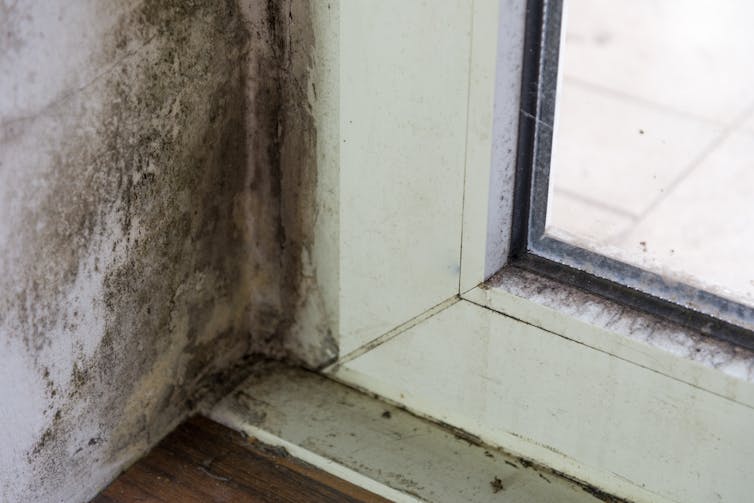
The house must meet the minimum standards, which means that the property can’t have a serious “Category 1” hazard under the Housing Health and Safety Rating System (HHSRS). There are 29 hazards under the HHSRS, including damp and mould growth, excess cold, pests, and electrical issues. Landlords already can face action from councils if there is a “Category 1” hazard – in other words, where the issue is a serious and immediate risk to a person’s health and safety.
The house must be in a reasonable state of repair. A property is currently classed as not decent if building components are old and need replacing or repairing.
The house must have reasonably modern facilities and services. For example, the bathroom must be less than 30 years old or less and appropriately located.
Finally, the house must provide a “reasonable degree” of thermal comfort. This means that the property should have both effective insulation and efficient heating.
But there are already more than 200 laws and regulations that affect landlords. A key problem has been the enforcement of existing laws. Research has demonstrated a “postcode lottery” of enforcement activity where levels of enforcement vary widely across council areas. It also found that many councils were not using new powers they had been given.
Further research has shown the differing approaches across local councils, some of which take a hard line to poor standards while others pursue a light-touch approach.
For these new standards to be a success there must be consistent investment into enforcement. Since 2009, local councils been forced to deal with funding cuts of up to 40%, and will need more resources if these standards are to be effectively policed. Landlord groups have already questioned the introduction of new minimum standards to privately rented properties, but the DLUHC must forge ahead to ensure that renters, whether in the social or private sector, have access to a decent home.
The target of a 50% reduction in “non-decent” homes by 2030 set by the department as part of their Levelling Up plan is a good start towards improving housing for many renters. But the DLUHC must go even further.
Unless the Section 21 “no-fault” eviction process is scrapped, renters will still be vulnerable to evictions based on no good reasons. Quite common examples of this are “revenge evictions”, where renters can be kicked out of their home if they make a complaint about their landlord.
These no-fault evictions cause significant insecurity for renters. Due to the prospect of being served a section 21 eviction, many of them feel unable to settle in the property and to put down roots in their communities. This insecurity, along with the actual eviction process, has harmful effects on mental health and wellbeing.
The DLUHC announced it would end no-fault evictions nearly three years ago, and yet renters are still waiting for this pledge to be honoured. The DLUHC has reconfirmed its intention to end this “unfair situation where renters can be kicked out of their homes for no reason”, and has promised to release a white paper on this issue this year.
The government has also committed to exploring the establishment of mandatory landlords registers. This could help with enforcement, as local authorities will have better data on who landlords are.
The DLUHC’s plans for reform show a clearer vision for the private rented sector -– they want a better managed and higher quality sector. However, there needs to be a lot more detail before we can say for certain whether these targets will be successful.

Tom Simcock receives funding from the Joseph Rowntree Foundation in partnership with the Scottish Government to understand the experiences of low-income renters in Scotland. Tom is the Secretary and on the Executive Committee of the Housing Studies Association. Tom is Chair of Renting Evidence, a knowledge-exchange initiative to bring together researchers and policymakers to share knowledge on renting.
: The Conversation – Articles (UK)
Have you tried: Diving with Sharks?