
The art of balding: a brief history of hairless men:
Balding is really common, affecting more than 50% of men. It’s also physically inconsequential (bald men live just as long as haired men). So why, in his memoir Spare, does Prince Harry refer to his brother’s baldness as “alarming”?
As a social psychologist with a special interest in balding (and author of an upcoming book entitled Branding Baldness), I know this didn’t used to be the case – as the presence of balding men in art history demonstrates.
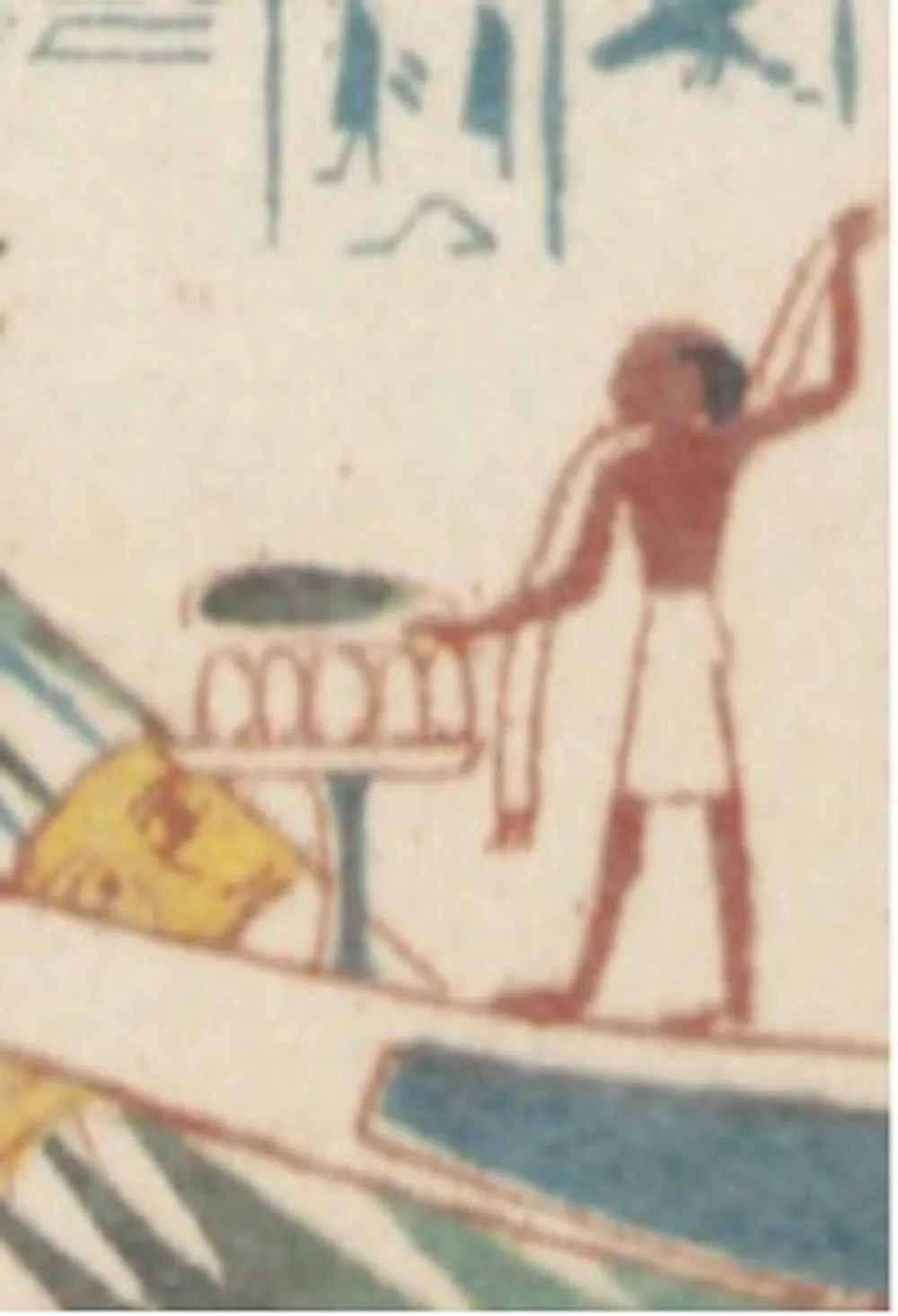
Historically, baldness was treated with neutrality, as a regular part of daily life. In 2019, Egyptology professor Samar Kamal found evidence of 122 bald men painted in private Ancient Egyptian tombs, circa 2613 to 525 BC.
Most of these men were visibly aged (their remaining hair was white). They were depicted in varied spheres of Egyptian society, from farming and fishing to sculpting and scribing.
The art suggests that the Ancient Egyptians didn’t treat bald men any differently from their haired peers.
Kamal also observed that the Ancient Egyptians had specific terms for male baldness, included a “baldness line” during mummification, and had different balding hairstyles (e.g. short all over or long at the back).
Balding men in European paintings
European art also showcases baldness’s historical ordinariness. Vincent van Gogh’s painting On The Threshold Of Eternity (1890) features the balding Dutch pensioner Adrianus Zuyderland.
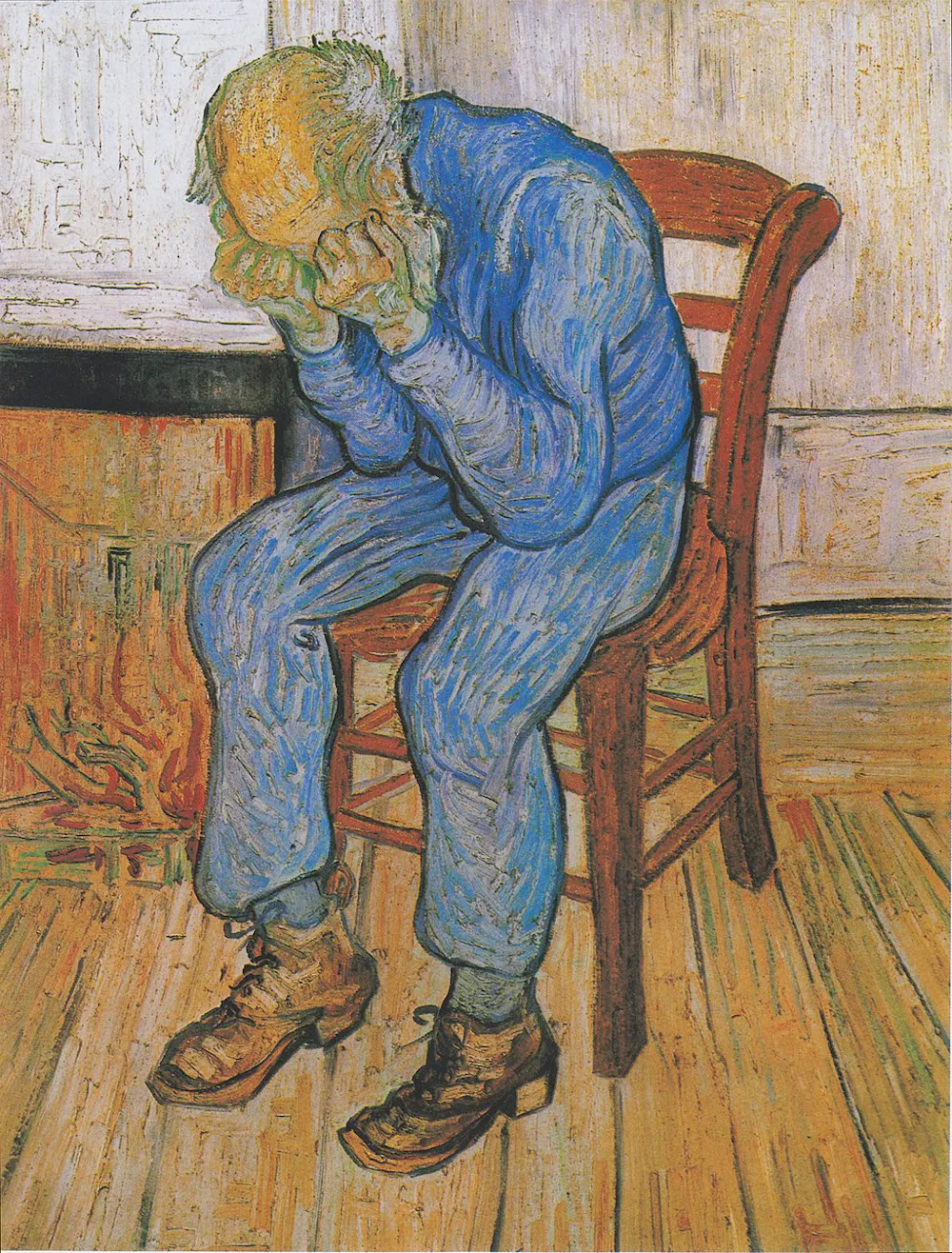
While the painting evokes a sense of existential despair, Zuyderland’s baldness is an incidental – even attractive – feature of the artwork. Van Gogh described the painting in his letters, writing: “What a fine sight an old working man makes, in his patched bombazine suit with his bald head.”
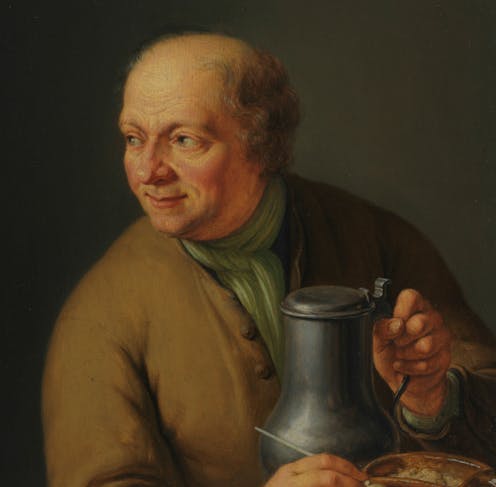
Zuyderland is not an exception – there are many other bald men featured neutrally in historical art. For example, Dutch Golden Age painter Frans van Mieris the Younger’s Man With A Tankard (1793) depicts a bald man contentedly enjoying a pub lunch.
Balding men have also historically been idealised in art. For example, Italian Renaissance painter Paolo Veronese’s 16th-century The Eternal Father features a balding God performing an ethereal miracle.
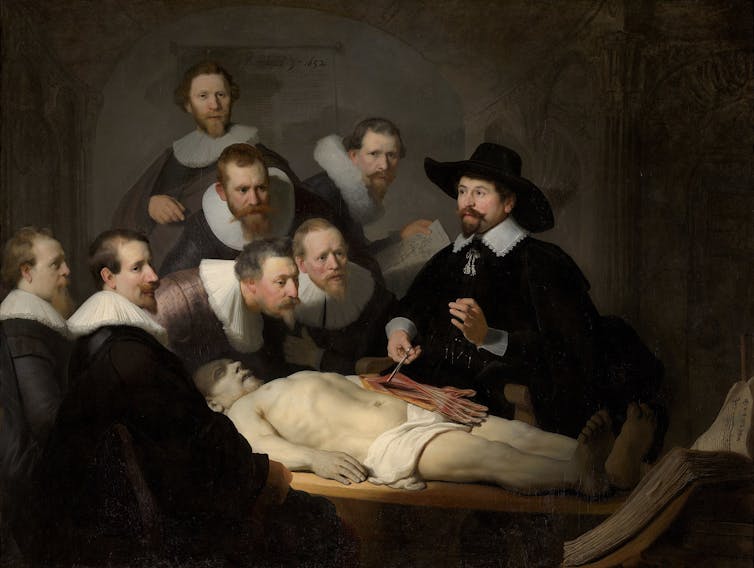
Rembrandt’s Anatomy Lesson of Dr Nicolaes Tulp (circa 1632) shows multiple balding doctors studying dissection. Impressionist Pierre-August Renoir’s Portrait of Ambroise Vollard (1908) depicts the eponymous balding art collector.
And there is plenty of other historical evidence to challenge the claim that baldness is “alarming”.
Balding religious figures exist across almost every faith. There’s Buddha, the Christian saints Jerome and Augustine, and then there are bald deities including the Japanese gods Fukurokuju and Hotei.
Religious and political directives have also promoted baldness. This ranges from Christian monks’ tonsure, where hair was grown around a centrally shaved part of the scalp, to the Manchu “queue” haircuts, where hair at the back of the head was grown into a long plait while the rest of the head was shaved.
How baldness became ‘alarming’: advertising and mass media
The mass marketing of anti-baldness products in the 20th century changed how baldness was seen. It transformed the perception of baldness from a benign aesthetic to a disadvantageous disease in need of “cure”.
Such “cures” ranged from expensive and ineffective “snake oil” products to the regulatory approved formulations that have some (though limited) hair regrowth properties, such as minoxidil.
The advertising of these products fostered the idea that baldness is alarming. In 2013, sociolinguistics professor Kevin Harvey observed that online anti-baldness adverts characterise haired men as attractive, successful and happy.
In contrast, the same adverts promoted the claim that baldness was a disease that severely distressed and disadvantaged men. Adverts for anti-baldness shampoo Renaxil, for example, depicted hair follicles on the verge of suicide. Renaxil bottles are shown extending a hand to save them.
In contemporary mass media, baldness is rarely seen beyond the few actors (such as Jason Statham, Vin Diesel and Bruce Willis) who have made lack of hair their unique selling point. Research conducted in 2006 found that just 3% of 1,356 characters in US popular children’s TV shows were balding.
In a study I led of 5,000 images of men in popular magazines published between 2011 and 2012, we found that just 8% were balding.
There are also negative stereotypes in many contemporary depictions of baldness. The website TV Tropes indicates that bald TV and film characters tend to be villains or aged. Another study found that more than 60% of 1980s TV actors portrayed bald characters who were “ugly”, incompetent or lazy.
Alarm around baldness is even promoted in academic research. Myself and Dr Hannah Frith recently found that about 80% of baldness psychology studies had links to businesses. The studies tended to depict baldness as a disease (77%), and promoted anti-baldness products (60%) without meaningful discussion of their limitations (68%).
Baldness representation matters. Modern depictions in TV, advertising and research sanction the claims that hair loss is a disadvantage and a disease. But a look at the art history of the balding man shows this hasn’t always been the case. Bald men can be healthy, successful and content – just as much as their haired counterparts.

Glen Jankowski ne travaille pas, ne conseille pas, ne possède pas de parts, ne reçoit pas de fonds d'une organisation qui pourrait tirer profit de cet article, et n'a déclaré aucune autre affiliation que son organisme de recherche.
: The Conversation – Articles (UK)
Have you tried: Visiting Port Elizabeth?