
Ten priorities for getting agriculture moving in Zimbabwe:
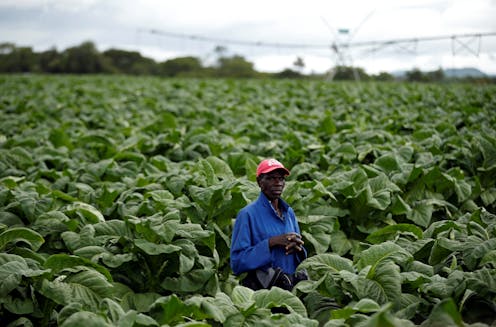
Agriculture is taking centre stage in plans for the revival of Zimbabwe’s ailing economy under the new leadership of Emmerson Mnangagwa.
Getting agriculture moving in Zimbabwe is a big task. The radical land reform of 2000 has left many outstanding challenges; not least the importance of compensating former farm owners. But the biggest challenge is that, with new ownership patterns, the agricultural sector has a much more diffuse base. Today there are many small to medium sized farms, rather than a few major players.
This has implications for what Mnangagwa does next. What are the top priorities for agriculture, and what can be learnt from the challenges faced since the land reform?
The research
Research we’ve done over the past 18 years provides some useful pointers. We have been tracking what has happened to land reform farms across Zimbabwe, with sites in Masvingo (in the dry south-east), in Mvurwi (north of Harare) and in Matobo (in Matabeleland). We have been looking at both smallholder production (in so-called A1 areas) and medium-scale commercial farms (so-called A2 allocations), as well as outgrower arrangements in lowveld sugar estates.
The results have been surprising. Despite the woeful lack of support, the smallholders have done reasonably well. Most are producing surpluses and reinvesting in their farms. Around two thirds have produced more food than just for subsistence in nearly all years that we’ve conducted the research. In Mvurwi, tobacco dominates, and the smallholder-led tobacco boom has brought significant investment, both on and off-farm.
For their part larger landholdings have struggled. Lack of finance capital for many has meant they have not got off the ground and some have significant areas of under-utilised land, with infrastructure in disrepair.
The exceptions are those operating under contract arrangements with estates. These farmers have done relatively well because they’ve been supported and finance has been guaranteed. New contracting and joint venture arrangements are emerging in some areas, but much more needs to be done.
Ten priorities for agricultural development
Drawing on this experience, below I suggest ten priorities for getting agriculture moving once the first tasks of paying compensation, undertaking a land audit and establishing an efficient land administration system are complete.
Land tenure
Land tenure security should be assured through issuing 99-year leases for larger land reform farms and permits for smaller farms. This should be complemented by clear regulations to avoid land concentration and to facilitate women’s access to land. This can be achieved through a multiform tenure system based on trusted, secure property relations.
Finance
Getting private bank finance flowing is essential. Bankable leases will help, as will the acceptance of a range of forms of collateral by finance institutions. State assurances and the building of trust will be key.
Partnerships
Partnerships and joint ventures will be significant for some larger farms and certain crops, where external finance and expertise are essential. Already Chinese involvement in tobacco production is proving to be important. Opening opportunities for the return of highly skilled former white farmers will be significant too. Regulations to ensure such partnerships are truly joint and involve the transfer of skills are vital.
Government loans
Government loans for agriculture are currently offered through the “command agriculture” programme. Focusing on larger farms with irrigation infrastructure, it has shown some success in the past season. But such programmes should not be abused for political ends. And it’s essential that loans are fully repaid.
Access to markets
Linking diverse producers to markets is essential. Too often smallholders get poor value for their products, but ensuring local content purchasing by supermarkets, reduced red tape and support for investment in transport infrastructure will help. Already the reduction in market transaction costs through the removal of many police roadblocks has had a massive, positive impact, as fewer bribes have to be paid.
Value addition
The country must work on developing value-added activity around the agricultural sector. Local processing and packaging would ensure employment along the value chain. And preservation, processing and selling to niche markets could offset risks, such as a glut in horticultural products.
Smart support systems
Extension advice and market support through IT applications is increasingly feasible, given growing connectivity and the wide ownership of smartphones. This means farmers can be offered more attuned and useful advice. A wholesale rethink of agricultural extension and support services is therefore required.
Irrigation
Irrigation is essential to boost production in dryland areas, especially given the increased variability in rainfall patterns due to climate change. But this should not involve expensive, large-scale schemes. Instead they should be focused on supporting farmer-led irrigation, using small pumps and pipes bought locally. External intervention should be focused on improving water use efficiency and management.
Mechanisation
Appropriate mechanisation is another priority. Again this shouldn’t be focused on the large-scale options of the past. Small-scale mechanisation, such as two-wheeled tractors and motorbike-drawn trailers may be more appropriate and affordable, and less subject to patronage, than large tractors and combines. For larger equipment, cooperative arrangements or private hire schemes could work, supported by online infrastructure and training.
Local economic development
Agricultural development needs to be seen as part of local economic development. It must be integrated into wider planning and investment frameworks at a district level, with new farms of varying sizes linked to small towns near land reform areas, where new employment and service provision opportunities open up.
These ten suggestions together could make a big difference, both to the economy and to farmers’ livelihoods across the country. Let’s hope that President Mnangagwa’s commitment to agricultural development is translated into action – and soon.

Ian Scoones receives funding from the UK Economic and Social Research Council through the ESRC STEPS Centre at Sussex.
: The Conversation – Articles (AFRICA)
Have you tried: Sailing in Africa ?