
Statelessness affects millions in Africa. Madagascar is tackling the problem:
Three years ago the United Nations took steps to try and address the issue of statelessness by putting in place a 10-point plan that aims to reduce the number of people who are not recognised as a national by any state.
The exact number of stateless people isn’t known. The UNHCR estimates that there are at least 10 million in the world – of which approximately one third are children. Though numbers have been decreasing (the number of stateless people in 2007 was 15 million) more needs to be done.
Apart from a sense of identity, belonging to a state is crucial to a person’s ability to access education, healthcare and fully participate in political processes. Without a nationality, individuals don’t have the right to vote or the unrestricted right to enter and live in a country under international law. Stateless people therefore end up without any residence status or, worse, in prolonged detention.
Statelessness happens for a number of reasons. It can be the result of policies that aim to exclude people deemed to be outsiders (as a result of ethnicity or religion), in spite of their ties to a particular country. This has happened in Eritrea and Ethiopia. It also occurs when there is large scale displacement – the estimated stateless population in Côte d’Ivoire, for example, is 700,000, many of whom were migrants of Burkinabé descent and not eligible for Ivorian nationality after the country’s independence from France in 1960.
But one of the most common causes of statelessness is gender discrimination. In Africa this comes in various forms, for example when women can’t pass on their nationality to their spouse. This is the case in some 25 countries on the continent. Or when children are denied their mother’s (and father’s) nationality. This often happens when a child is born out of wedlock.
The Maputo protocol, a specific protocol to the African Charter on Human and People’s Rights to address the rights of women, itself doesn’t seem to challenge these issues. In article (h) it states that:
a woman and a man shall have equal rights, with respect to the nationality of their children except where this is contrary to a provision in national legislation…
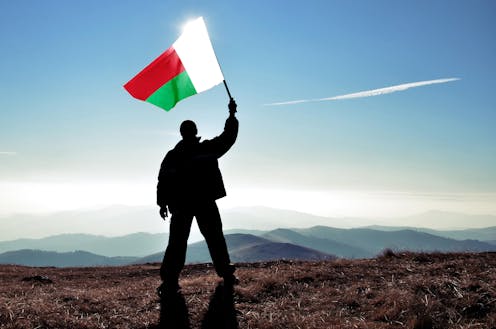
Madagascar is one of only a few countries in Africa to have taken concrete steps to address this problem. Earlier this year it passed a new nationality law that guarantees the equal right of citizens, regardless of their gender, to confer their nationality on their children. In doing so, it became the first country in Africa, since the UNHCR action plan’s conception, to give women the same right as men to pass on their nationality to their children.
Madagascar’s case
The exact number of stateless people in Madagascar is unknown, although the UNHCR puts the figure at up to 100,000 in a country with 24 million inhabitants. By comparison, the number of stateless people in Kenya, with a population of about 47 million people, is estimated to be 18,500.
Madagascar’s original nationality laws were a product of its colonial history. Colonised by the French from 1896 to 1960, laws were put in place that were discriminatory along both gender and ethnic lines. Not only did they deny Malagasy women the right to confer nationality on their children and spouses, but individuals were often denied citizenship documents by authorities who claimed that their names didn’t “sound” Malagasy. This was particularly the case for the Karana (a minority of Indo-Pakistani origin who have lived in Madagascar since before independence in 1960) or those with Comorian origins.
The new nationality law does not permit Malagasy women to confer their nationality to their non-national spouses (as Malagasy men can), however allows both spouses and children to retain their nationality if a partner or a parent loses theirs. Due to the recent passing of this law, its impact on statelessness is not yet evident.
More to be done
But there are still improvements to be made.
Madagascar hasn’t signed up to key legal pillars for the abolition of statelessness – these are the 1990 African Charter on the Right of the Child, which states that “every child has the right to acquire a nationality” and the 1954 Convention on the Status of Stateless Persons as well as the 1961 Convention on Reduction on Statelessness. The ratification of these two legal instruments would tie Madagascar to internationally recognised standards of protection. The conventions also provide guidelines for states, with respect to policies that ought to be adopted to minimise statelessness.
The nationality law also hasn’t taken steps to remove discrimination against women. Malagasy women are denied the right to confer nationality on spouses, a right which is reserved for Malagasy men. This creates statelessness as women can’t give their nationality to a foreign or stateless husband and to any adopted children.
Madgascar’s new reforms nonetheless serve as an example for other African countries that are experiencing the same kind of discrimination. West Africa, for instance, recently adopted a regional action plan to help the approximately 1 million people without a nationality. It includes encouraging the adoption of new laws, the issuing of identity papers and better data to manage situations which could result in statelessness.
It’s still early days for the plan and only time will tell how well it does. But the issue of gender discrimination will be key.

Cristiano D'Orsi does not work for, consult, own shares in or receive funding from any company or organisation that would benefit from this article, and has disclosed no relevant affiliations beyond their academic appointment.
: The Conversation – Articles (AFRICA)
Have you tried: Visiting Port Elizabeth?