
Speculum: the creepy history of this ancient gynaecological device and why it’s still feared today:
Women’s health is in crisis. In many places, gynaecology waiting lists are rising or are even at record lengths.
Even when a woman sees a specialist, there are terrifying accounts of what human rights body the Council of Europe defines as “gynaecological violence”. That includes not just performing diagnostic procedures without adequate pain control, but also a lack of compassion for the patient. Such reports are shocking, but perhaps not surprising when you consider how little some aspects of women’s medicine have changed in hundreds of years – and the unpleasant history they carry.
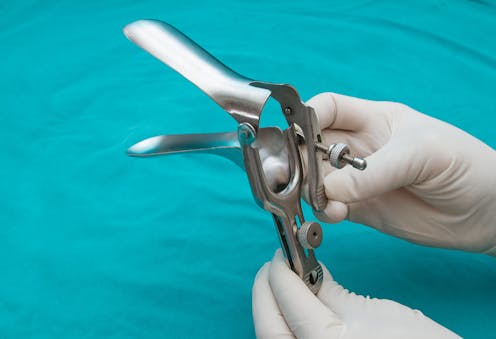
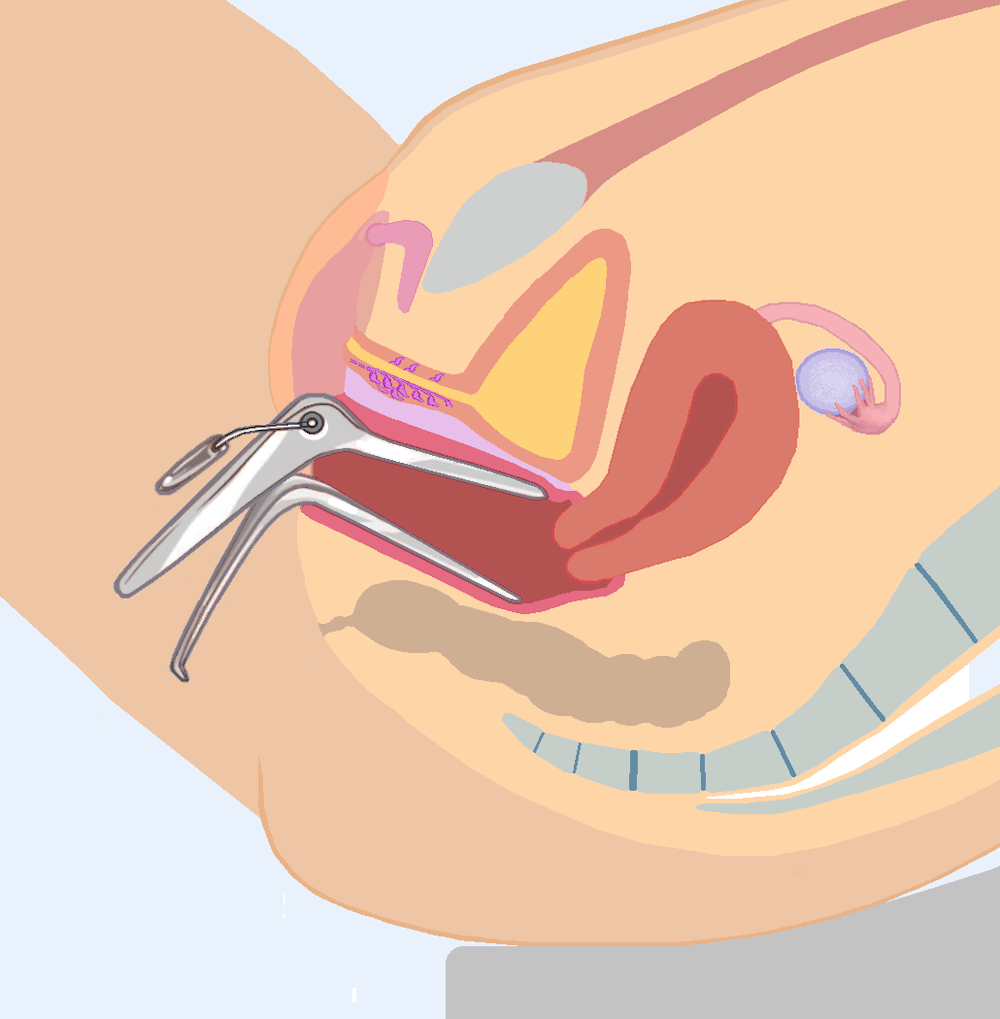
Once a woman gets to her appointment with the specialist, a speculum is the usual way of seeing what’s happening inside the body. These devices go back to ancient Rome. They comprise two or three “bills” which need to be opened up inside the body to give the best view.
The speculum is traditionally metal, meaning that it’s cold unless pre-warmed. A new design is now being worked on by a group of female designers and engineers. The Yona has a silicone surface and a much less threatening appearance. This is an important development in women’s healthcare given that the vaginal speculum has remained largely unchanged since the nineteenth century.
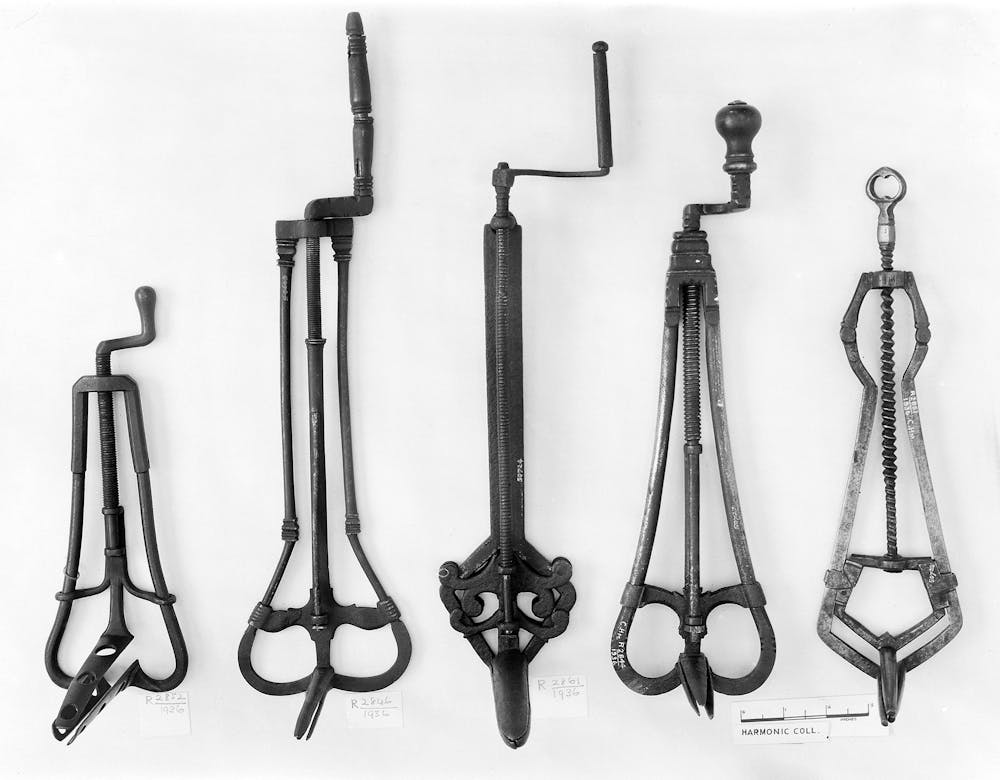
But more than the metallic noises and coldness, it is the invasiveness of the speculum that is at the centre of its fairly horrific history. Indeed, back in 19th-century Britain, when three laws tried to stop sexually-transmitted diseases (because these were thought to threaten the health of the nation’s army and navy), any woman suspected of being a sex worker could be sent for a forcible speculum examination.
The campaigner Josephine Butler called such examinations “forcible rape”. Even a hint of disease meant that the woman would be kept in what was known as a “lock hospital” – an establishment that specialised in treating sexually transmitted diseases – until the symptoms had gone.
The virginity myth
In the past, when virginity was still firmly linked to the idea of a membrane called the hymen, the speculum was feared because it was thought to break the hymen and end virginity. This would damage a woman’s “purity” and make her unmarriable.
Although at least in western societies these ideas are no longer common, assumptions about which size of speculum (yes, they come in different sizes) to use still refer to sexual activity.
Sarah Walser, a resident physician at Johns Hopkins Hospital in the US, was shocked to discover when she was doing her clinical training that the names “virginal speculum” and “extra virgin speculum” were used for the smaller sizes. As Walser argues, these labels assume that “the only sex that matters is heteronormative penile-vaginal penetration”.
Fear of breaking the hymen still holds back people with vaginas from important routine gynaecological examinations, such as the Pap smear to detect abnormal cells in the cervix. Health advice sites try to allay such fears. But hymens, even where they exist (some women are born with little hymeneal tissue or without the tissue at all), vary enormously in their flexibility.
Indeed a 19-year-old girl who was in hospital in the 1880s for not having any periods was found to have a hymen that was so flexible that “a medium-sized (one inch) Fergusson speculum has been repeatedly introduced, for purposes of exploration, without in the slightest degree affecting its integrity”.
This is a disturbing story because the use of the word “repeatedly” suggests that this young woman may have been examined over and over again to demonstrate the point. Yet even at this time, it was known that the speculum can cause pain by pinching the walls of the vagina (and this is still the case today).
Invasive and painful
Back in the fifth century, in his book The City of God, the influential theologian St Augustine argued that purity was about the soul, not the body. Back then, midwives seem to have been used to check whether the hymen was there. Augustine commented:
“A midwife, suppose, has (whether maliciously or accidentally, or through unskilfulness) destroyed the virginity of some girl while endeavouring to ascertain it: I suppose no one is so foolish as to believe that, by this destruction of the integrity of one organ, the virgin has lost anything even of her bodily sanctity.”
Augustine draws our attention here to the hymeneal paradox: the search for it can be precisely what destroys it.
Even those historical writers, such as Thomas Bartholin and his father Caspar Bartholin, who insisted the hymen was real and was evidence of virginity, realised how easy they were to lose. In their 1668 text Bartholinus Anatomy, they admitted that a virgin could break it with her fingers or with something else, and suggested that there were ways of having vaginal intercourse that would keep it intact.
Women’s bodies have always carried far more meaning than their basic anatomy. They are used to talk about morality and purity. And even though for most women seeing a specialist today the hymen is no longer relevant, the invasive speculum with its potential for pain remains as much a threat to our health as a means to diagnose our disease.

Helen King does not work for, consult, own shares in or receive funding from any company or organisation that would benefit from this article, and has disclosed no relevant affiliations beyond their academic appointment.
: The Conversation – Articles (UK)
Have you tried: Diving with Sharks?