
Six English words borrowed from the Romany language:
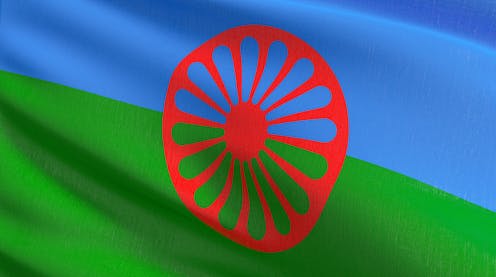
Gypsy, Roma and Traveller communities have been part of the UK’s regional populations for centuries. Roma communities are documented to have migrated to the UK during the early 15th century and evidence is found among a variety of official legal documentation and formal correspondence. As part of a wider community referred to as Gypsy Roma and Traveller, Roma have often faced hostility and inequality. It may be surprising then to hear that Romany, an unwritten language spoken by Roma communities is used in everyday English. Romany is a language spoken by communities who live largely across Europe.
The Romany language and culture have been associated with central and northernIndia and inherits a significant part of its linguistic heritage from Sanskrit alongside other Indian languages such as Hindi, Urdu and Gujarati. In this sense, it is considered the only Indo Aryan-derived European language.
While there are large communities of Romany speakers across Europe and beyond, only a small number of people in the UK speak a fully grammatical version. Within the UK, the majority of speakers use what is referred to as Anglo-Romany. This is a language unique to the Anglo-Roma of the UK and with a historical and linguistic connection to Romany culture. You may be surprised by some of the words that have been incorrectly labelled as colloquial or slang in English, which are in fact words that have crossed over from Anglo-Romany.
Here are six such words including their meaning found in regional dialects in England with their Romany historical links explained.
1. Wonga
This is a word considered slang according to many online dictionaries. However, this is actually an Anglo-Romany word used for “money”. The word derives from the European Romany word “vangar” and is a word used for “coal”, having a clear and historical association of value. There are a number of variations used across Anglo-Romany speaking communities for money and these range from “vonga” to “luvna”.

2. Chav
The word “chav” has been popularised as a slur in English to mean a person whose behaviour shows a lack of education or someone having a lower-class status. But the meaning of “chav” or “chavvi” in Anglo-Romany simply means “boy” or “girl” or even just “child”. “chavo” for boy, “chavi” for girl and “chave” meaning children.
3. Cushty
This is another word that was brought into mainstream use and is often associated with the comedy character Del Boy in the popular British sitcom Only Fools and Horses. The word “cushty”, sometimes spelled “kushti” in Anglo-Romany is used as an affirmative adjective and means “good” or “fantastic”. The meaning of cushty originates from an older Romany word “ku?”, meaning expensive. Its use in English is most likely linked to dialect mixing of Anglo-Roma communities and east London cockney speakers.
4. Chingering
According to the online source the urban dictionary the word “chingering” means to caress another person’s chin in a sensual way. This is quite far removed from the meaning of the word chingering used amongst speakers of Anglo-Romany. This word is used to refer to quarrelling or to the act of insulting someone. The word again derives from the Romany words “?hinger” and “?hingerel” meaning to quarrel or shout.
5. Pal
This is perhaps the most well-used example of a Romany word found in everyday English, most typically meaning “friend” in English. This term actually originates from the Romany word “phral” meaning brother. The Anglo-Romany word pal is also used for brother and has been extended and again crossed over through dialect contact over the centuries into everyday English.
6. Peeved
The English slang word “peeved” is sometimes used to refer to someone who has drunk too much alcohol and is again derived from a Romany word. The European Romany word “pijav” means “drink” and shows a direct connection with the English slang.
These are only a few examples and words such as “lollipop”, and “doylum” are also words from Anglo-Romany. There are many other words from Anglo-Romany that have been adopted into English, and most likely a regional dialect you know will have some fascinating examples.

Peter Lee does not work for, consult, own shares in or receive funding from any company or organization that would benefit from this article, and has disclosed no relevant affiliations beyond their academic appointment.
: The Conversation – Articles (UK)
Have you tried: Diving with Sharks?