
Seabed trawling’s impact on the climate may be wildly overestimated – new study:
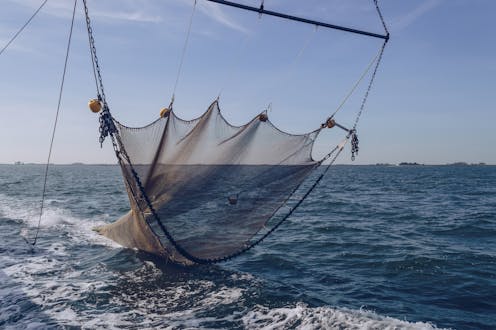
You might remember newspaper articles in 2021 claiming that towing nets over the seabed to catch fish (known as bottom trawling) releases as much carbon as all flights taken each year. It turns out that the assessment behind this claim overestimated how much CO? is released in the process of bottom trawling by 100 to 1,000 times.
Bottom-trawl fishing supplies one-quarter of fish landings globally and, as it occurs worldwide, is by far the most extensive way in which people disturb the seabed. Towing nets, chains and other heavy metal trawl gear along the seabed kills some of the clams, worms and starfish that live within it, but it also mixes and resuspends sediment in the water.
Globally, 1.75 times more carbon is stored in the sediment of the seabed than all the soil on land. Disturbing this carbon could increase CO? concentrations in the water, and in shallow well-mixed waters, where around half of trawling activity is concentrated, this CO? may be released to the atmosphere.
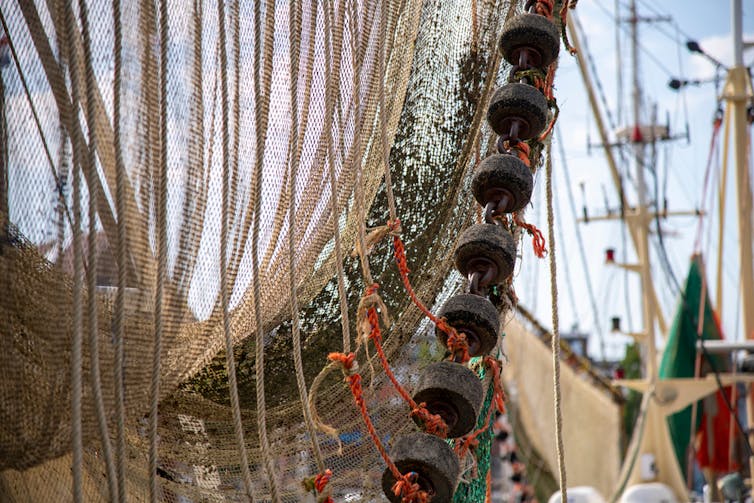
While preventing bottom trawling from disturbing the seabed could reduce the emissions driving climate change, how much CO? it would prevent is uncertain – and previous predictions are likely to be overestimates.
Modelling the effect of trawling
Once a trawl throws up sediment into the seawater, animals and microbes consume and convert the organic material into CO?. A widely publicised study published in 2021 modelled the effect of bottom trawling on the carbon stored in the seabed and predicted that a similar amount of CO? is released annually as a result as all global air travel.
This amount didn’t seem plausible to me and my collaborators at the time. An earlier review of 49 studies investigating how much carbon was stored in the seabed after trawling had found mixed results: 61% of the studies reported no difference, 29% reported less carbon and 10% even reported more carbon.
This prompted us to look at the model used by the authors of the 2021 study to identify what caused this discrepancy. We found that an assumption they had made about the carbon cycle was incorrect.
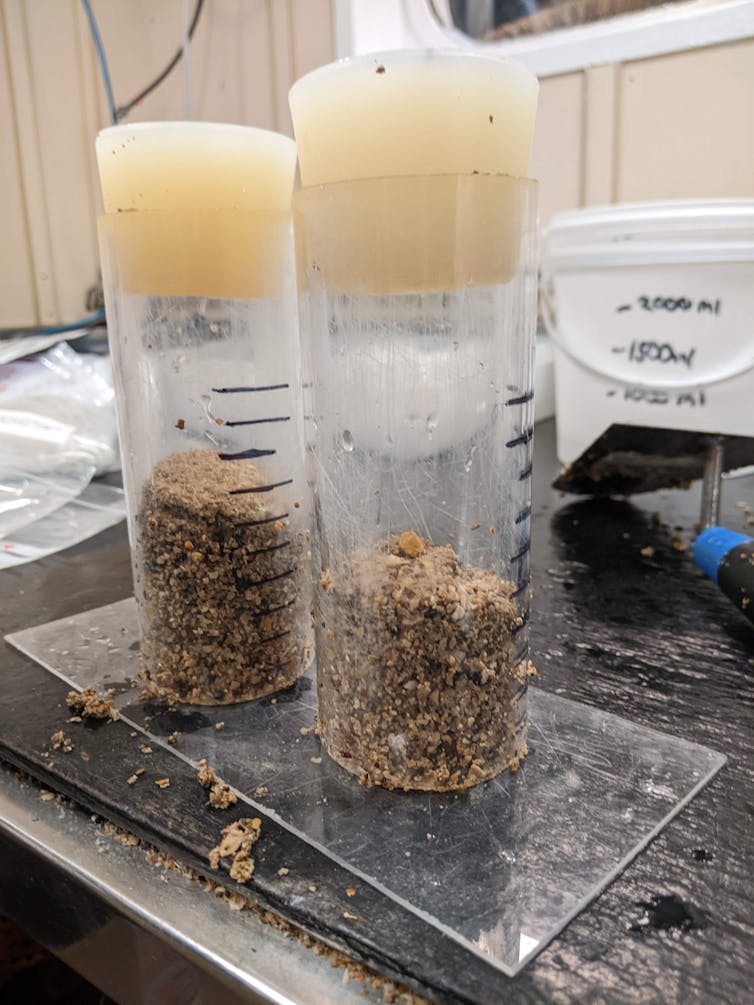
Organic carbon in the sediment consists of different fractions. The freshest fraction has recently settled from the water and consists of algae and recently dead animals. Most of this fraction is highly reactive, meaning that it is readily consumed by invertebrates and bacteria living in the seabed and then returned to the water as CO?. But a small fraction is not easy to digest because it consists of largely inedible material, such as bones. This unreactive organic carbon is what is buried and forms the seabed’s carbon store.
The authors of the 2021 study asked how much bottom trawling contributes to releasing this buried carbon into the water as CO? (a process scientists call remineralisation). Their model assumed that the buried carbon is highly reactive and is converted to CO? very quickly. If that was correct, up to 60% of the organic carbon disturbed by a single trawl passing would be converted to CO?. But if this carbon was really so reactive, microbes and seabed animals would have consumed it already, and it would not have been buried.
Biogeochemists have found that organic carbon buried in the sediment typically degrades much slower. And so, these results seem highly implausible. Using the much slower rates of decay that are appropriate for buried carbon, we showed that the approach used by the authors of the 2021 study overestimates the amount of buried organic carbon released as CO? by 100 to 1,000 times.
Credit for nothing
Why does clarifying the climate consequences of bottom trawling matter?
Some governments are considering banning bottom trawling and creating carbon credits to represent the quantity of CO? averted in order to offset other activities. You might have seen a similar option to pay for someone to plant trees to offset the emissions from a flight you’re planning to take.
But if the carbon emissions caused by trawling are overestimated then these carbon credits could increase CO? emissions overall by justifying more pollution elsewhere. Because most of the CO? reduced by curtailing trawling is likely to be imaginary, treating it as an offset threatens to exacerbate the climate crisis. The management of bottom trawling might be a good idea for other reasons of course, such as protecting endangered habitats and vulnerable species that live on the sea floor.
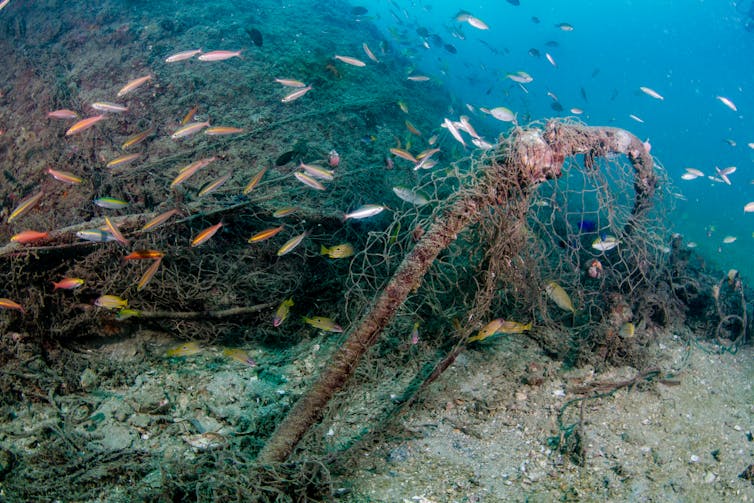
But managing bottom trawling to benefit the climate requires estimates of the relevant carbon emissions involved that are at least of the correct order of magnitude. Research has so far not been able to supply those because our understanding of the mechanisms through which bottom trawling affects seabed carbon is very limited. Researchers need to, among other things, study the effects of different trawls in different environments, examine how seabed invertebrates mix the sediment and what happens to carbon once it is thrown up into the seawater.

Don’t have time to read about climate change as much as you’d like?
Get a weekly roundup in your inbox instead. Every Wednesday, The Conversation’s environment editor writes Imagine, a short email that goes a little deeper into just one climate issue. Join the 20,000+ readers who’ve subscribed so far.

Jan Geert Hiddink currently receives funding from NERC, DEFRA, the Marine Stewardship Council, the Welsh government, the Department of Environment, Food and Agriculture of the Isle of Man, The South Pacific Regional Fisheries Management Organisation, Natural Resources Wales and NIRAS.
: The Conversation – Articles (UK)
Have you tried: Diving with Sharks?