
Research sets out key obstacles to maternal health in rural Tanzania:
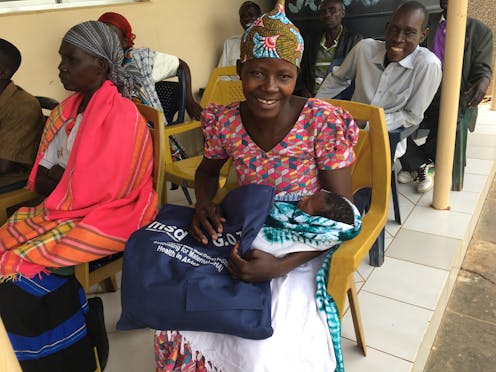
In Tanzania’s rural Rorya region, approximately 40% of women aren’t in the care of medical staff at hospitals or clinics when they deliver their babies. Instead they give birth at home, sometimes with a traditional birth attendant.
The region has the one of the lowest facility birth rates in the country. As a result, women die unnecessarily every year from treatable complications such as bleeding after delivery.
Tanzania’s government would like more than 80% of births to be overseen by skilled health care providers. Evidence shows that delivering in a health facility with a skilled birth attendant with access to medications, supplies and surgery as needed reduces deaths of both mothers and their infants.
Tanzania has limited resources for rural districts. It has very few skilled birth attendants and a shortage of medical supplies.
We did a study to understand what was preventing women from getting health care during pregnancy and childbirth. Our research was conducted in a way that allowed participants to discuss both the problem and solutions that are most meaningful to them.
The main problems we identified by speaking to both mothers and fathers were poor transportation, a shortage of medical equipment and supplies and disrespectful medical staff.
We found that community members and policymakers had similar priorities for improving maternal health. These involve social and structural changes such as accessibility to health facilities. Similar barriers have been found in research done in other rural regions of Africa. The challenge is now how to address them.
The research
In November 2015 a research team conducted four discussion groups with couples who had recently had babies, as well as with community leaders from four areas in Rorya, a northern Tanzania district. One discussion group was held with policy makers from the Rorya District Medical Office.
Participants were encouraged to identify a factor that contributed to maternal deaths and when it had an impact – that is during pregnancy, during delivery or after delivery. The purpose was to understand which period featured the most significant barriers for women.
Participants shared their ideas with the whole group. Each group was then split into men and women. This was important because it enabled women to speak freely. Many women in rural Tanzania are not comfortable voicing their opinions in front of men.
Each group was asked to come up with a list of what they thought were the main risks and impediments to accessing maternal health. The top five or six risks were then prioritised. Each risk was rated by severity and probability and the community’s capacity to respond to it.
Finally, the larger group of men and women agreed on the three or four most important issues affecting maternal health and discussed how to address them.
Main challenges
The first common theme was transport to health facilities. Many of the villages are located several kilometres from their designated dispensary. One woman described her experience of walking two hours each way to attend prenatal care, which became more difficult as her pregnancy progressed.
Some forms of transport, such as motorcycle taxis, were cited as unaffordable or not available on a regular basis. Community members also reported that it was hard to get an ambulance in an emergency because the patient first had to get to a dispensary.
The second common theme was a lack of equipment, medication and other supplies at health facilities. Women are often required to purchase supplies for their delivery, like gloves and medication, from local pharmacies. This is a cost they cannot afford.
Another concern was the disrespectful attitudes of nurses and midwives at the health facility. Health care providers were said to use negative language towards expectant mothers, for example chastising them for coming late or not being prepared for delivery. Community members said this problem was severe, common and beyond their capacity to address. In two groups, men said some people paid bribes to health care providers to get their cooperation.
Community members also said they needed more health care providers and better education for women about safe delivery.
The policymaker consultation group chose a slightly different process. But they came up with similar priorities to community members for improving women’s access to health care facilities. The group first drew up its priority risks and then ranked them according to severity, probability, and the capacity of a community health worker to deal with the issue.
The policymaker group listed transport and disrespectful health care provider attitudes as important concerns. They added women’s lack of knowledge about safe delivery; the accessibility of health facilities; and women’s power to make decisions about their care.
The challenge is to develop strategies to act on these priorities in a low resource setting. As a first step to finding out how to do this, maternal programme providers are supporting a pilot study tracking a number of interventions.
For example, community health workers have been given mobile phones to register the pregnant women and educate them about safe birthing practices. This includes the need to attend antenatal care and to deliver their baby at a health facility. The community health workers also work with the nurses to distribute clean birth kits and medication to prevent bleeding for women who deliver in the village as well as at health facilities.
Another step is that women who live farthest from the health facilities are provided with free transport to the local health facility at the time of delivery.
The goal is to come up with viable and sustainable solutions and determining the most effective way to deliver these interventions.
Preliminary results from the research, which is due to be concluded next year, suggest that these steps are increasing the number of women delivering in health facilities.
Dr Bwire Chirangi, a PhD candidate at Maastricht University, contributed to the research on which this article relies.

Gail Webber receives funding from the Candian government through IDRC, CIHR and Global Affairs Canada.
: The Conversation – Articles (AFRICA)
Have you tried: Farking?