
 |
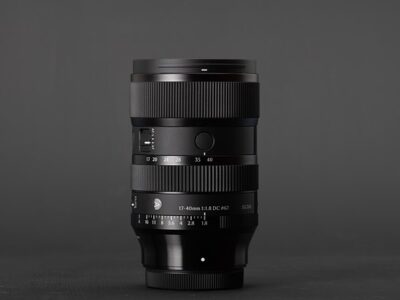
| Sometimes, the availability of even a single lens could be the deciding factor on whether to invest in a particular mount. Photo: Mitchell Clark |
If you’ve spent any time in the comments sections of articles about cameras, you’ve probably come across the idea that which camera body you choose barely matters: the lenses are the most important thing to consider. While this can read as people being dismissive of new tech, or even as sour grapes from people who don’t want to admit that something new is, in fact, better than what they have, I have to begrudgingly admit that the killjoys have a point. They’re correct when they say that you’re likely to keep your lenses longer than any particular body.
Because of that, your lenses become (a sometimes very substantial) lock-in to a particular mount, which is something of a walled garden. With seemingly every company on its A-game when it comes to designing cameras, it’s possible that the most important part of choosing which system to go with is making sure that you’ll be comfortable in that garden. The most capable body in the world won’t do anything for you if the lenses you want aren’t available at a price you’re willing to pay.
 |
 |
 |
| Canon RF 50mm F1.8 STM – $240 | Canon RF 50mm F1.4 L VCM – $1550 | Canon RF 50mm F1.2 L USM – $2600 |
 |
 |
 |
| Nikon Z 50mm F1.4 – $600 | Nikon Z 50mm F1.8 S – $670 | Nikon Z 50mm F1.2 S – $2250 |
Images: Canon, Nikon
It’d be impossible to go through every combination of lenses that someone might want and rank how each system stacks up, but that’s sort of the point. Only you know your exact wants and needs, and everyone’s will be different, which is why it’s not safe to assume that each mount will have all the options you’re looking for. When choosing which garden you’ll spend the next ten to twenty years in, you’ll want to consider what lenses are currently available, and whether the manufacturer’s capabilities and R&D budget will be enough to fill in any gaps.
Conversely, if a system you like already has the lenses you want, that may be enough. There’s no benefit to you in knowing that some other system has umpteen more lenses available if they’re lenses you can’t imagine yourself ever using. Similarly, one mount offering a choice of eight 50mm lenses won’t tip the scales in its favor if all the others have one that matches your price and performance criteria.
It’s worth noting that the exercise of checking lens availability becomes even more important if you have niche or unusual requirements. Sure, companies have been building out their lineups with more experimental lenses, but if you’re looking for something truly weird, there’s a good chance the more restrictive mounts may not get what you want in an amount of time you’re willing to wait. Canon currently doesn’t allow any third-party full-frame autofocus lenses for RF mount, and while Nikon allows Tamron and Sigma to produce Z-mount lenses, there’s a question mark over the future of lenses from makers that don’t have a license.
If you’re factoring in third-party lenses into your choice of mount, keep in mind what level of legal gray zone they’re operating in
Panasonic and Leica, meanwhile, have a bit of a bigger tent with the L mount, with each making lenses that work on each other’s cameras, and allowing other companies like Sigma, Viltrox, and many others to join the alliance and do the same. Then there’s Sony, which hasn’t made any overt attempts to control what lenses are made for its E mount, though it does appear to arbitrarily restrict shooting faster than 15fps to its own-brand lenses (which could be a disappointment if you’re excited by the amazing sports lenses Sigma has been making).
The point is that if you’re factoring in lenses from third parties into your choice of mount, it’s worth keeping in mind what level of legal gray zone they’re operating in, and whether you’d still be happy with your decision if some of the lenses you were planning on picking up suddenly become unavailable, or if they don’t work as expected in all cases. It’s also up to you to decide whether your personal moral convictions about companies’ right to defend their intellectual property have any bearing on your decision.
It’s easy to get overwhelmed trying to compare lens ecosystems. While there may only be a handful of cameras you’re interested in, you’ll probably have to parse several more lens offerings if you choose to make those your main consideration. And that’s not even mentioning the idea that some manufacturers might make something that you never would’ve even thought about, but you’d really like to try.
Choosing a lens mount is a commitment
Still, we think it’s a worthwhile part of the buying process; perhaps even the most important part. Choosing a lens mount is a commitment, and it’s worth the extra work up front so you don’t find yourself peering over the garden wall after realizing that your system just doesn’t have the specific option you’d like (or, at least, not for a price you’re willing to pay).

Our DPREVIEW Tribute:
After nearly 25 years of operation, DPReview closed on 10 April 2023. This difficult decision was part of the annual operating plan review that parent company, Amazon, shared earlier this year.
Over the course of 25 years, DP Review built up a reputation as being one of the most informative places to go for information about that new camera or lens you’re after. DP Review began as an independent reviews site based in the UK in 1998, the brainchild of Philip and Joanna Askey, but it was eventually purchased by Amazon in 2007 and relocated over to Seattle in the USA in 2010.
Cheers DPReview – thanks for the great work and content that guided photographers, videographers and techno junkies the world over!