
Now’s the time to rethink your relationship with nature:
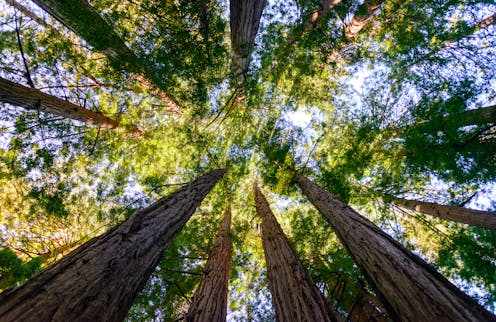
The pandemic has allowed many of us to develop a new appreciation of the great outdoors. But of course, this renewed engagement with nature comes at a time when our natural world is facing an unparalleled climate crisis.
I’m a psychologist interested in how people engage with and think about nature, in this precise historical moment when it is unprecedentedly threatened. In my new book Anthropocene Psychology I consider how we live in and with nature and how this poses profound and troubling questions.
Read more: Five must-read novels on the environment and climate crisis
If you’ve never heard of the Anthropocene, here’s a very brief primer. Anthropos is Greek for human and cene refers to a distinctive geological time period. The term is used to convey how, for the first time in history, the Earth is being transformed by one species – homo sapiens.
Though timings are still debated, around 1950 is considered the start date of the Anthropocene, as this is when rapid escalation of various factors began to converge. Factors such as the use of fossil fuels, population growth, tourism and travel, energy use, water usage, plastic waste, industrial agriculture, CO? emissions, deforestation, habitat loss and a warming climate.
Conscious of our connections
The idea of the Anthropocene can seem overwhelming and can generate anxiety and fear. It can be hard to see past notions of imminent apocalypse or technological salvation. Both, in a sense, are equally paralysing – requiring us to do nothing.
I consider the Anthropocene as an invitation to think differently about human relationships with nature and other species. Evidence suggests this reorientation is already happening and there are grounds for optimism.
For example, in just the last few years there has been an increasing number of academics in many different fields working on new understandings of how nature is deeply interconnected. Take forest ecologist Susan Simard, who looks at the way in which trees communicate with each other to enhance the health of forest ecosystems, part of a “wood wide web” that can also incorporate other species, including people. Then there’s the philosophers such as Timothy Morton and Donna Haraway both arguing that the Anthropocene provokes us to radically rethink how we perceive and relate to non-human animals and nature more generally.
Alongside these developments are indigenous North American scholars like Zoe Todd and Kim Tallbear renewing older forms of knowledge about the fundamental interconnectedness of humans, other species and landscape for new and receptive audiences. All are pushing at the boundaries of what we know about the entanglement of human and other forms of life.
Novel approaches to our relationship with nature are not limited to academic research. A recent Netflix nature documentary, My Octopus Teacher, is a more mainstream example. It documents a year in the life of filmmaker Craig Foster as he forges a life-changing friendship with an octopus. While Richard Powers’ Pulitzer prize-winning novel The Overstory interweaves multiple human stories with those of trees – shining a light on our connection and reliance upon the natural world.
These efforts are reflected in wider trends like the growth of veganism and animal welfare movements. Along with the push to grant rights to nature and natural entities. And the increasing vocalness of and receptiveness to indigenous knowledge and activism. There’s also been a rise of mutually beneficial animal-assisted therapies and nature-based interventions. All of which represent greater recognition of our entanglement with nonhuman nature.
Time to think differently
Precisely because it is unsustainable, the Anthropocene is likely to be short lived in the context of the planet’s history. And while this might seem scary or depressing at first, it’s a realisation that can invoke feelings of relief or even awe.
Activities like mindfulness or meditation in nature, along with “technology sabbaths” or structured time away from screens can help us begin to redefine our relationship with the natural world. Exercises that encourage us to contemplate deep time can also help us to avoid overwhelm and eco-fatigue.
While practices like this may seem naive or indulgent in the face of environmental crisis, it’s worth remembering that felt experience is essential to the momentum of any movement. And that becoming more conscious of the ways in which humans and nonhumans are inextricably connected is now more vital than ever.
The Anthropocene puts paid to any idea that we can carry on as normal. Indeed, even if all of humanity was wiped out tomorrow, it’s estimated the natural world would take at least five million years to recover. Which is why in the longer term there must be a fundamental reconsideration of how a significant minority of the global population live, get around, feed ourselves and exploit other humans and nonhumans.

Matthew Adams is a member of the Climate Psychology Alliance.
: The Conversation – Articles (UK)
Have you tried: Sailing in Africa ?