
Nigeria’s natural resources are under threat – urgent steps a new president must take:
By the end of May 2023 Nigeria will have a new president following February’s elections.
Among their many duties the person who takes over will be expected to appraise the nation’s performance and its commitment to protecting the environment. Nigeria is a signatory to many international conventions on environment-related treaties.
Nigeria’s biological and physical environments – in particular, its forests, inland waters and coastal waters – have inevitably been affected by its population growth. This rise in population has led to growing socio-economic needs. These include residential buildings and more physical infrastructure, such as roads, hospitals, and schools. More space is needed for people, at the cost of natural environments; and people’s activities have also contributed to pollution.
The biggest threat to the environment in Nigeria is people’s lack of awareness and understanding of what they can do to keep it clean and healthy. A commitment to the environment should begin at the family level. It extends from there to the top. The incoming president will have to initiate and drive progress on policies and plans that preserve the country’s natural resources.
What’s under threat
Nigeria’s rapid urbanisation has taken a toll on the natural environment as cities and towns have expanded and become interconnected. These developments have also led to the fragmentation of the forests, making many species that depend on a wide geographic range susceptible to poaching. Animals could become threatened or extinct once their habitats are lost or fragmented.
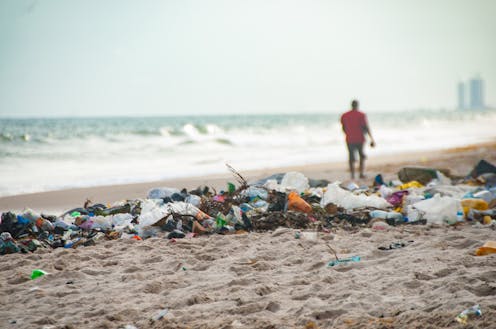
Nigeria’s inland waters (streams, rivers and lagoons) and coastal environment are not faring well. Many people dump their waste into the waterways. The pollutants are then carried by large rivers into lagoons and, eventually, the sea.
Plastic waste is the chief pollutant of Nigeria’s water bodies. No decisive action has been taken to manage the problem.
Decades of oil exploration, too, have severely contaminated some of the country’s important rivers. The level of mining effluents in some of the country’s waterways is alarming.
What needs to be done
The country’s National Biodiversity Strategy and Action Plan has set a number of targets.
Environmental education: My research group conducted a study in which we discovered that Nigeria had not yet met the first target. This was that by 2020, at least 30% of Nigerians should be familiar with the idea of biological diversity.
We recommended, that environmental education be made compulsory at all levels. Government agencies should use electronic and social media to educate the public about the need to protect natural ecosystems.
Establishment of conservation areas: The sixth target of the environmental plan is that at least 10% of Nigeria’s territory should be conservation areas. This is vital in view of the country’s expanding population and encroachment into natural environments.
To start with, the undisturbed forests, rivers and streams, especially those that harbour threatened species, should be designated as conservation areas as soon as possible.
Once a conservation area is established, encroachment will stop as these locations are normally off-limits to human habitation.
Managing population growth and infrastructural development: Nigeria’s population exceeds those of countries with much larger land areas, such as Ethiopia, Tanzania and Angola. Population growth should therefore be a focus area for the new president.
Housing policies should discourage indiscriminate building, especially in forested areas. Housing estates should be environmentally compliant.
Each household should be required by law to plant and nurture at least one tree to maturity. This could help create green environments, reduce carbon buildup in the atmosphere, and create a cool environment.
Funding: The next president will also need to make more budgetary allocations for environmental education and conservation projects. There are still many unexplored natural sites with threatened species in Nigeria. They need to be protected before they are lost.
Laws: The plastic pollution bill hasn’t been passed. It needs to be sent back to the National Assembly as soon as possible for quick passage.
Single-use plastics should be banned for tourists in all protected areas, parks and beaches. Nigeria can’t afford to be complacent. Several African nations have passed laws prohibiting plastic pollution and are enforcing them to varying degrees.
Specialists: To drive this agenda, the nation needs to employ professional zoologists, botanists and environmental scientists in the ministries, departments, and agencies of government that are responsible for protecting natural environments. There are two constraints to this happening. First, many young Nigerians find some of these courses less appealing. Second, career prospects are low: some of the available positions are filled by people who aren’t natural scientists.
Enrolment in environment-related programmes (especially in fee-paying private universities) should be encouraged with incentives such as scholarships and career opportunities.
Four of the 17 Sustainable Development Goals have an environmental emphasis, which is not surprising, given that, as humans, we are only as healthy as our environment. Thus, the next president of Nigeria should give environmental protection as much care as he does the economy and the security of lives and properties.

Emmanuel O. Akindele works for Obafemi Awolowo University, Ile-Ife, Nigeria. He receives funding from the British Ecological Society.
: The Conversation – Articles (AFRICA)
Have you tried: Visiting Port Elizabeth?