
Methane: war and international tensions make cutting potent greenhouse gas emissions harder:
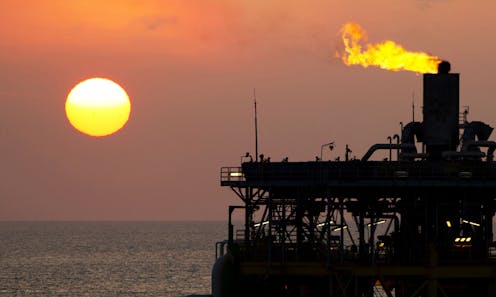
US president Joe Biden has announced new oil and gas industry regulations, which his administration claims will plunge emissions of the greenhouse gas methane 87% below 2005 levels. This is part of an update to the Global Methane Pledge, a US-EU initiative announced at COP26, last year’s UN climate summit in Glasgow.
Trumpeted as essential to meeting the 2015 Paris agreement’s goal of limiting global temperature rise, the pledge aims to slow rising methane concentrations in the atmosphere. But in the 12 months since the global pledge was announced, war in Ukraine and fraying international relations have made achieving this goal more uncertain.
Also announced at COP27, the current summit in Sharm El-Sheikh, Egypt, was a new programme using satellites to alert governments and companies of large methane leaks. The UK, along with the EU, Japan, Canada, Norway and the US have also made a joint declaration to reduce emissions from fossil fuel importers and exporters.
Methane is a far more powerful greenhouse gas than CO?. Though it will typically linger for nine years compared with centuries for CO?, a molecule of methane will heat the atmosphere around 80 times more over a 20-year period.
Since methane molecules are destroyed quite rapidly in the atmosphere, how much of the gas accumulates to trap the sun’s heat will depend on recent sources. Earth’s climate responds to any changes in emissions within decades. So cutting methane emissions anywhere – oil and gas infrastructure, livestock farms, landfills – can slow the rate of global warming quite rapidly.
It’s methane leaking from storage tanks and pipelines (so-called fugitive emissions) which is of particular concern for the oil and gas industry and its emissions.
The Global Methane Pledge, which 130 countries signed at COP26, sought a 30% reduction in emissions based on their 2020 level by 2030. The ambition is to shave 0.2°C off of total warming by 2050.
Some experts say this is an overestimate and that only halving methane emissions could reduce total warming by 0.2°C. Nevertheless, the quick results for the climate of reducing methane emissions could buy time for the trickier task of reining in CO?.
So is it possible to cut methane emissions by a third in a decade? In the mid-1990s, Russia cut around 1 million tonnes of methane from its fossil fuel sector’s annual emissions by upgrading and tightening leaky gas pipelines. But this amounted to just over 1% of total global methane emissions from the fossil fuel industry, which averaged 95 million tonnes each year during the 1990s, and which hit 111 million tonnes annually by 2020.
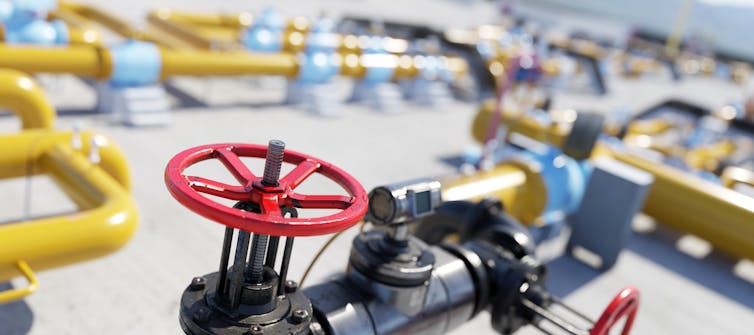
This also happened at a time when globalisation was increasing the interdependence of the international community. That came at the expense of nation states’ control over their energy supplies in many cases, best illustrated by Germany’s dependence on Russian gas.
Today, western sanctions on Russia in response to its invasion of Ukraine have precipitated a scramble for other sources of gas. The recent sabotage of the Nord Stream pipelines that carried natural gas from Russia to Germany under the Baltic Sea showed how casually states can destroy gas distribution infrastructure for geopolitical gain, regardless of the climate consequences.
One recent estimate put the total methane emissions from the resulting leak at up to a quarter of a million tonnes. While this is the largest individual methane gas leak ever recorded, more than twice the estimated 100,000 tonnes emitted by the 2015 Aliso Canyon gas leak in California, it remains small as a proportion of total annual global methane emissions from the fossil fuel sector.
Methane leaks such as the Nord Stream sabotage may not make a huge difference to global emissions on their own. But they do signal, despite new announcements to cut methane and police similarly large leaks, how readily realpolitik trumps international concern about preserving a liveable climate, particularly at a time of geopolitical re-balancing and rising international tensions.
Don’t have time to read about climate change as much as you’d like?
Get a weekly roundup in your inbox instead. Every Wednesday, The Conversation’s environment editor writes Imagine, a short email that goes a little deeper into just one climate issue. Join the 10,000+ readers who’ve subscribed so far.

Vincent Gauci receives funding from the Natural Environment Research Council and the Royal Society.
: The Conversation – Articles (UK)
Have you tried: Visiting Port Elizabeth?