
Malnutrition among children is rife in Nigeria. What must be done:
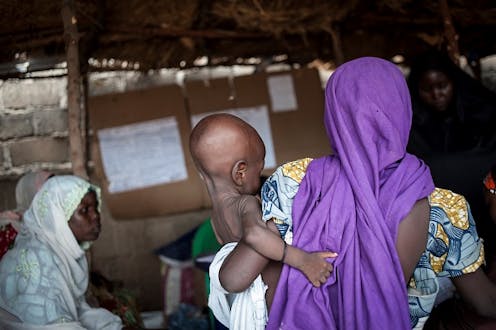
Malnutrition is one of world’s major public health and development concerns. In Nigeria, the situation is dire. Currently, UNICEF says 5 in 10 children under five years old suffer from the effects of being malnourished. This has an overarching impact on the lives, future and productivity of Nigerian children. Ogechi Ekeanyanwu, from The Conversation Africa, asked Blessing Akombi-Inyang, a maternal and child health expert, to explain the reasons for this high rate of malnutrition.
Why is malnutrition so endemic in Nigeria?
The main reason is malnutrition’s close association with poverty. One of the consequences of poverty is the lack of access to nutritious food, which predisposes people to poor nutrition. Poverty increases the chances of malnutrition. Malnutrition, in turn, traps communities in poverty. Poverty and malnutrition are inextricably linked.
Prior to the emergence of COVID-19, approximately 4 in 10 Nigerians were living in extreme poverty based purely on monetary measures. Post-COVID-19, the cost of living has continued to rise, thereby plunging Nigerians deeper into poverty. But poverty goes beyond monetary measures, it extends to being a multidimensional phenomenon. According to the Multidimensional Poverty Measure, about 47% of Nigerians (98 million people) live in multidimensional poverty. This encompasses the various deprivations experienced by poor people in their daily lives. These include poor health, lack of education, inadequate living standards, disempowerment, poor quality of work and the threat of violence. Living in areas that are environmentally hazardous is also a contributing factor.
These various dimensions of deprivation have an impact on the nutritional status of the population directly and indirectly.
The prevalence of malnutrition in Nigeria goes beyond the ability to purchase food. It is ingrained in those structural, cultural and physiological predispositions that hinder Nigerians from considering nutrition as a priority in the light of other challenges. With the increasing level of multidimensional poverty in Nigeria, it is expected that malnutrition at all levels will also rise.
Which regions have the worst problem?
Malnutrition varies by region. This means that strategies to reduce malnutrition need to be carefully targeted.
According to the 2018 Nigeria Demography and Health Survey, malnutrition is largely concentrated in Nigeria’s northern states. The proportion of stunted children is highest in the North-West at 57% and lowest in the South-East at 18%.
By state, stunting is most prevalent in Kebbi at 66%, Jigawa at 64% and Katsina at 61% and these are all North-East states. It is least prevalent in the South-East states of Anambra at 14% and Enugu at 14.8%.
In addition, the proportion of children who are wasted – where a child is too thin for their height – is approximately twice as high in the North-East at 10% and North-West at 9%. In the other zones, the percentage is at 4%-6%. This gap in child malnutrition between northern and southern Nigeria has been constant over time.
What are the consequences?
Malnutrition, in all its forms, imposes unacceptably high costs – direct and indirect – on the nation. It stretches the already thin economy and has important economic consequences at the individual, household and community level.
At the individual level, malnutrition leads to impaired physical development. It has long-term effects on cognitive development, educational performance and economic productivity in adulthood and on maternal reproductive outcomes. Malnutrition also weakens the immune system. It results in a higher risk of severe infectious diseases, including diarrhoea and pneumonia.
At the household level, the economic consequences are the health expenses and the opportunity costs incurred in caring for sick children. The risk of chronic diseases goes up so more money is spent on medication and accessing healthcare services.
Having a huge number of malnourished children could lead to lost investments in human capital associated with preventable child deaths.
On top of this, malnourished children often suffer from loss of physical growth and do not to attain their optimal height. There is a body of evidence that shows associations between height and outcomes in the labour market. The World Bank estimates that a 1% loss in adult height due to childhood stunting is associated with a 1.4% loss in economic productivity.
Thus, the economic viability of a country largely depends on its human capital and optimal child nutrition is key to harnessing this.
What interventions are necessary?
Improving child nutrition is key. But this needs a multi-sectoral approach and collaboration from stakeholders in the public and private sectors.
Because childhood malnutrition is inextricably linked to multidimensional poverty, interventions to address malnutrition must be multidimensional. They must address various deprivations experienced by the Nigerian people. Therefore, a commitment from the government at all levels (federal, state and local) is crucial in improving child health in Nigeria.
At the individual level, nutrition-based interventions to improve child malnutrition should include:
-
educating mothers and fathers about the need to breastfeed infants within the first hour of life.
-
exclusive breastfeeding in the first six months of life
-
introduction of appropriate complementary food accompanying breast milk after six months of age
-
appropriate diet diversity
-
administering iron and vitamin A supplements.
At the household level, ensuring good water, sanitation, and hygiene practice could help reduce infections which result in child malnutrition. While at the community level, supplementary food such as lipid-based nutrient supplements and fortified cereal products should be distributed.
There should also be support in the form of food or cash transfers to allow households to buy their own food.

Blessing Akombi-Inyang PhD, MPH does not work for, consult, own shares in or receive funding from any company or organization that would benefit from this article, and has disclosed no relevant affiliations beyond their academic appointment.
: The Conversation – Articles (AFRICA)
Have you tried: Farking?