
Lots of IMF programmes are never completed – because they’re unworkable:
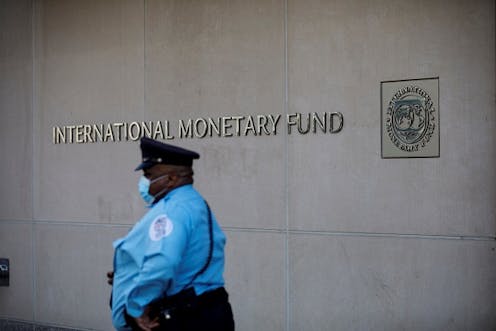
The International Monetary Fund (IMF) gives loans to countries in economic trouble. In exchange, countries must implement a programme of painful policy reforms. Countries rarely complete these programmes.
IMF programmes usually last one to three years. Countries must meet policy conditions in regular reviews – typically every three to six months – to gain access to tranches of funding. Failure to implement them interrupts the programme.
Of 763 programmes between 1980 and 2015, 512 were interrupted, of which 291 did not resume – as our data from the IMF Monitor Database shows. This is a very high failure rate given that the IMF enters into every agreement on the basis that it wants to see it completed.
We argue that reform programmes may be unimplementable by design. We show that they simply entail too many policy conditions. Even reform-minded governments struggle to implement them.
Our research also investigated financial market responses to programme interruptions. We found that programme failure has serious repercussions for economic development. Failure sends a negative signal to markets, causing them to lose confidence in the ability of governments to stabilise the economy and undertake reforms. The result very often is a rise in inflation and increases in capital flight that deprive countries of much-needed capital for investment in public goods and services.
Behind the failure rate
Some scholars have blamed the failure rate on a lack of motivation by borrowing governments. Facing pressures from special interest groups, such as labour unions and business groups, governments often backpedal from previous commitments.
In addition, scholars have found that countries that are friends with powerful donors like the US also experience more implementation failure. They receive favourable treatment, such as regaining access to IMF loans much faster than other countries, creating a moral hazard problem. In other words, encouraging bad behaviour.
Our paper breaks new ground in trying to understand why so many programmes fail by looking at their actual design.
We looked at whether the programmes themselves were in fact unimplementable. To do this we collected detailed compliance data for all 763 IMF programmes between 1980 and 2015. Our aim was to test if the number of conditions was related to programme interruption.
We found that each additional condition increases the likelihood of a programme interruption by at least 1.1% — a moderate effect given the average failure rate of 58.6%, but programmes typically include 22 such conditions, which boosts the failure probability accordingly.
Conditions to privatise state-owned enterprises, liberalise prices and overhaul the public sector were especially prone to cause implementation failure. This is because these conditions mobilise domestic opposition that can thwart programme implementation.
Our research also ruled out that implementation failure was driven by the occurrence of a financial crisis, macroeconomic instability, domestic opposition to policy reform, or geopolitical factors.
Our explanation for our findings was that that over-ambitious programme designs were the result of intra-organisational bargaining within the IMF bureaucracy. While an area department within the IMF drafted the initial reform programme, functional departments used their amendment power to include policy conditions that they cared about, without due consideration of local circumstances, which led to overambitious programmes.
We are not the first to voice such concerns about the complexity of the IMF’s programmes. The fund’s own Independent Evaluation Office noted in relation to the 1994 programme of the Philippines:
The IMF was simultaneously pushing for reforms to the oil pricing system and to tax policy, each of which required congressional approval … In the view of some staff, this may have been overambitious, exceeding the capacity of the political system to digest several major reforms at the same time.
The dependency trap
Our research also investigated financial market responses to programme interruptions. Using annual data for all developing countries, we found that investors rate a country lower when it had a permanent interruption of an IMF programme. Monthly data from 30 emerging market economies showed that a permanent interruption increased the cost of borrowing by governments by about 3%.
Programme interruptions lead to adverse financial market reactions. When investors lose confidence in a country’s ability to undertake market-liberalising reform, they require higher interest rates on their loans.
Borrowing countries that failed to implement IMF programmes therefore faced the risk of more volatile capital flows and higher refinancing costs. Ultimately, higher financing costs made them even more dependent on the Fund, entrapping them in a cycle of dependency.
What to do about it
Our findings have important implications for theories of compliance as well as for policymaking in international organisations.
Given the detrimental effects of IMF programme interruptions for developing countries, it is puzzling that the reform of IMF conditionality is lagging.
The IMF has often blamed weak capacity and lack of “political will” for poor implementation. This predominant view was challenged by Horst Köhler, a former IMF managing director, who launched a “streamlining initiative”. Its goal was to reduce the number of conditions.
But the number of conditions remained high. This is partly because of the rigid process by which new IMF programmes come about. When a country requests a programme, the draft agreement must be approved by all nine of the IMF’s sector departments. This empowers departments to include their “pet issues”, which results in overambitious programmes.
An implication of our findings is a need for greater leadership to ensure policy coherence in IMF programmes. This is even more important right now with a record-high number of 80 new IMF lending arrangements due to the COVID-19 crisis in developing countries.
Under the dual COVID-19 health and economic crises, these programmes run the risk of having too many conditions. This may drive countries into financial disaster … and back to the IMF again.

The authors do not work for, consult, own shares in or receive funding from any company or organisation that would benefit from this article, and have disclosed no relevant affiliations beyond their academic appointment.
: The Conversation – Articles (AFRICA)
Have you tried: Diving with Sharks?