
Long COVID: brain function still affected for some up to two years after infection – new research:
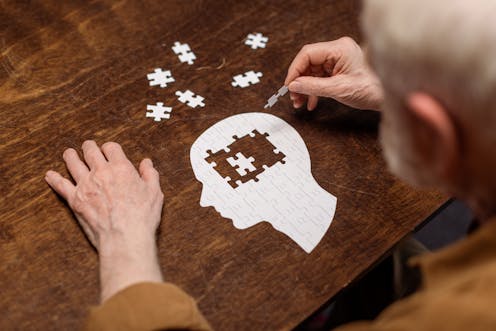
Difficulties with cognitive functions or skills, such as the ability to recall memories, concentrate on tasks, or find the right words in conversation, are commonly reported following a COVID infection. These symptoms are often referred to as “brain fog”, and are especially common among people who have long-term or persistent symptoms called long COVID.
At the latest count in March 2023, there were 1 million people in the UK with long COVID who reported difficulty concentrating, and three-quarters of a million who reported memory loss or confusion.
In the short term, brain fog symptoms can affect people’s ability to carry out their normal daily tasks, such as work and childcare, and reduce their quality of life.
In the longer term, mild cognitive impairment can develop into more severe conditions, such as dementia. COVID infection generally has been linked to an increased risk of being diagnosed with dementia.
So to support people in the short and longer term, it’s important to understand the nature, size and duration of the effects of brain fog and long COVID more generally on cognitive function.
In a new study, my colleagues and I set out to understand whether a COVID infection, and symptom duration, affected performance in cognitive tests, and how test performance changed over time. We found people with persistent symptoms fared worse in these tests up to two years after a COVID infection.
Brain training
To test cognitive skills, we invited participants in the COVID Symptom Study Biobank to complete a series of 12 brain-training-style tasks online in July 2021 and again in April 2022. In the first round, more than 3,300 people completed the test. Another 2,400 completed the second round, of whom 1,700 had also participated in the first round.
The COVID Symptom Study Biobank is a study that began in 2020, recruiting people from the COVID Symptom Study smartphone app (now the ZOE Health Study) which tracks symptoms and COVID tests. The study includes over 8,000 people both with and without a history of COVID infection and with a range of shorter- and longer-term COVID symptoms.
The tasks aimed to cover a range of elements of brain function, including visual memory, attention, verbal reasoning and motor control. Some tasks involved remembering words and shapes after a short delay of less than a minute, or a longer delay of around 20 minutes.
Other tasks included watching sequences of numbers appear on the screen and then repeating the sequences, clicking on a moving “bullseye” target, and deciding if pairs of words have the same meaning. Similar versions of the test are available for anyone to try online.
We then recorded how accurately people completed the tasks and their response times.
Read more: How COVID can disturb your sleep and dreams – and what could help
What we found
When we compared how accurately people with or without a history of COVID completed the test in the first round, we saw that people with an infection had lower scores on average across the 12 tasks.
Digging deeper, we saw that the effect of COVID on test performance was biggest for people with a longer symptom duration of more than three months. These people meet the criteria for having long COVID.
By also testing how other factors affected test scores, we were able to put into context how big an impact COVID had. For example, we saw that older people and people experiencing psychological distress scored lower in the tests.
The effect for the long COVID group was comparable to a ten-year increase in age, or experiencing mild to moderate distress versus no distress. However, COVID’s effect on test scores was not as large as other factors, such as education level.

When we considered how people felt about their recovery from COVID, we saw that people who weren’t reporting symptoms anymore and felt “back to normal” did no worse on the tests than people who hadn’t had COVID in the first place. This was even true for people who’d had more than three months of symptoms, which is good news. But it’s important to note that only one in six of those who had persistent symptoms felt fully recovered.
People who’d had COVID, including those who’d had more than three months of symptoms, were no slower than people without infection. This was another positive, as slower reaction times can be a sign of more serious cognitive impairment.
In the second round of testing, we saw no significant changes in test performance. This meant that the group with lower scores in 2021 were still feeling the effects of COVID on their brain function in 2022, up to two years after their initial infection.
Limitations and where to next
It’s important to note some limitations in our study. We don’t have test results for people before their COVID infection, which limited our analysis to comparing results across different groups.
Also, our participants were mostly female, and there was a higher proportion of people identifying as being from white backgrounds and living in more affluent areas than in the general UK population.
Nonetheless, our study shows the need to monitor those people whose brain function is most affected by COVID, to see how their cognitive symptoms continue to develop and to provide support towards recovery.

Nathan Cheetham receives funding from The National Institute for Health and Care Research.
: The Conversation – Articles (UK)
Have you tried: Visiting Port Elizabeth?