
We’ve added the Leica M11 to our studio scene as we try to address the backlog that built up while we were expecting to close. We’ll be adding the M11 Monochrom to the test scene and looking at whether the theoretical benefits of removing the color filter array are borne out, in the coming weeks.
As it stands, between the M11’s magnified live view and the 90mm F1.5 lens, we weren’t able to match the level of sharpness we achieved with the Sony a7R V, which offers the same pixel count. The Sony’s JPEG engine also does a much better job of presenting and emphasizing fine detail than Leica’s does.
This doesn’t take away from the fact that the M11 represents a significant step forward from the 24MP M10, though, bringing more resolution while delivering comparable image-level noise both at high and very ISO settings.
It’s worth noting that we got better results using the electronic shutter, particularly at shutter speeds in the 1/50 to 1/100 second region, as shutter shock appear to have a slight softening effect in this range. This may be less visible when shooting hand-held, as there’s less expectation of absolute sharpness, and some chance of the shock being accommodated by the photographers hand, rather than having to be stay within the camera, but for the level of scrutiny made possible by our comparison tool, the electronic shutter gave appreciably better results.
Gear in this story


The M11 is the latest in the Leica’s series of rangefinder cameras, which date back to the early years of the 20th century. While it may look like Leicas of the past, it offers technology that 20th Century film photographers could never have imagined.

The Leica M11 brings a 60MP BSI CMOS sensor, USB charging and auto-magnifying, stabilized live view to the classic rangefinder form. We dig into the detail…

The Leica M11 may look like the other M-series cameras that came before it, but it has some notable upgrades and changes. Find out why Chris thinks it’s the most enjoyable ‘M’ camera he’s used.

The Leica M11 includes numerous updates, but for many the headline feature will be the camera’s 60MP BSI CMOS sensor. How do those beautiful Leica lenses hold up to high resolution? Check out our sample gallery from DPReview TV to find out.

Leica has announced the M11, the newest member of its M-series rangefinder line of cameras. It’s headline spec is a new 60MP BSI CMOS sensor, but it also includes useful features like a larger battery, internal storage, a redesigned baseplate and more.
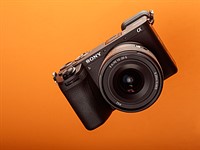
The Sony a6700 is the company’s latest high-end APS-C mirrorless camera, built around a 26MP BSI CMOS sensor and bringing the latest subject recognition AF and 10-bit video.

This pro-oriented plugin for Lightroom promises to learn to reproduce your editing style. Can it deliver?

The Canon EOS R8 is the company’s entry-level full-frame mirrorless camera. It brings the sensor and autofocus from the EOS R6 II and combines them in a smaller, more affordable body. Here’s our full look at this value-oriented Canon.
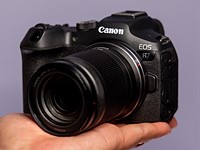
Canon’s EOS R7 is a 33MP APS-C enthusiast mirrorless camera built around the RF mount. It brings advanced autofocus and in-body stabilization to the part of the market currently served by the EOS 90D. But is it any good?

Jason Hendardy provides an overview of the Sony ZV-1 Mark II, highlighting its capabilities as a tool for vloggers and content creators in video and still photography. View samples of S-Log2 and S-Log3 from the camera, plus see how it performs at a bit of Seattle street photography.

Above $2500 cameras tend to become increasingly specialized, making it difficult to select a ‘best’ option. We case our eye over the options costing more than $2500 but less than $4000, to find the best all-rounder.

There are a lot of photo/video cameras that have found a role as B-cameras on professional film productions or even A-cameras for amateur and independent productions. We’ve combed through the options and selected our two favorite cameras in this class.

What’s the best camera for around $2000? These capable cameras should be solid and well-built, have both the speed and focus to capture fast action and offer professional-level image quality. In this buying guide we’ve rounded up all the current interchangeable lens cameras costing around $2000 and recommended the best.

Family moments are precious and sometimes you want to capture that time spent with loved ones or friends in better quality than your phone can manage. We’ve selected a group of cameras that are easy to keep with you, and that can adapt to take photos wherever and whenever something memorable happens.

What’s the best camera for shooting sports and action? Fast continuous shooting, reliable autofocus and great battery life are just three of the most important factors. In this buying guide we’ve rounded-up several great cameras for shooting sports and action, and recommended the best.

Our DPREVIEW Tribute:
After nearly 25 years of operation, DPReview closed on 10 April 2023. This difficult decision was part of the annual operating plan review that parent company, Amazon, shared earlier this year.
Over the course of 25 years, DP Review built up a reputation as being one of the most informative places to go for information about that new camera or lens you’re after. DP Review began as an independent reviews site based in the UK in 1998, the brainchild of Philip and Joanna Askey, but it was eventually purchased by Amazon in 2007 and relocated over to Seattle in the USA in 2010.
Cheers DPReview – thanks for the great work and content that guided photographers, videographers and techno junkies the world over!