
Check out this Paternoster image:
Image from page 704 of “The animal kingdom : arranged after its organization, forming a natural history of animals, and an introduction to comparative anatomy” (1849)
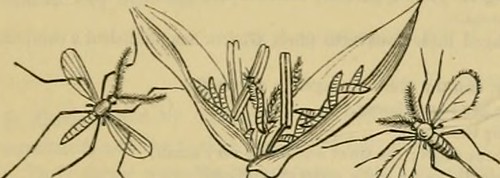
Image by Internet Archive Book Images
Identifier: animalkingdomar00cuvi
Title: The animal kingdom : arranged after its organization, forming a natural history of animals, and an introduction to comparative anatomy
Year: 1849 (1840s)
Authors: Cuvier, Georges, baron, 1769-1832 Metcalf Collection (North Carolina State University) NCRS Blyth, Edward, 1810-1873 Mudie, Robert, 1777-1842 Johnston, George, 1797-1855 Westwood, J. O. (John Obadiah), 1805-1893 Carpenter, William Benjamin, 1813-1885
Subjects: Animals
Publisher: London : Wm. S. Orr and Co., Amen Corner, Paternoster Row
Contributing Library: NCSU Libraries
Digitizing Sponsor: NCSU Libraries
View Book Page: Book Viewer
About This Book: Catalog Entry
View All Images: All Images From Book
Click here to view book online to see this illustration in context in a browseable online version of this book.
Text Appearing Before Image:
Text Appearing After Image:
Tlie larvae of many species live in the earth, the rotten parts of trees, &c. The thorax is not distinct,and they have no false feet. They exhibit at the superior extremity of the body two more evidentapertures for respiration. The pupae are naked, with two respiratory tubes near the head; and theedges of the abdominal segments spinose. These insects are well known under the name of DaddyLong-legs, Tailors, &c. G20 INSECTA. In many, the win^^s are always extended, and the palpi lons^; with the last joint very long and annular. Ctenophora, Meig., has filiform antennae, pectinated in the males, and serrated in the females. Tipula pecitni-coniis, Fabr. Pedicia, has them nearly setaceous, simple, with the two basal joints thicker, and the seven terminal onesslender and subcylindric. Tipitla^ Latr., has also the antennre nearly setaceous and simple; but atl the joints, except the second, are nearlycylindric ; the first is largest, the third elongate. T. oleracea, the Common Crane F
Note About Images
Please note that these images are extracted from scanned page images that may have been digitally enhanced for readability – coloration and appearance of these illustrations may not perfectly resemble the original work.
Image automatically curated and published by www.free-mail.co.za – CLICK HERE to learn more about WP Robot for WordPress.
Have you tried: Visiting Port Elizabeth?