
A nice Paternoster image:
Image from page 531 of “The animal kingdom : arranged after its organization, forming a natural history of animals, and an introduction to comparative anatomy” (1849)
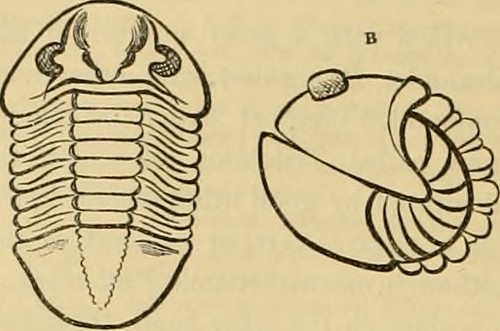
Image by Internet Archive Book Images
Identifier: animalkingdomar00cuvi
Title: The animal kingdom : arranged after its organization, forming a natural history of animals, and an introduction to comparative anatomy
Year: 1849 (1840s)
Authors: Cuvier, Georges, baron, 1769-1832 Metcalf Collection (North Carolina State University) NCRS Blyth, Edward, 1810-1873 Mudie, Robert, 1777-1842 Johnston, George, 1797-1855 Westwood, J. O. (John Obadiah), 1805-1893 Carpenter, William Benjamin, 1813-1885
Subjects: Animals
Publisher: London : Wm. S. Orr and Co., Amen Corner, Paternoster Row
Contributing Library: NCSU Libraries
Digitizing Sponsor: NCSU Libraries
View Book Page: Book Viewer
About This Book: Catalog Entry
View All Images: All Images From Book
Click here to view book online to see this illustration in context in a browseable online version of this book.
Text Appearing Before Image:
having the appeaiance of eyes, either donot exist, or are not distinctly to be seen, in the genus Para-doxides, Brong. The segments, or at least the majority ofthem, extend laterally beyond the body, and are disengagedat their extremity on the sides. Such are the characters of the five genera established byM. Alex. Brongniart, and which may be arranged into threegroups; I, the Reniformes (genus ^^no«/««); 2, theContrac-tlles (g. Cali/jnene); 3, the Extensi (g. Asaphus, Ogygia, and,_ Paradoxides). We refer for a knowledge of the species and ^ ^^^ ^ * their respective strata, to the work of the above-mentionedcelebrated naturalist, who has associated with him, in respect to the fossil Crustacea, M. Desmarest, so often citedby us in our accounts of fossil and recent Crustacea. Other savans have proposed other genera amongst the Trilo-bites; but being confined to the most general considerations, I can only cite those which appear in the bestwoik yet published on these singular fossils.
Text Appearing After Image:
THE SECOND CLASS OF ARTICULATED ANIMALS FURNISHED WITHARTICULATED LEGS— ARACHNIDA,— Is, like the Crustacea, [composed of species] destitute of wings, and which are in amanner not liable to change their form, not undergoing metamorphosis, but simplesheddings of the outer covering of the body. Their sexual organs are placed at adistance from the posterior extremity of the body, being (except in some males) atthe base of the venter. But they diifer from these animals as well as from the trueinsects in many respects. As in the latter, the surface of their bodies exhibits orificesor transverse slits, named stigmata (but which it would be better to name Pneumo-stomes,—mouth for the air,—or spiracles, that is, respiratory orifices), serving for theentry of the air, but being few in number, (eight at most, generally only two), andsituated only on the under side of the abdomen. Respiration is effected either bymeans of aerial branchiae, serving as lungs and inclosed in bags, to which t
Note About Images
Please note that these images are extracted from scanned page images that may have been digitally enhanced for readability – coloration and appearance of these illustrations may not perfectly resemble the original work.
Image automatically curated and published by www.free-mail.co.za – CLICK HERE to learn more about WP Robot for WordPress.
Have you tried: Visiting Port Elizabeth?