
A nice Paternoster image:
Image from page 168 of “The animal kingdom : arranged after its organization, forming a natural history of animals, and an introduction to comparative anatomy” (1849)
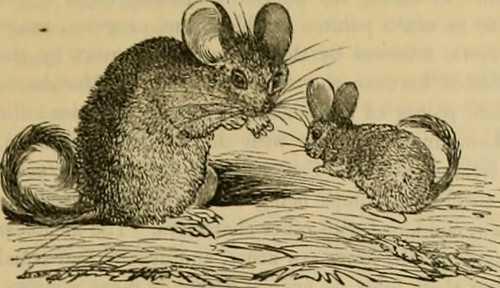
Image by Internet Archive Book Images
Identifier: animalkingdomar00cuvi
Title: The animal kingdom : arranged after its organization, forming a natural history of animals, and an introduction to comparative anatomy
Year: 1849 (1840s)
Authors: Cuvier, Georges, baron, 1769-1832 Metcalf Collection (North Carolina State University) NCRS Blyth, Edward, 1810-1873 Mudie, Robert, 1777-1842 Johnston, George, 1797-1855 Westwood, J. O. (John Obadiah), 1805-1893 Carpenter, William Benjamin, 1813-1885
Subjects: Animals
Publisher: London : Wm. S. Orr and Co., Amen Corner, Paternoster Row
Contributing Library: NCSU Libraries
Digitizing Sponsor: NCSU Libraries
View Book Page: Book Viewer
About This Book: Catalog Entry
View All Images: All Images From Book
Click here to view book online to see this illustration in context in a browseable online version of this book.
Text Appearing Before Image:
level country, and is not esteemed as food. Thisanimal is figured in Grifliths edition of the present \York under the name of Diana Marmot. The others are mountain animals, which frequent rocky places near the snow-line.The Chinchas {Logolis, Ben.; Legidium, Meyer)—Scarcely diifer from the Viscacha except in having four toes to each foot, and a long bristly tail, as inthe Chinchilla. Two species are known; the first with long Rabbit-like ears, and greyish fur, from the Peruvian Andes(//. Cuvieriy Ben.; Legid. peruvianmn, Mey.); the other from the Chilian Andes, with shorter ears, and fur inchiiingto reddish-brown (X. paUipes, Ben.). Lastly, The Chinchilla {Cliinchilla, Ben.; Eriomys, Vander Hoeven; Callomys, Gray),—lias a fourth very small internal toe on the hind-foot: ears ample; the internal auditory bullaeremarkably capacious, appearing on the upper part of the skull. Each of the upper molars hasthree alternate layers of enamel and ivory, the inferior only two. RODJiNTIA. 121
Text Appearing After Image:
One species only is well determined, r.ie Chin-chilla of the furriers (CA. lanigera, Ben.), cele-brated for the delicate fineness of its fur. Itinhabits the Chilian and Peruvian Andes. Somewhat allied to the foregoing, is an-otlicr small group of South .American rodents,with also four rootless molars of equal sizeP^_ aliDve and below, except in one instanceJI== (.•/irocomal, where the inferior resemblethoser – J ^:ii^>!:^^^ – ~~ of an .-Inicola; they are surrounded with ^^ enamel, and doubled, or indented deeply, on both sides. The antorbital foramen is veryFic. <8.-Tii« chinciiiiu. l^rge. There are five toes to each foot, ex- cept in Abrocoma, w hi^li li: s only four anteriorly; and the general aspect is intermediate to that of theChiuchillas and Rats or Voles: the head, however, is arched. Four subdivisions have been distiu-guislied. In The Abrocomes {Abrocoma, Waterh.),— The cars are large, the claws very small, and the tail rather long and not tufted. The excessivefinen
Note About Images
Please note that these images are extracted from scanned page images that may have been digitally enhanced for readability – coloration and appearance of these illustrations may not perfectly resemble the original work.
Image automatically curated and published by www.free-mail.co.za – CLICK HERE to learn more about WP Robot for WordPress.
Have you tried: Farking?