
Check out this Paternoster image:
Image from page 142 of “The trees of America: native and foreign, pictorially and botanically delineated, and scientifically and popularly described…illustrated by numerous engravings” (1851)
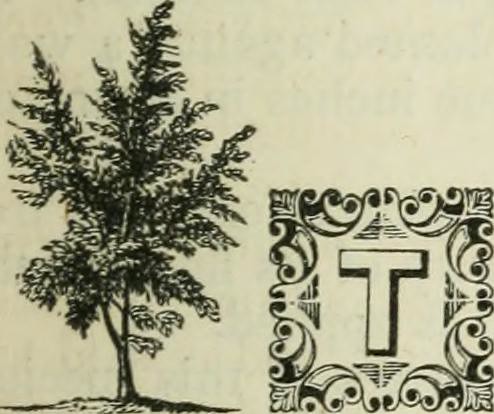
Image by Internet Archive Book Images
Identifier: treesofamerican00brow
Title: www.flickr.com/photos/internetarchivebookimages/tags/book…
Year: 1851 (1850s)
Authors: Browne, D. J. (Daniel Jay), b. 1804
Subjects: Trees
Publisher: New York : Harper & brothers
Contributing Library: University of British Columbia Library
Digitizing Sponsor: University of British Columbia Library
View Book Page: Book Viewer
About This Book: Catalog Entry
View All Images: All Images From Book
Click here to view book online to see this illustration in context in a browseable online version of this book.
Text Appearing Before Image:
Lilac, Persian Lilac, Bead-tree, Neem-tree, Hill Margosa,Pride of China, Pride of India, f LiNNJEus, Species Plantarum. I De Candolle, Prodromus. \ MicHAux, North American Sylva. I Loudon, Arboretum Britannicum. y ToRKEY AND Gray, Flora of North America. France. Germany. [Italy. Spain and Spanish America. Portugal. Arabia. Northern Provinces of India. I Britain. United States. Derivations. The specific name is derived from the Persian, azad-i-durukht, which signifies the tree of pre-eminence. TheGerman name signifies Paternoster-tree, in allusion to the nuts of this tree being used for rosaries. The Spanish name, Arbol deParaiso, signifies tree of Paradise. Engravings. Michaux, North American Sylva, pi. 102; Audubon, Birds of America, pi. Ixiii.; Loudon, Arboretum Britan-nicum, i. figure 133; and the figures below. Specific Characters. Leaves deciduous; leaflets about 5-together, glabrous, obliquely ovate-lanceolate,acuminate ; petals (lilac) nearly glabrous.—Torrey and Gray, Flora.
Text Appearing After Image:
Description. ii HE Melia azedarach, in favourable situations, often attains a height of thirty or forty feet,with a trunk fifteen or twenty inches in diam-eter ; but when standing alone, it usuallyrests at a smaller elevation, and diffuses itselfinto a spreading summit, with a stem six oreight feet in circumference. Its leaves are ofa dark-green, large, doubly-pinnate, and com-posed of smooth, acuminate, or obliquely-acu-minate, denticulated leaflets. The leaveschange colour, and fall, with the slightestcold, almost without frost, which usuallytakes place in the southern states in Novem-ber or December. When in bloom, it hassome resemblance to the lilac. The flowers,which appear in March, April, or May, formbeautiful axillary clusters at the extremity ofthe shoots, and exhale a delicious odour. The fruit is round, or oblong, of ayellowish colour when ripe, and about the size of a common cherry. The nut,or kernel of the fruit, is of a brownish colour, and is surrounded by a sweetishpul
Note About Images
Please note that these images are extracted from scanned page images that may have been digitally enhanced for readability – coloration and appearance of these illustrations may not perfectly resemble the original work.
Image automatically curated and published by www.free-mail.co.za – CLICK HERE to learn more about WP Robot for WordPress.
Have you tried: Visiting Port Elizabeth?