
Check out this Paternoster image:
Image from page 142 of “The animal kingdom : arranged after its organization, forming a natural history of animals, and an introduction to comparative anatomy” (1849)
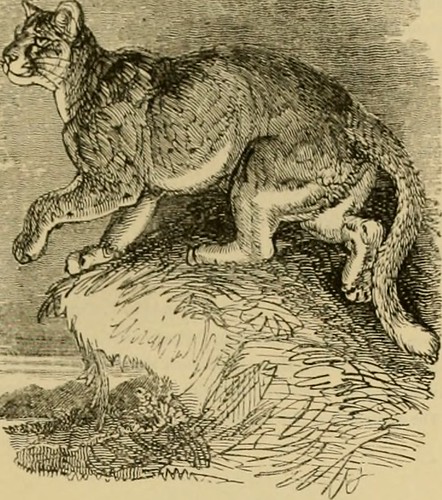
Image by Internet Archive Book Images
Identifier: animalkingdomar00cuvi
Title: The animal kingdom : arranged after its organization, forming a natural history of animals, and an introduction to comparative anatomy
Year: 1849 (1840s)
Authors: Cuvier, Georges, baron, 1769-1832 Metcalf Collection (North Carolina State University) NCRS Blyth, Edward, 1810-1873 Mudie, Robert, 1777-1842 Johnston, George, 1797-1855 Westwood, J. O. (John Obadiah), 1805-1893 Carpenter, William Benjamin, 1813-1885
Subjects: Animals
Publisher: London : Wm. S. Orr and Co., Amen Corner, Paternoster Row
Contributing Library: NCSU Libraries
Digitizing Sponsor: NCSU Libraries
View Book Page: Book Viewer
About This Book: Catalog Entry
View All Images: All Images From Book
Click here to view book online to see this illustration in context in a browseable online version of this book.
Text Appearing Before Image:
ents. The DiGiTiGRADA o* Cnvicr, c^siveofthe semi-plantigraile genera «have no coecum, divide primarily ifirst, the Canine group, or the DogsFoxes, which is the most distinctl\paratcd by anatomical characters ;remainder are all mnch more nearl\lied, bnt we may venture to detach tFeline animals or Cats : the rest may illbe included in the Viverrine section, luwhich the Ilyicnas strictly appertain ; avaried, but quite natiu-al assemblage, ex-clusively contined in its distribution to the eastern continent, and scarcely extending beyo.ulthe tropics; whereas the former groups are generally diffused, with the exception of Aus-tralia and the remote oceanic islands. Of the Viverrine animals, the most definitely cha-racterized subdivision is that of the Mangoustes and subordinate sections: the Genets scarcelydiifer from the Cats except in the prolongation of the muzzle; and the Hysena group is sonearly related to the Civets that it does not appear to be separable on physiological characters.]
Text Appearing After Image:
The A.mphibia [Pinxigrada, Blain.]—Compose the third and last of the minor tribes into which we divide the Carnivora. Theirfeet are so short and so enveloped in the skin, that, upon land, they only serve to crawlwith* ; but, as the intervals between their toes are occupied by membranes, they form excel-lent oars : hence these animals pass the greater portion of their lives in the water, which theyonly quit to bask in the sunshine, and to suckle their young. Their lengthened body; theirvery moveable spine, provided w ith muscles «hich strongly flex it; their narrow pelvis; theirshort close fur, setting flat upon the skin; all combine to render them able sw imraers, andthe details of their anatomy confirm these first indications. [.\s in the Dugong, the Cetacca, andother large aquatic Mammaha, their bones are light and spongy, more particularly in thelarger species.] Only two genera have as yet been distinguished, the Seals and the Morsts. The Seals {Phoca, Lin.)—Have six or four i
Note About Images
Please note that these images are extracted from scanned page images that may have been digitally enhanced for readability – coloration and appearance of these illustrations may not perfectly resemble the original work.
Image automatically curated and published by www.free-mail.co.za – CLICK HERE to learn more about WP Robot for WordPress.
Have you tried: Travelling to South Africa?