
Check out this Paternoster image:
Image from page 125 of “The animal kingdom : arranged after its organization, forming a natural history of animals, and an introduction to comparative anatomy” (1849)
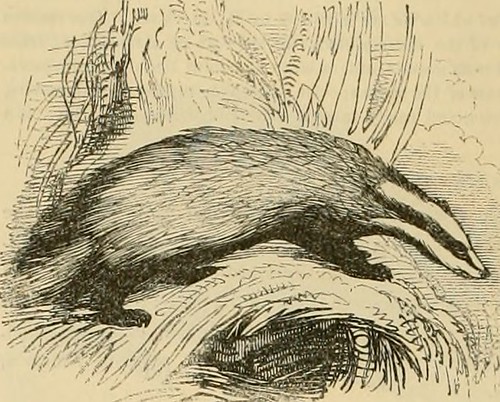
Image by Internet Archive Book Images
Identifier: animalkingdomar00cuvi
Title: The animal kingdom : arranged after its organization, forming a natural history of animals, and an introduction to comparative anatomy
Year: 1849 (1840s)
Authors: Cuvier, Georges, baron, 1769-1832 Metcalf Collection (North Carolina State University) NCRS Blyth, Edward, 1810-1873 Mudie, Robert, 1777-1842 Johnston, George, 1797-1855 Westwood, J. O. (John Obadiah), 1805-1893 Carpenter, William Benjamin, 1813-1885
Subjects: Animals
Publisher: London : Wm. S. Orr and Co., Amen Corner, Paternoster Row
Contributing Library: NCSU Libraries
Digitizing Sponsor: NCSU Libraries
View Book Page: Book Viewer
About This Book: Catalog Entry
View All Images: All Images From Book
Click here to view book online to see this illustration in context in a browseable online version of this book.
Text Appearing Before Image:
ize as carnivorous, from the trace of a cutting character which it exhibits on iis outer side ;behind this is a square tuberculous tooth, the largest of the series; and, on the lower jaw, the last butone Ukewise commences to bear some resemblance to the inferior carnivorous tooth; but as thereare two tubercles on its inward border as elevated as its cutting point, it performs the office of atuberculous one; the last below is very small. [The Badger, in fact, has precisely the same den-tition as the Weasels and Otters, presenting a modification of that type for less carnivorous regimen.]These animals have the tardy gait and nocturnal habit of all the preceding; their tail is short, [and bich I hid Bn opportunity of studyin ponscsscd tbe prehensile power of t degree, merely resting slightly 0» led throaghout its length, and never coili t Strong presamptive eviden«ppcrt*in to the Viverrinc groigeogTApliic range of llie latleother instance. Tbe prcsenci for the Yew genus.—Eo MAMMALIA.
Text Appearing After Image:
Fig. 25,—Common Barlger. coramonly held erect]. Their toes are wiuch enveloped hi the skin ; and, what eminently distinguishes tliem, is a pouch situate beneath the tail,from which exudes a fatty, fetid humour, [asin the Sltunks, Weasels, &c., to which theBadgers are very closely allied]. The longclaws of their fore-feet enable them to burrowwith much facility. The European Badger iUrsHs metes, Lin.; 31.taxns, Auct.)—Greyish above, beneath black, witha dusky band on each side of the head. ITiat ofAmerica {MeL hudsonius [ (?) M. labradonus, Sa-bine; Vrstts iaxus, Schreb.] does not appear todiffer essentially. [It is even generically very dis-tinct, pertaining to the ne.xt division. A secondspecies of Badger, however, appears to me to ex-ist in the Balysaur of India {Arctoiiiix coUans,F. Cuv.; Mi/daus eullaris, Gray,) which M. F.Cuvier lias represented much too Hog-like inhis figure; the snout being scarcely longer thanthat of the European Badger, the fur somewhatcoarser, and th
Note About Images
Please note that these images are extracted from scanned page images that may have been digitally enhanced for readability – coloration and appearance of these illustrations may not perfectly resemble the original work.
Image automatically curated and published by www.free-mail.co.za – CLICK HERE to learn more about WP Robot for WordPress.
Have you tried: Visiting Port Elizabeth?