How the world fell in love with plastic without thinking through the consequences – podcast:
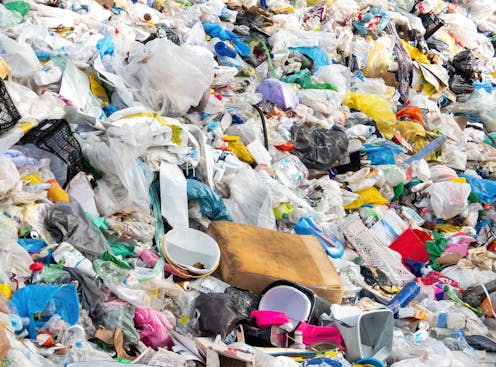
Every year, 400 million tons of plastic are produced worldwide, and every year, approximately 57 million tons of plastic pollution is created. And yet in November, the latest round of negotiations on the first legally binding international treaty on plastics pollution ended without an agreement.
Oil-producing countries, including Saudi Arabia, Iran, Kuwait and Russia, refused to sign up to a clause calling for the world to reduce its production of plastics. As clean energy technologies like electric vehicles gain traction worldwide, these economies are counting on continued and even increased plastic production to buffer them from the economic blow of reduced demand for oil.
So what can we really do about the plastics pollution problem? The Conversation Weekly podcast sat down with Mark Miodowonik, professor of materials and society at UCL in the UK, to understand the history of plastic, how it’s shaped our lives, and what can be done to make sure more plastic is recycled and less ends up polluting the planet.
In 1907 a chemist called Leo Bakerland invented a new type of rigid, synthetic plastic. He called it bakelite, and it was quickly seized upon by the modernism movement.
“You can start mass producing items in a particular shape and they’re all the same,” explains Miodowonik, who leads the Plastic Waste Innovation Hub at UCL. First telephones, and then radios are manufactured using bakelite. “It’s a huge revolution in the way people think about themselves, how they communicate with the world, who they are … plastic becomes the material of this new era and everyone goes to town with it.”
Because plastic is a big business, the price comes down and it goes from a somewhat luxurious item to an everyday one. Suddenly everything is made of different types of plastic, including disposable packaging for fast food that people are encouraged to throw away.
By the 1970s, scientists working in plastic manufacturing companies were sounding alarms about all the plastic making its way to landfill and how long it took to degrade. But little action was taken, says Miodowonik.
“You can see that the companies obviously don’t want to deal with it. It’s going to cost them money. And us people who are buying this stuff, we went along with it, right? We luxuriated in it. We weren’t too bothered either.”
Making polluters pay
As a result of environmental activists raising the alarm in the 1980s and 1990s, governments and companies slowly started to at least pay lip service to plastic recycling. And these days, there has been a shift in our attitudes toward plastics as people are starting to realise the scale of plastic pollution.
Few plastic manufacturers have faced consequences for their inaction, though these days, there seems to be more of a collective will to take action against them. In September 2024, the US federal government successfully sued Keurig, the company that makes those little plastic pods that produce one cup of coffee or tea, for claiming that those pods are recyclable when they’re not. Keurig paid US$ 1.5 million (£1.2m) in penalties.
The state of California in the US has also brought a similar lawsuit against Exxon Mobil alleging that it knowingly made fraudulent claims about the recyclability of its plastic products.
Midowonik doesn’t lay the blame solely at the feet of companies like these. He says the inaction of plastic manufacturers to reduce plastic waste is a reflection of our own consumerist society and our desire for cheap stuff. He believes there needs to be a more concerted effort to make polluters pay.
“I think we need to change the laws so that if you make something, you’re responsible for its end of life. You should not be able to sell any product into a market where there’s not a waste processing system in place which can deal with that material.”
Listen to the The Conversation Weekly podcast to hear the full conversation with Miodowonik.
This episode of The Conversation Weekly was produced by Gemma Ware and Katie Flood. Sound design was by Michelle Macklem, and our theme music is by Neeta Sarl.
Newsclips in this episode from NHK World Japan, Today and CBS News.
You can find us on Instagram at theconversationdotcom or via e-mail. You can also subscribe to The Conversation’s free daily e-mail here.
Listen to The Conversation Weekly via any of the apps listed above, download it directly via our RSS feed or find out how else to listen here.

Mark Miodownik receives research funding from UK Research and Innovation. He is a fellow of the Royal Academy of Engineering, Honorary Fellow of the Institute of Materials, Minerals and Mining and Honorary Fellow of the Institute of Design Engineers.
: The Conversation – Articles (UK)
Have you tried: Diving with Sharks?