
How open source is revitalizing the payphone: How open source is revitalizing the payphone Klaatu Mon, 11/28/2022 – 03:00
Phones used to act as the host for computer communication. Modems sent signals from computer to computer by utilizing the phone network. In today’s world, though, computers have become the host for telephony apps. Phones aren’t really phones any more, they’re literal computers. This has enabled some amazing technology, but many people wonder whether we’ve lost something by giving up the concept of public phones. The PhilTel project in Philadelphia is seeking to change the trajectory of phone communication by reviving some old concepts. I was intrigued, so I spoke to Mike Dank about this exciting and unexpected development.
Klaatu: What’s PhilTel?
Mike Dank: PhilTel is a telephone collective based in Philadelphia, Pennsylvania, focusing on making communications accessible to everyone by installing free-to-use payphones. While you’ll be able to make standard telephone calls through our phones, we’re also focusing on offering interesting services or experiences. We don’t want to only facilitate human-to-human interaction but also human-to-machine interaction and give people an environment where they can explore the telephone network and learn from it.
Klaatu: Why are you installing free-to-use payphones? Surely everyone has a mobile phone these days.
Mike: Surprisingly, there are more people out there without mobile phones than you may think! While there are many that won’t have a mobile phone due to socioeconomic disparities, others choose not to have them because of concerns about privacy, health, and the effects of being “plugged in” or reachable 24/7. My co-founder on this project does not own a mobile phone himself, so we have first-hand experience with what it is like to not have a phone on your person at all times and how important it is for there to be access to public telephones.
Philadelphia in particular has a lot of payphone use, even as payphone companies have been steadily removing phones from service year after year. Residents who rely on these phones are being increasingly marginalized and if this trend continues, many will be left without a communication platform they need to carry out their lives. At PhilTel, we are committed to increase access to telephone-mediated services through the preservation of public, free-to-use telephone infrastructure.
Klaatu: You obviously know a lot about phones. It makes me think of the phone phreaking scene in the 1950s.
Mike: Yes, “phone phreaking” is a term used to describe the culture and activities of people who explore the phone system and equipment connected to it. While people have been phreaking since the 1950s, it rose to prominence in the 1970s with the advent of the “blue box”: a hobbyist-built, pocket sized device that could produce tones which would allow the user to place free long-distance calls. Later phreaking devices such as the “red box,” commonly made by modifying a pocket tone dialer, would allow the user to imitate coin tones at a payphone so calls could be made for free. It’s important to note that phone phreaking is still alive and well today, but the focus is on discovery and gaining an understanding of how the phone system works while communications fraud is now widely frowned upon.
In many ways, hacking and hacker culture can be seen as an offshoot of phreaking, and it is undeniable that phreaking had a direct influence on hacking as we know it today. With the advent of personal computing in the 1980s, many curious and tech-savvy people would communicate over bulletin board systems to share information about exploring the phone system and, increasingly, the computers that were connected to it.
Anyone who identifies as a hacker these days can trace the culture back to those early days of phone phreaking where the curious spent days or months or weeks doing experiments with the phone system. PhilTel is a “phreak-friendly” network, and we not only encourage exploration but also have resources to emulate aspects of the phone network of a bygone era. Do you want to use your vintage (or modern recreational) “blue box” or “red box” today? We have ways for you to do that!
Klaatu: How did you get involved with PhilTel?
Mike: Well, I’m one of the PhilTel co-founders! PhilTel draws direct inspiration from a similar project known as Futel, based out of Portland, Oregon. My co-founder and I met a few years back and bonded over our love of telephone infrastructure, including visiting old telephone buildings and finding payphones scattered throughout the city. We had discussions about how it could be beneficial to start a project where we installed and operated payphones and we realized the only thing holding us back was simply sitting down and working out the details for how to do it!
Klaatu: Do you have a background in telephony?
Mike: I don’t have any background in telephony myself, but I’ve had an interest in it since I bought my first Raspberry Pi in 2012 and went about setting up my own PBX so I could give extensions to different phones in my house and allow them to call one another. While I have a formal background in software engineering, I identify more as a hacker who likes to tinker and learn as I go. I’m very lucky to be working with my co-founder as he became interested in telephony in high school and gradually became interested in phreaking as well as VoIP. Nowadays, he primarily does telecom-related software development, including freelance Asterisk development for businesses and development of features and capabilities for telephone hobbyists.
Klaatu: Speaking of Asterisk, what other open source technologies are you using to make this project happen?
Mike: We strive to use as much open source technology as we can with PhilTel! Each payphone site that we will set up has a router running OpenWRT and WireGuard to get a secure VPN connection to our server. Our Linux-based server runs Asterisk, an open source PBX (private branch exchange) toolkit, to connect our phones to the PSTN and other internal services or hobbyist or collector phone networks. We are very fortunate in that my co-founder has an in-depth knowledge with Asterisk as he is a regular code contributor.
Klaatu: How can people get involved with PhilTel?
Mike: There are numerous ways to get involved! If you’re a hacker, artist, or engineer with an interest in payphones and things that can be done with and through them, we’d love to hear from you (especially if you’re an artist working with audio.) We’re always looking for new things to add or new perspectives! If you’re local to the Philadelphia area and have ownership of a physical location where we may put a phone, we’re always looking for installation sites! If anything about PhilTel interests you, be sure to visit our website for more information and ways to contact us!
One of the founders of the PhilTel open source project shares why free-to-use payphones are critical to social infrastructure.
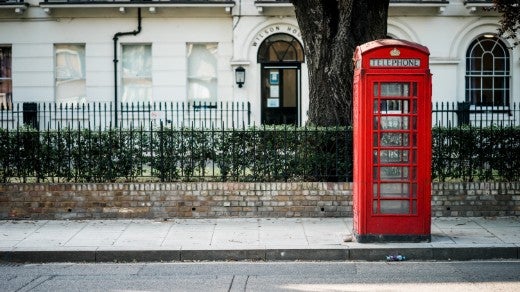
Photo by Jonathan Chng on Unsplash
 This work is licensed under a Creative Commons Attribution-Share Alike 4.0 International License.
: Opensource.com Klaatu
Supporting Open Source.
Have you tried: Diving with Sharks?