
How climate change is washing away precious evidence of our distant past:
As well as threatening biodiversity, food systems and human health, climate change has another victim: ancient artefacts. At some UK sites of archaeological interest, unusually heavy rainfall is eroding layers of protective peat to damage the preserved relics that lie beneath.
Some of the UK’s finest archaeological remains have been found buried in peat, a type of soil that’s naturally high in acidity and low in oxygen. That means it preserves wood, leather and textiles extremely well, as the microorganisms that would usually cause these materials to break down can’t thrive.
Peat has helped to keep Britain’s ancient environments alive for modern analysis: from neolithic trackways marking where our ancestors travelled between settlements in Somerset, to preserved bodies like the Lindow Man found in a bog in Cheshire. The peat environment in which Lindow Man was buried dramatically reduced decay, meaning that his hair and beard have remained visible even after almost 2,000 years.
But climate change is bringing increasingly hotter summers and wetter winters to the UK, including unprecedentedly heavy local rainfall. This changes the landscape by washing away layers of soil and peat to reveal archaeological buildings, items and human remains.
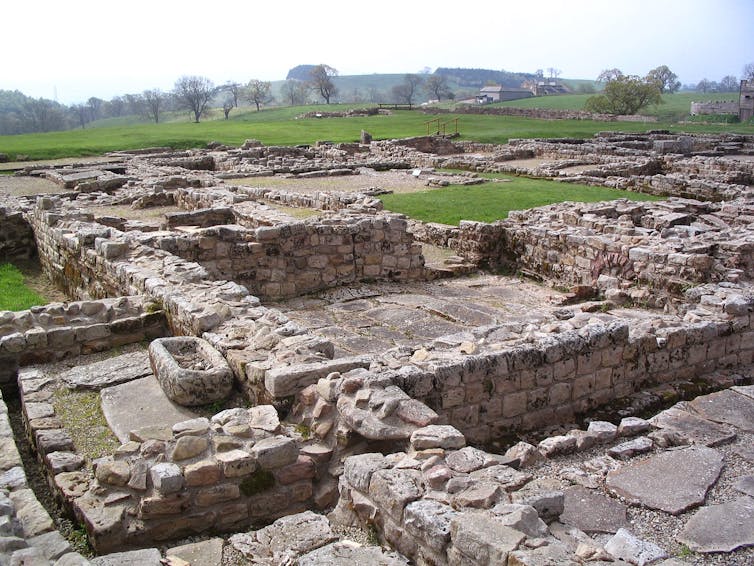
To better understand how fast these changes are taking place – and what their consequences might be for future archaeologists – our colleagues are studying what’s happening at Magna, the site of an ancient Roman fort in Northumberland.
Magna
Magna is one of the most fascinating, well-preserved sites in the UK. As a strategic army base, it would have held a commanding position at the junction between three key Roman roads: the Stanegate, Military Way and Maiden Way. Surveys suggest that it was occupied from AD80-85 to the end of Roman Britain, in around AD410.
To study it, archaeologists dug boreholes and inserted devices called piezometers to collect data on groundwater levels and temperature. They’re also sending peat samples to a laboratory for chemical and microbiological analysis. This information will help us to understand how the local environment is changing and what effect this might have on archaeological degradation.
Another Roman fort just a few miles east of Magna, Vindolanda, has provided some of the most significant finds from Roman Britain. Here, archaeologists have discovered the first evidence of handwriting by a woman (Claudia Severa writing to invite her friend Sulpicia Lepidina to her upcoming birthday party), the world’s oldest boxing gloves from around AD120, and the largest Roman leather shoe collection ever found – consisting of an astonishing 7,000 items.
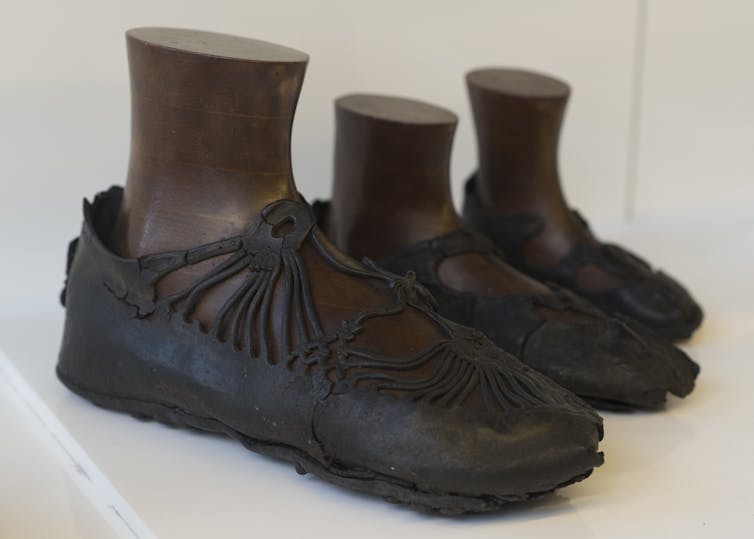
These remarkable finds are due to the fort’s unique, peat-rich environment, which means that they’re also threatened by climate-driven deterioration. We fear that finds which haven’t yet been discovered may soon be irreversibly damaged due to the effects of climate change.
The point of peat
Peatlands cover about 3% of the world’s land area but are one of its best natural carbon stores, holding twice as much carbon as all the world’s forests.
In England and Northern Ireland, peatland makes up 10%-12% of all land, while Scotland has 20% peatland cover. Historically, these landscapes have been drained for use in farming, with peat dried to burn for fuel: releasing massive amounts of carbon into the atmosphere.
Across Europe, an estimated 100,000km² of peatland has been lost over the last 50 years. Much of what remains is poor quality. In the UK, only a fifth of UK peatlands can be described as “near pristine”.
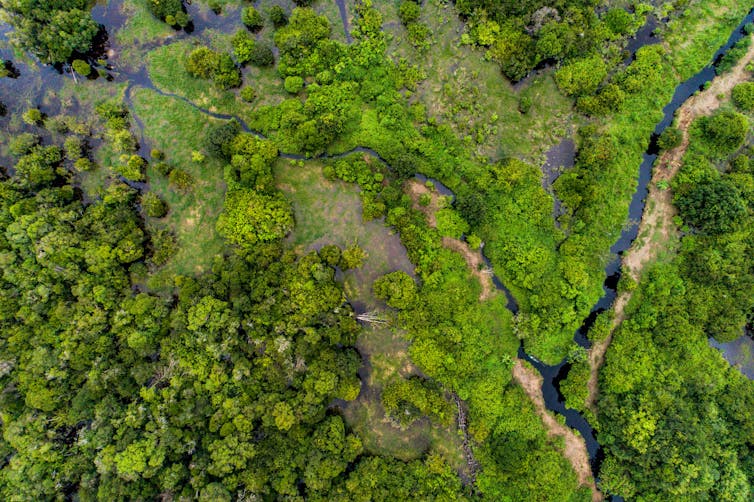
The drainage, cutting and agriculture that have damaged these ecosystems have caused equal damage to the archaeological finds buried within them. Peat growth is slowed or stopped when peatlands are drained, leading to oxidised soil that encourages destructive microorganisms to proliferate.
Archaeologists and policymakers are now working side by side to keep peatlands protected environments, to help capture and preserve both carbon and the evidence of the UK’s history.
And this commitment to protecting peatlands and the heritage they shelter has gone global. Last year, a session at the UN climate conference COP26 was dedicated to highlighting the importance of protecting peatland. But this is only the beginning of a long journey to ensure that peatlands, and the treasures they hold, will remain safe for generations to come.

Don’t have time to read about climate change as much as you’d like?
Get a weekly roundup in your inbox instead. Every Wednesday, The Conversation’s environment editor writes Imagine, a short email that goes a little deeper into just one climate issue. Join the 10,000+ readers who’ve subscribed so far.

Rosie Everett works for Northumbria University.
Gillian Taylor does not work for, consult, own shares in or receive funding from any company or organisation that would benefit from this article, and has disclosed no relevant affiliations beyond their academic appointment.
: The Conversation – Articles (UK)
Have you tried: Diving with Sharks?