
Herbal skin treatments in Uganda get an important scientific boost:
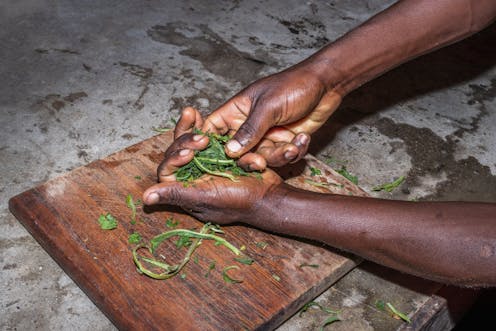
Herbal medicine is used all over the world, and Uganda is no exception. Figures suggest that up to 79% of the East African nation’s population favours herbal medicine for a variety of ailments rather than pursuing other treatment options.
COVID-19 has escalated the use of herbal medicine. In June 2021 the government approved the use of a herbal remedy, Covidex, as a treatment for COVID-19. The remedy had not undergone clinical trials and the World Health Organisation warned against its use. Communities are also using other herbal remedies to treat and manage COVID-19.
At first glance, this should not be an issue. Herbal medicine has proven to be very effective in treating several ailments like malaria, tuberculosis, cough and skin diseases. But using it is not without risks. There is a myth among the local population and some herbalists that medicinal plants do not produce toxic effects: they think that, since medicinal plants are natural, there are no negative effects and you can take any amount you want. However, a lot of research has shown that some medicinal plants can be toxic.
The problem is that herbal remedies don’t always undergo proper scientific tests for quality, efficacy and safety. Sometimes people might underdose, meaning that even if the remedy is safe, it doesn’t help them. On the other hand, some may take too much of a remedy and this can be toxic.
It is important that herbal medicine – just like the medication usually found on pharmacy shelves – be checked for its safety, its potential to treat particular ailments, and to ascertain its chemical components. This is also very useful in drug discovery. Uganda could add herbal treatments to the global market, knowing they are safe and effective; this would be good news for Uganda’s scientists, its economy, and ordinary people all over the world who could benefit from new remedies.
That’s why the team I’m part of, the organic research group at Makerere University’s Department of Chemistry led by Professor Robert Byamukama, focuses on testing the safety, quality and efficacy of herbal remedies. To do so, we work closely with herbalists and communities. For instance, we have trained people in Mpigi, Kamuli, Kayunga and Buikwe districts to formulate herbal cosmetics (sunscreens and skin creams) they can use safely and sell.
A thorough process
Our latest research examined how medicinal plants commonly used in Uganda might be used to treat various skin infections.
The first step was to consult with herbalists and communities to learn what plants, or parts of plants, are used for these sorts of ailments. They identified Spermacoce princeae, Psorospermum febrifugum, Plectranthus caespitosus, and Erlangea tomentosa.
We then collected the plants, either early in the morning or late in the evening. That’s because the plants’ chemical components are in their most natural state during these times. During the day when the sunshine is at its peak, some active chemicals can either evaporate or can be exchanged for inactive ones.
Read more: South Africa is rich in plants used for skincare: rural women helped us document some
The plant parts were then taken to the research facility and dried under shade to prevent the loss of any chemical components that can escape into the atmosphere in sunshine. Shade drying also prevents active components from degrading into an inactive state.
Next, dried plant material was ground into fine powder and extracted using water and organic solvents to obtain the active components. The resultant liquid was filtered to remove any solid material, then dried so it can be thoroughly tested for efficacy and toxicity, and its chemical components analysed. By identifying the chemical components, we were able to ascertain which chemicals were responsible for a plant’s effectiveness as a treatment.
Positive findings
Some of the plants we tested proved to be very safe and effective as skin antibacterials and sunscreens. Using these findings, we have formulated herbal cosmetics – soap, jelly and cream. We have shared this formulation with the communities we consulted, so they can make their own products and use them knowing they are scientifically sound. We plan to share it more widely.
We’ll also be doing further tests on the formulated products – a step, we hope, towards bringing it in line with international standards so that these African plants can step onto the world stage.

Jane Namukobe works for Makerere University, Uganda. She receives funding from AESA-RISE postdoctoral fellowship implemented by the African Academy of Sciences through funding from the Carnegie Corporation of New York. She is affiliated with NAPRECA.
: The Conversation – Articles (AFRICA)
Have you tried: Visiting Port Elizabeth?