
Perhaps when you think of scientific research in Africa you think of the continent’s amazing natural resources, buried out of sight under soil or rocks. Or maybe your mind goes to its ancient history of human evolution.
But there’s another important, huge expanse that’s garnering attention among African researchers: the Universe. Planetary and space scientists study our solar system. They draw from the disciplines of astronomy, Earth sciences, geology, robotics and aerospace research, among others, to understand the Universe and humans’ place in it.
The study of planets and of outer space also helps to advance technology. Familiar consumer products such as GPS, LED lighting, wireless devices and even memory foam are all spinoff technologies from space research.
Research in this field offers a way to study Earth’s environment, atmosphere and climate through remote sensing and Earth observations such as satellite data. And it’s an opportunity to explore other planets for alternative natural and energy resources.
Some African countries, like South Africa, Morocco and Senegal, have already established themselves as major players in planetary and space science. There have beensome pan-African attempts to develop and promote planetary and space science.
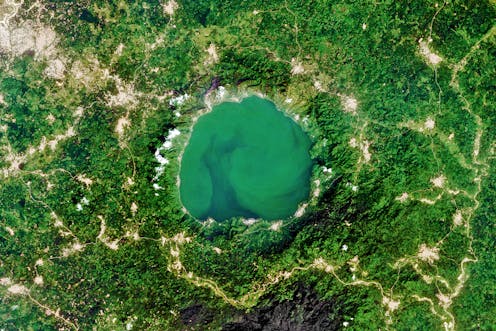
For the most part, though, planetary and space science doesn’t garner much interest beyond research scholars. Many Ghanaians, for example, don’t know about the country’s growing planetary and space science community. They may not know that Ghana is home to West Africa’s only planetarium, or that the region’s largest natural lake, Lake Bosumtwi, was formed in the crater caused by a meteorite striking Earth.
As a planetary scientist working and conducting research in Ghana, I think it’s time to get more people interested in this fascinating, important aspect of science – and to cement the country’s place as a major player in planetary and space science. This could also be a valuable way to develop Ghana’s knowledge economy, which developed nations have harnessed to drive their economic growth.
Education and outreach
The first step to growing interest in planetary and space science is through educational outreach. This consists of educational, entertaining programmes and activities in both informal and formal learning environments. Here, Ghana could learn from Senegal. The Senegalese Association for the Promotion of Astronomy has developed several successful projects, most notably the Spacebus.
The Spacebus is a caravan that promotes astronomy and scientific culture. It travels across Senegal, presenting exhibits and giving members of the public access to science kits and telescopes.
This could be replicated in Ghana. Space science and planetary researchers could also visit schools, conduct workshops and take part in career fairs to get young people interested in this sort of work. The Ghana Planetarium in the capital city, Accra, could play a key role here: it already organises events and activities centred on robotics and astronomy, among others.
There’s also the Ghana Radio Astronomical Observatory in Kuntunse, in the Greater Accra region. Its 32-metre telescope allows it to image distant space objects, as well as tracking satellites and spacecrafts. It is already an educational centre for the general public and this capacity could be developed.
Getting young people interested is important because Ghana needs more astronomers, astrophysicists, aerospace engineers, cosmochemists – and, for the especially adventurous, astronauts. These sorts of experts can boost the country’s scientific knowledge and output and this, in turn, can benefit Ghana economically through the development of the knowledge economy.
Read more: How the SKA telescope is boosting South Africa’s knowledge economy
There is no data on the precise numbers of people working in these fields in Ghana, but in my own experience and based on how few planetary and space science-related institutions there are in the country, it is clear that more should be done to boost these professions’ ranks.
A unique site
Perhaps another way to get Ghanaians engaged is to show them how space and Earth sometimes interact. The country has one of the world’s best examples of this interaction, dating back more than a million years. Lake Bosumtwi is West Africa’s largest natural lake and Ghana’s only naturally occurring inland freshwater lake. Located about 25km south-east of Kumasi in the Ashanti region, it fills a 1.07 million year old meteorite impact crater.
Many impact craters around the world, including South Africa’s Vredefort Crater, are popular tourist attractions. People visit these sites to learn about Earth’s relationship with space, asteroids and meteorites. The same can be done with the Bosumtwi impact crater, making it a boon for Ghana’s tourism industry – and another way to get Ghanaians excited about planetary and space science.
Planetary and space science has become an integral part of the world’s development. Ghana has the opportunity to build on its existing facilities and to capture people’s imaginations so that the country can boost its contribution to global efforts.

Marian Selorm Sapah does not work for, consult, own shares in or receive funding from any company or organisation that would benefit from this article, and has disclosed no relevant affiliations beyond their academic appointment.
: The Conversation – Articles (AFRICA)
Have you tried: Travelling to South Africa?