
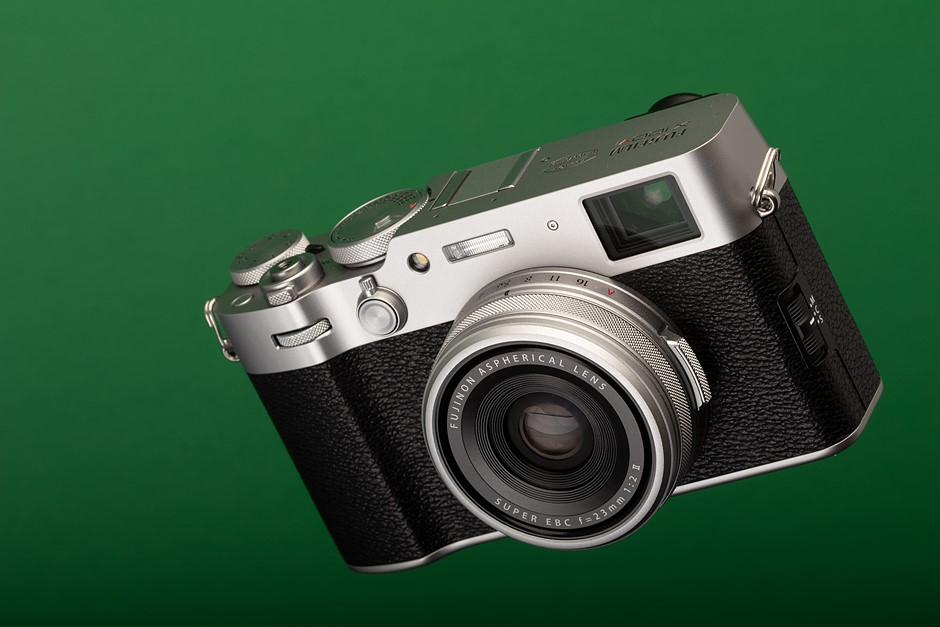
As part of the work on our review of the Fujifilm X100VI, we’ve shot and processed our standard studio test images with the camera.
Recent Videos
Given the camera is based on a sensor we’ve seen before, there are few surprizes in terms of its performance. It produces more detail than the 26MP sensor in the X100V. Inevitably it shows more noise at the pixel level than lower-res sensors, but is comparable when viewed at the same output size, up until the very highest ISO settings.
Lens performance
The studio scene is not intended as a lens test: we typically use very high-performance lenses at an aperture that delivers high levels of cross-frame consistency with little risk of diffraction limiting the performance. However, with the X100VI, we have no choice but to use the built-in lens.
The 35mm equiv field of view means we have to move much closer to the target but this is still at over 40x focal length, so not especially close-up. An aperture value of F5.6 means we’re not being especially challenging.
And the X100VI’s lens appears to acquit itself well in these circumstances. In the JPEGs it’s comparably detailed near the center as the X-H2’s results, using our standard 56mm F1.2 R testing lens (though the X100VI is possibly having to apply more sharpening to deliver this result). Things get a little softer towards the corners and exhibit (easily corrected) lateral chromatic aberration and some vignetting in the Raw conversion, but overall the lens appears to be doing a good job in front of a high-resolution sensor.
As with all the other 40MP X-Trans cameras, the Adobe Camera Raw conversion isn’t showing the same levels of contrast or sharpening that the camera’s own JPEGs do, so it’s worth downloading the Raw files to see whether your preferred software and processing workflow produce results you’re happier with. But overall, we feel it does well.

Our DPREVIEW Tribute:
After nearly 25 years of operation, DPReview closed on 10 April 2023. This difficult decision was part of the annual operating plan review that parent company, Amazon, shared earlier this year.
Over the course of 25 years, DP Review built up a reputation as being one of the most informative places to go for information about that new camera or lens you’re after. DP Review began as an independent reviews site based in the UK in 1998, the brainchild of Philip and Joanna Askey, but it was eventually purchased by Amazon in 2007 and relocated over to Seattle in the USA in 2010.
Cheers DPReview – thanks for the great work and content that guided photographers, videographers and techno junkies the world over!
 iOS app mood.camera aims to recreate the experience of shooting film