
Flu is set for a big comeback now COVID restrictions are lifted – here’s what you need to know:
The flu seasons of 2020 and 2021 were mild, mostly thanks to measures people took against COVID, such as wearing masks, social distancing and using copious amounts of hand gel. 2022, however, looks like a whole different kettle of fish.
The southern hemisphere – where flu season starts – has been hit hard. Australia, for example, has had the worst flu season in five years, and it has been hammered by COVID, too. This year has been the first real opportunity for both viruses to circulate freely as all COVID restrictions have now been lifted.
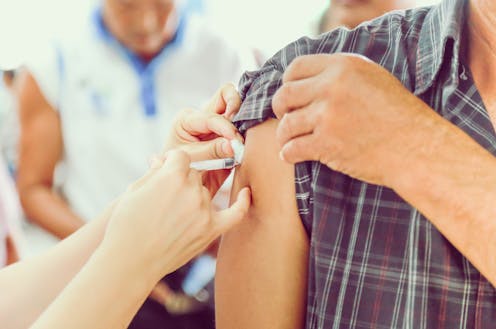
It’s strongly advised that people in the UK get the flu vaccine and ensure they are up to date with their COVID vaccine boosters. Scientists aren’t sure how these viruses will dovetail, but evidence suggests that being infected with both viruses simultaneously greatly increases the risk of severe disease and death.
About 33 million people in the UK are eligible for a free flu vaccine, including those aged 50 or older, pregnant women, people in residential care, and frontline healthcare workers. There is also a nasal-spray vaccine for children aged two years and older, with many vaccine rollouts delivered in schools.
Great pressure on the NHS
Flu usually has an “R number” between one and two, meaning that, on average, each infected person will infect one or two people. This level of flu transmission is significant.
In the UK, across the winters of 2017-18 and 2018-19, there were 46,215 and 39,670 flu-related hospital admissions respectively. And, as of early September 2022, there were 590 daily hospital admissions with COVID, with those numbers on the rise.
NHS trusts are usually under greater pressure during the winter. Yet already in the autumn, several health services report that their capacities are limited. Derriford Hospital in Plymouth had waits of up to 72 hours for admission from A&E, while the East of England Ambulance Service recently came close to declaring a “major incident”.
Nottingham Hospitals Trust declared a “critical incident” on September 29. The legacy of Boris Johnson’s pandemic governance, with higher case and death rates than most comparable countries, has created further pressures across the health service, including hospitals and primary care. This does not bode well heading into a winter when there is a risk of high levels of both flu and COVID.
Despite the continuous circulating of new variants and sub-variants, the COVID vaccine continues to provide high protection against severe disease and death. The strains of flu also change each winter and are, to some extent, unpredictable. So flu vaccine effectiveness is variable, but typically between 40% and 60%.
Data from Australia provides an early estimate of around 40% effectiveness from their 2022 flu season. However, this is still an important level of protection, with hospitalisation rates among vaccinated people typically much lower than in unvaccinated populations.
The Australian data is important for people in the UK and elsewhere in the northern hemisphere. Surveillance agencies look at circulating virus types in the southern hemisphere, and use that data to decide the likely impact in their own countries, including the manufacturing of the flu vaccine. Australian virology reports show the vast majority of their laboratory-confirmed cases were a strain of influenza called H3N2.
The UK Health Security Agency says this year’s flu jab is a good match for this strain.
Other measures
With the added pressures already on the NHS, a high vaccine uptake will be important. But wearing a mask can also help reduce the spread of flu and COVID. Meeting outdoors or opening a window to improve ventilation can also help to prevent new chains of transmission and lessen the likelihood of infecting vulnerable people.
The UK winter of 2022-23 will be a very good time to try to stay well, leaving some healthcare capacity for emergencies and vulnerable people.

Michael Head has previously received funding from the Bill & Melinda Gates Foundation and the UK Department for International Development.
: The Conversation – Articles (UK)
Have you tried: Travelling to South Africa?